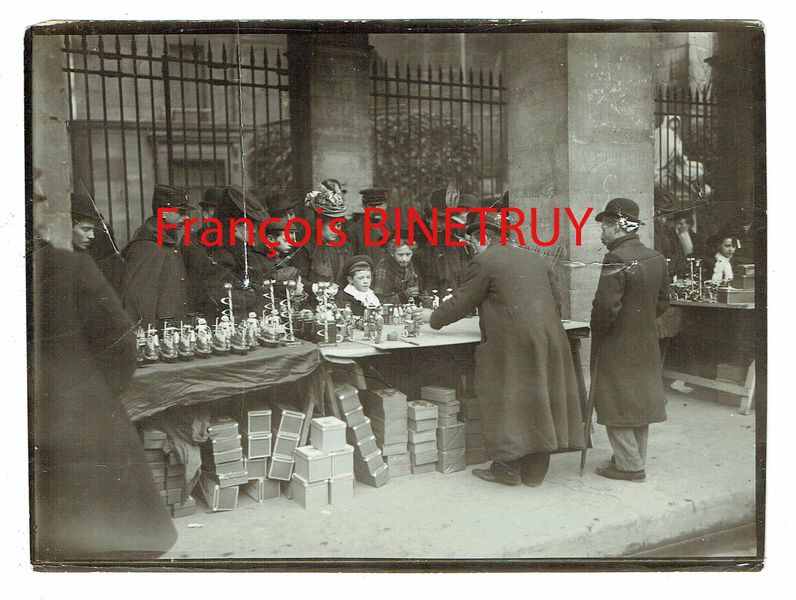
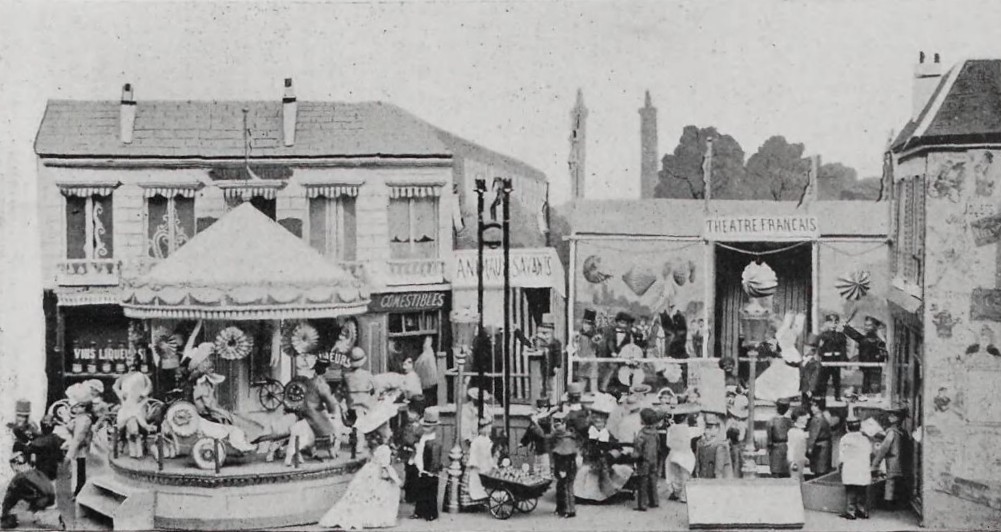
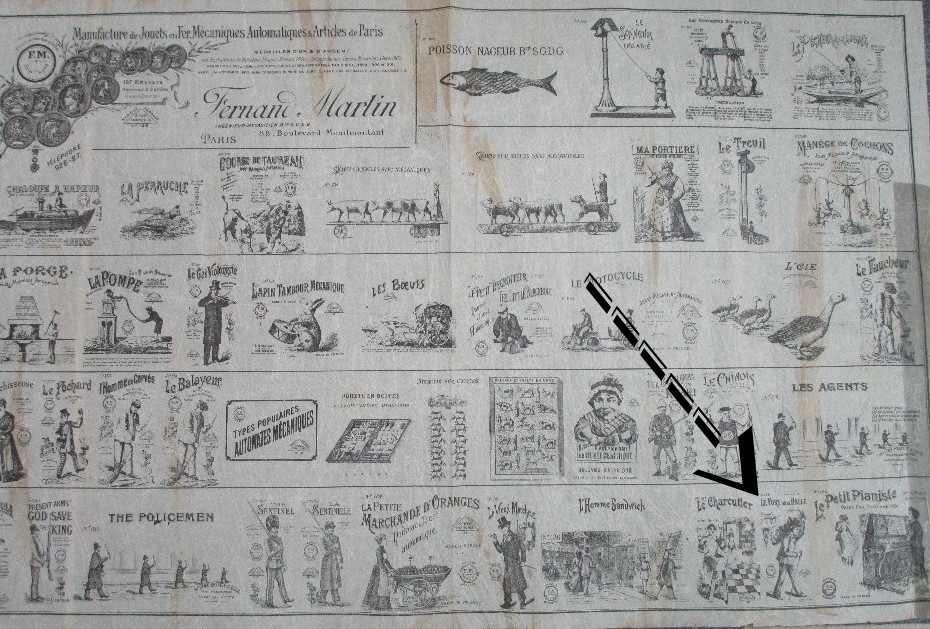
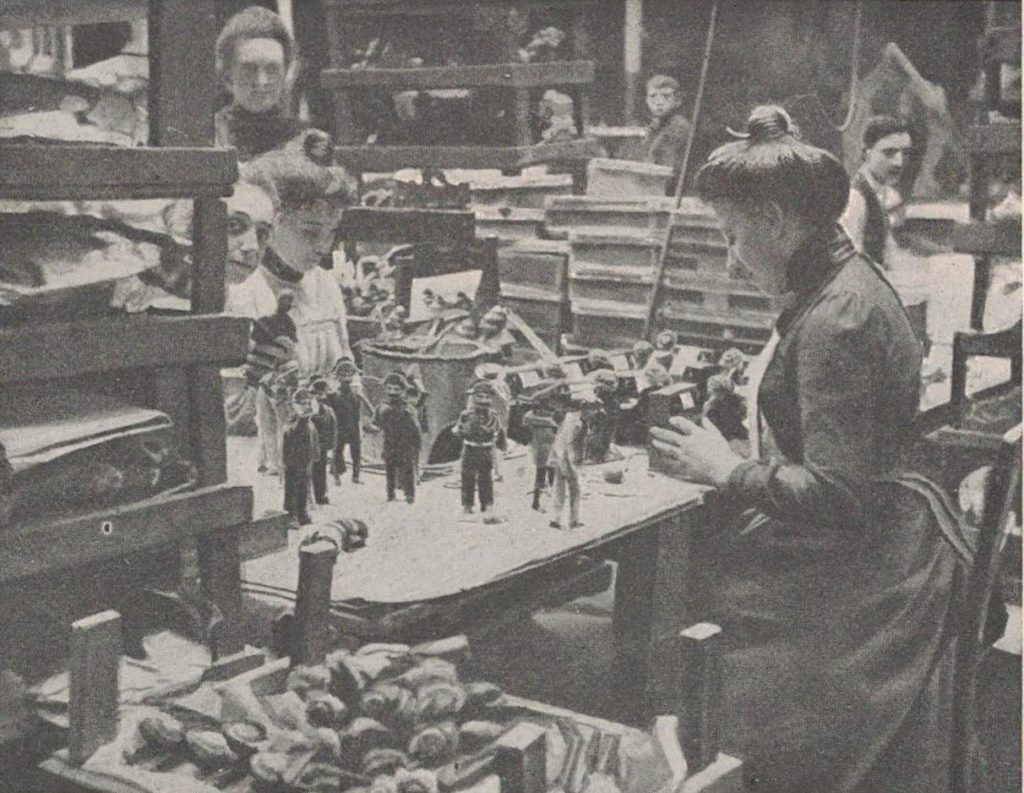
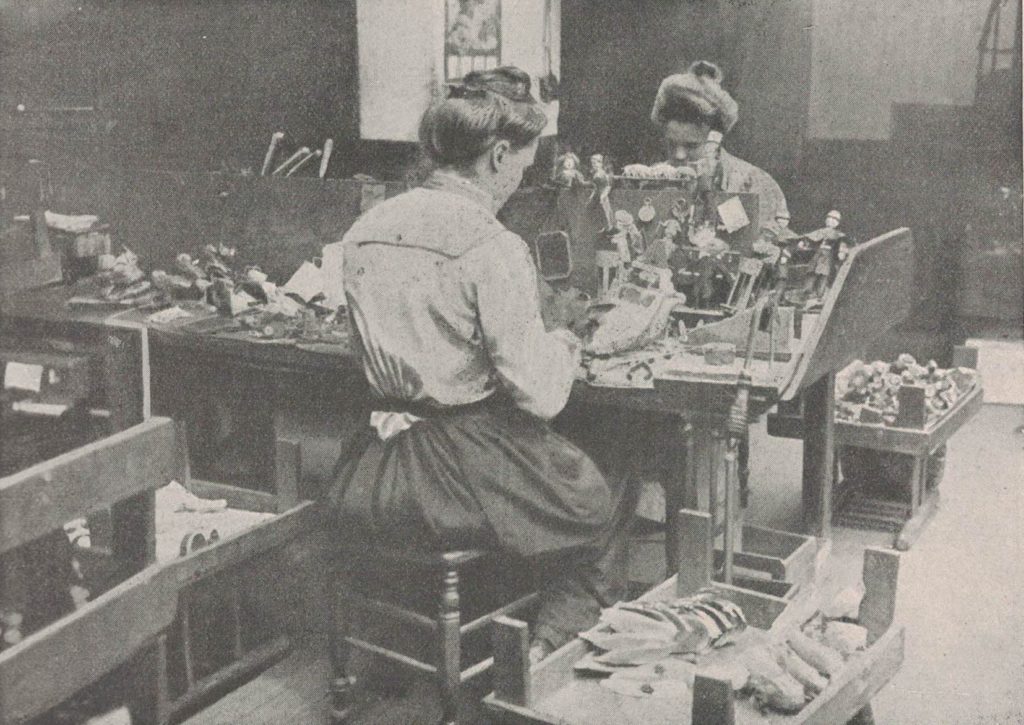
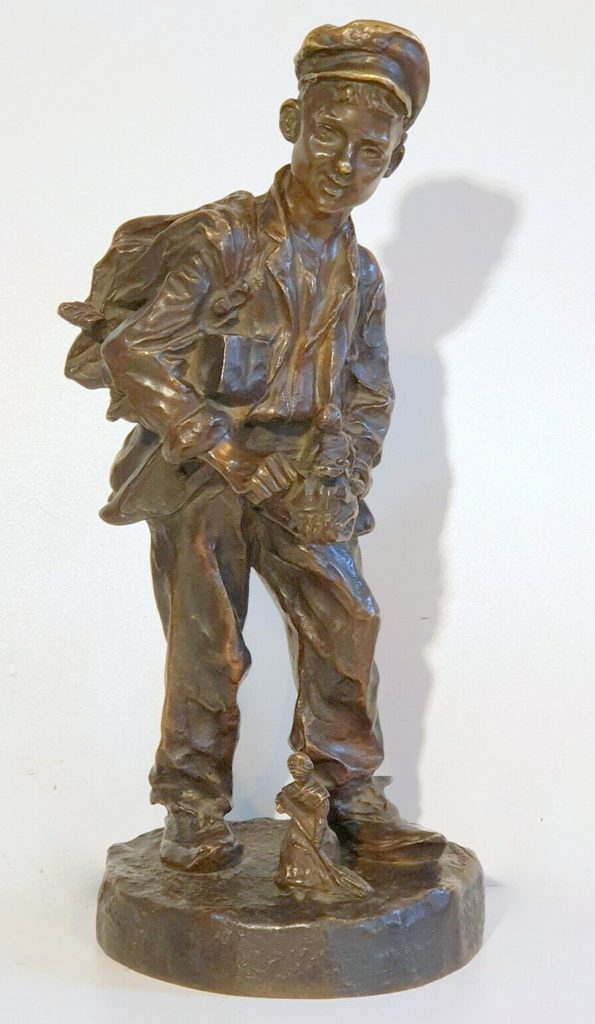
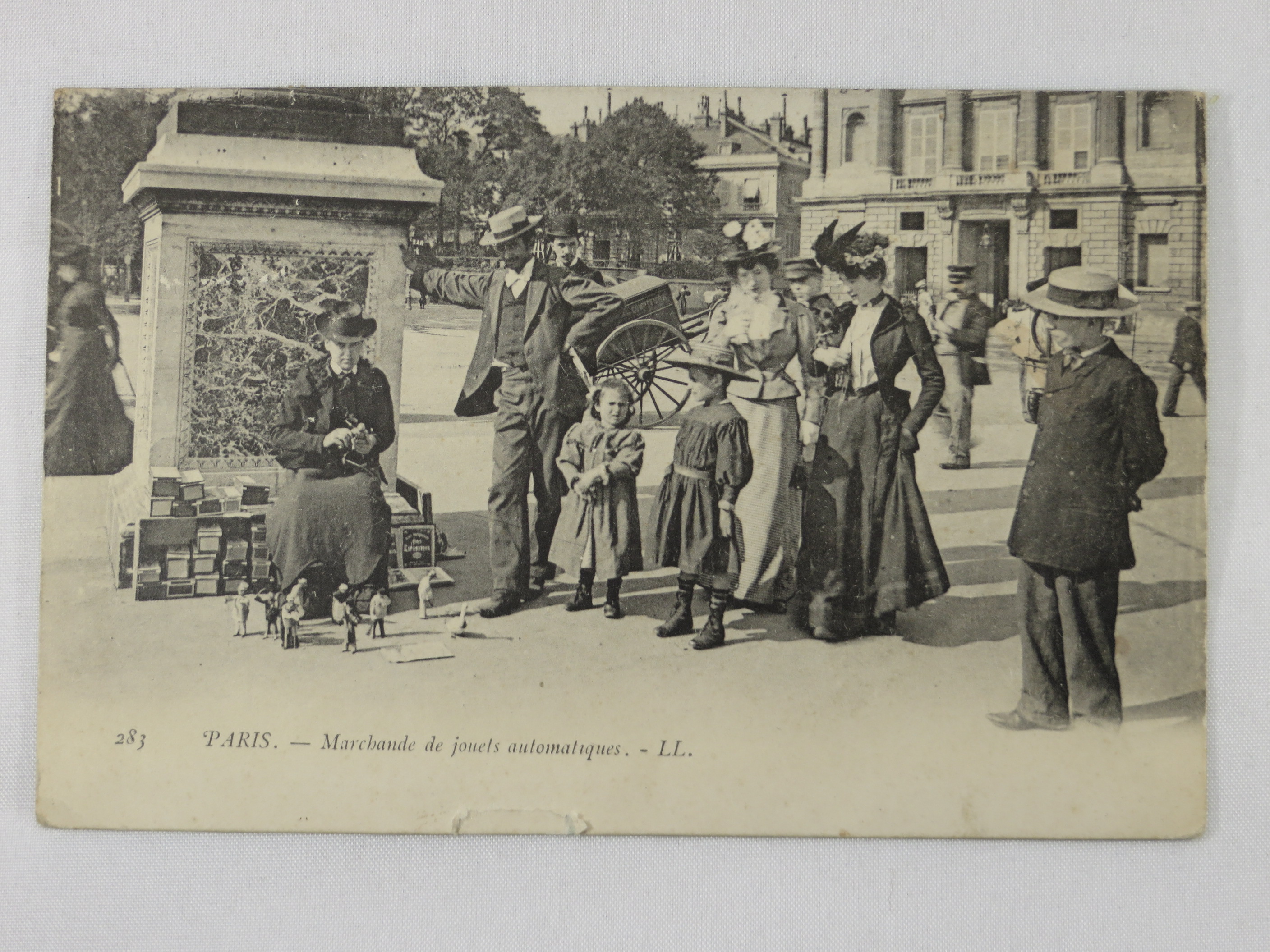
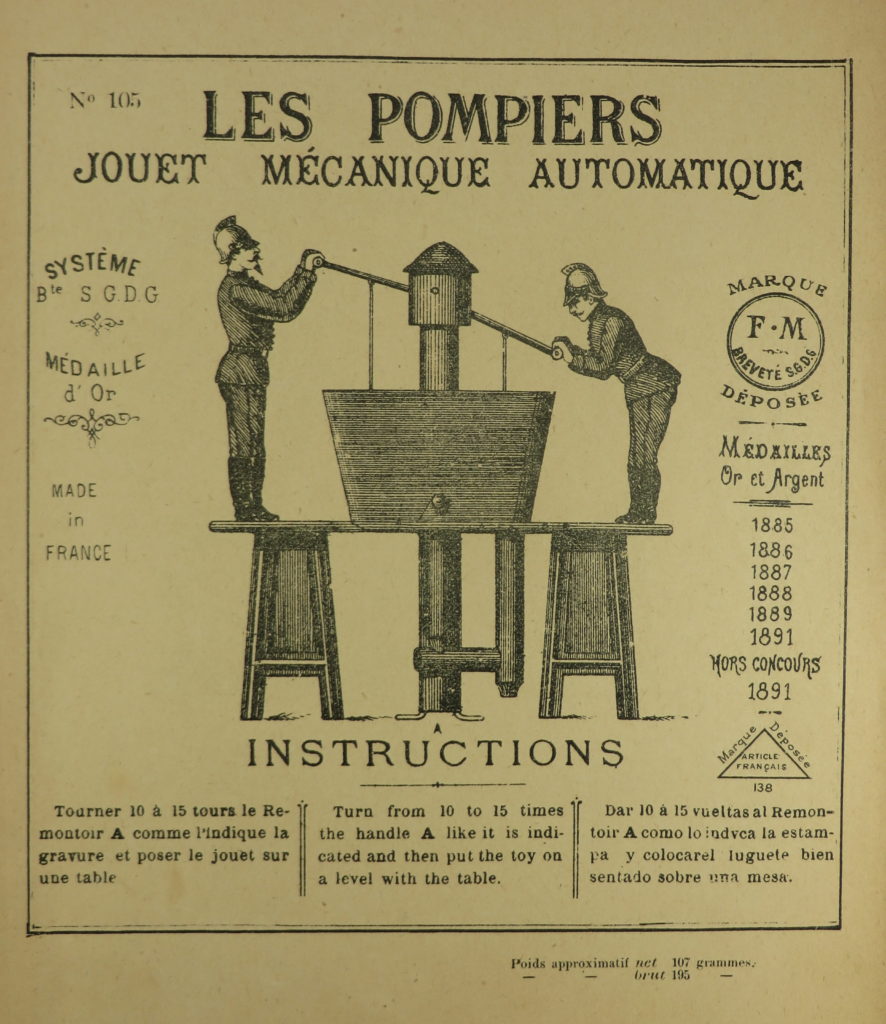
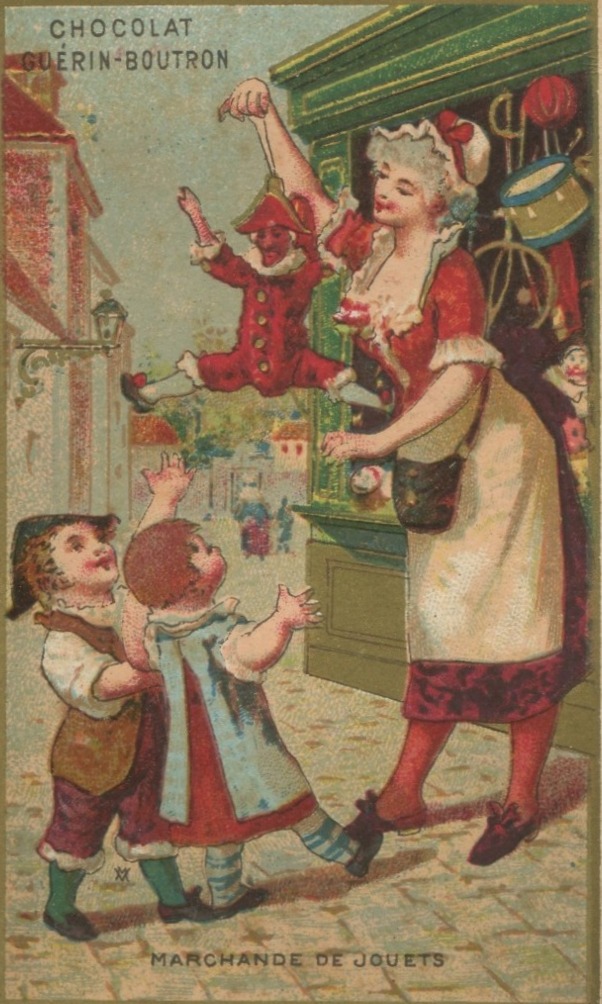
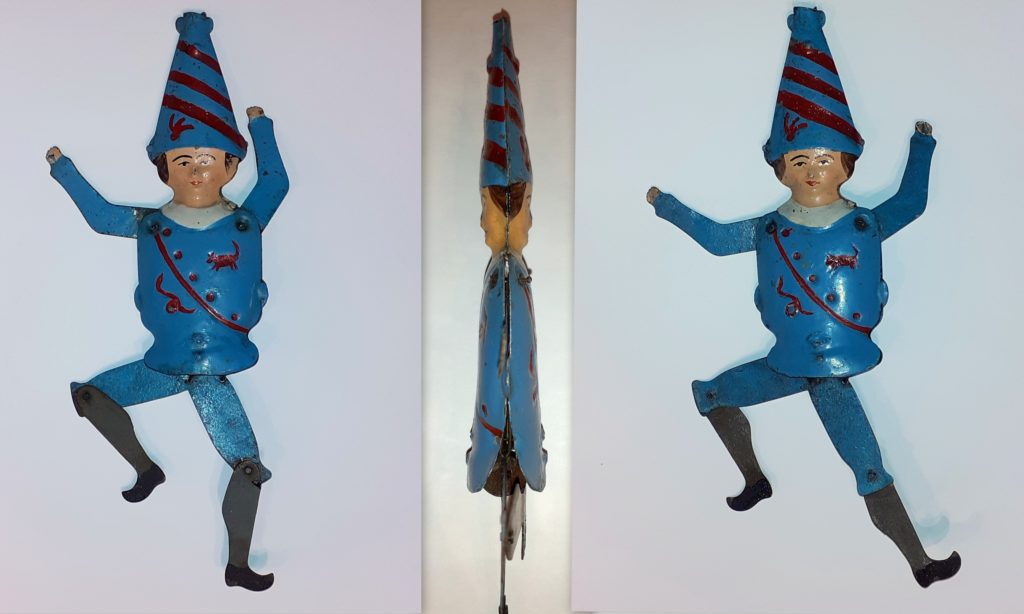
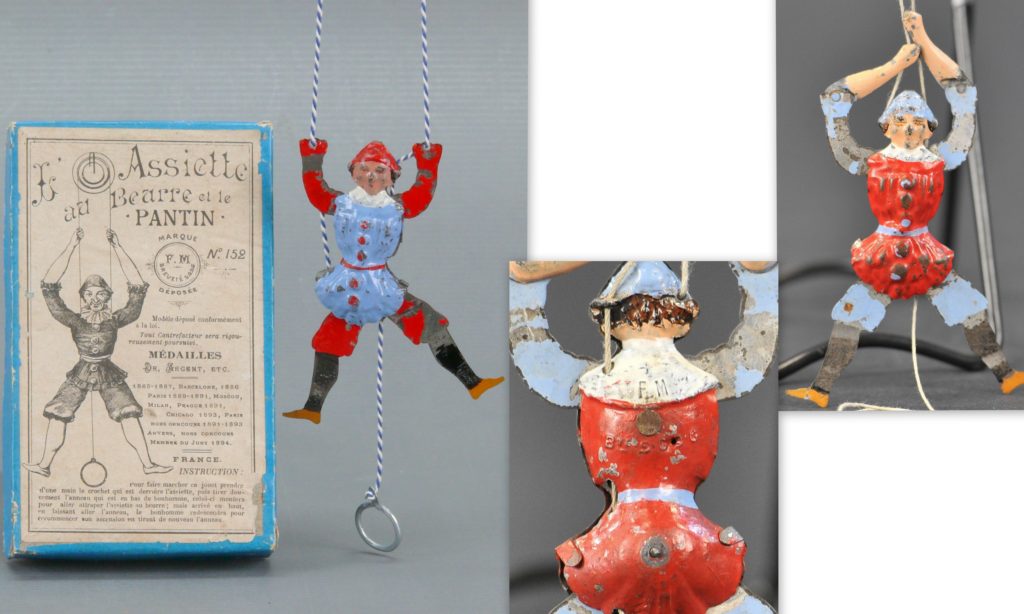
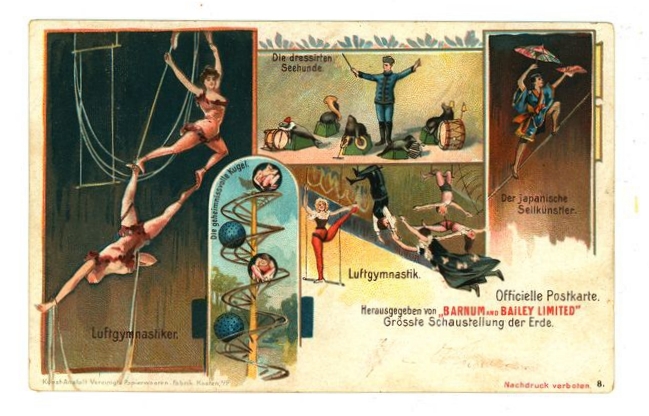
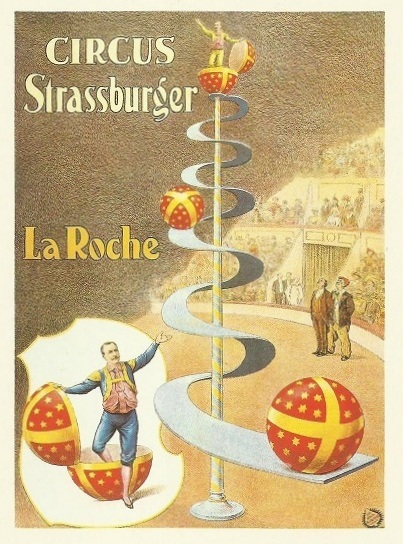
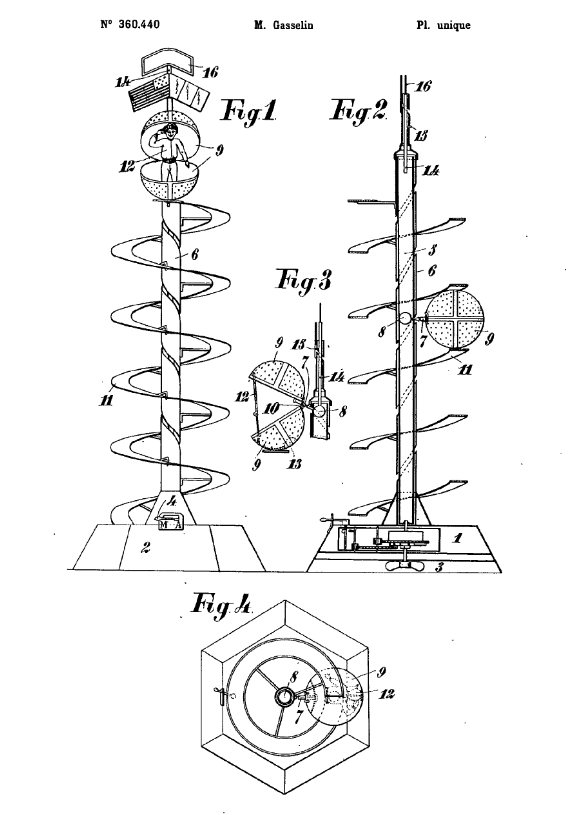
I found this extremely rare and 100% original photo at a French toy dealer Mr François Binetruy. He has a shop “Brocante L’Orangerie” in France in the place Versaille and a webshop https://www.binetruy.org/ . These kind of photos are very very rare and unique and you don’t see them often.
Maker of this photo is Paul Geniaux (1873-c.1930).
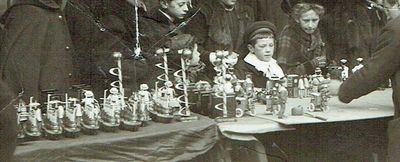
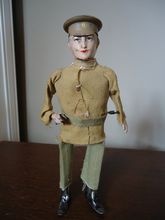
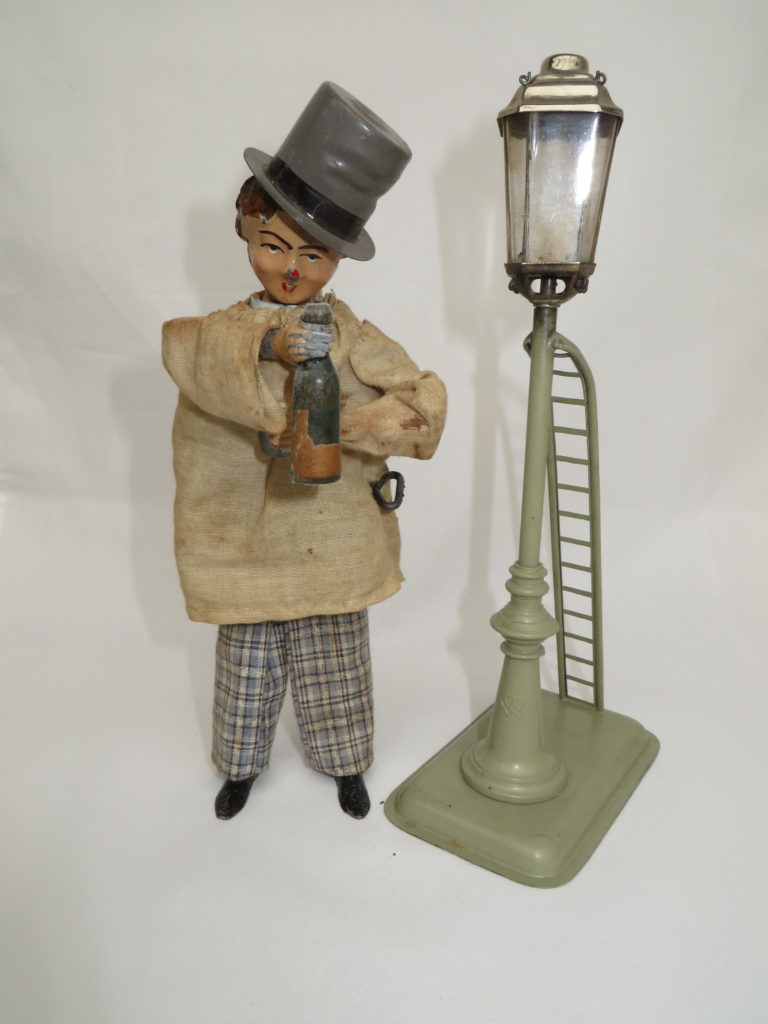
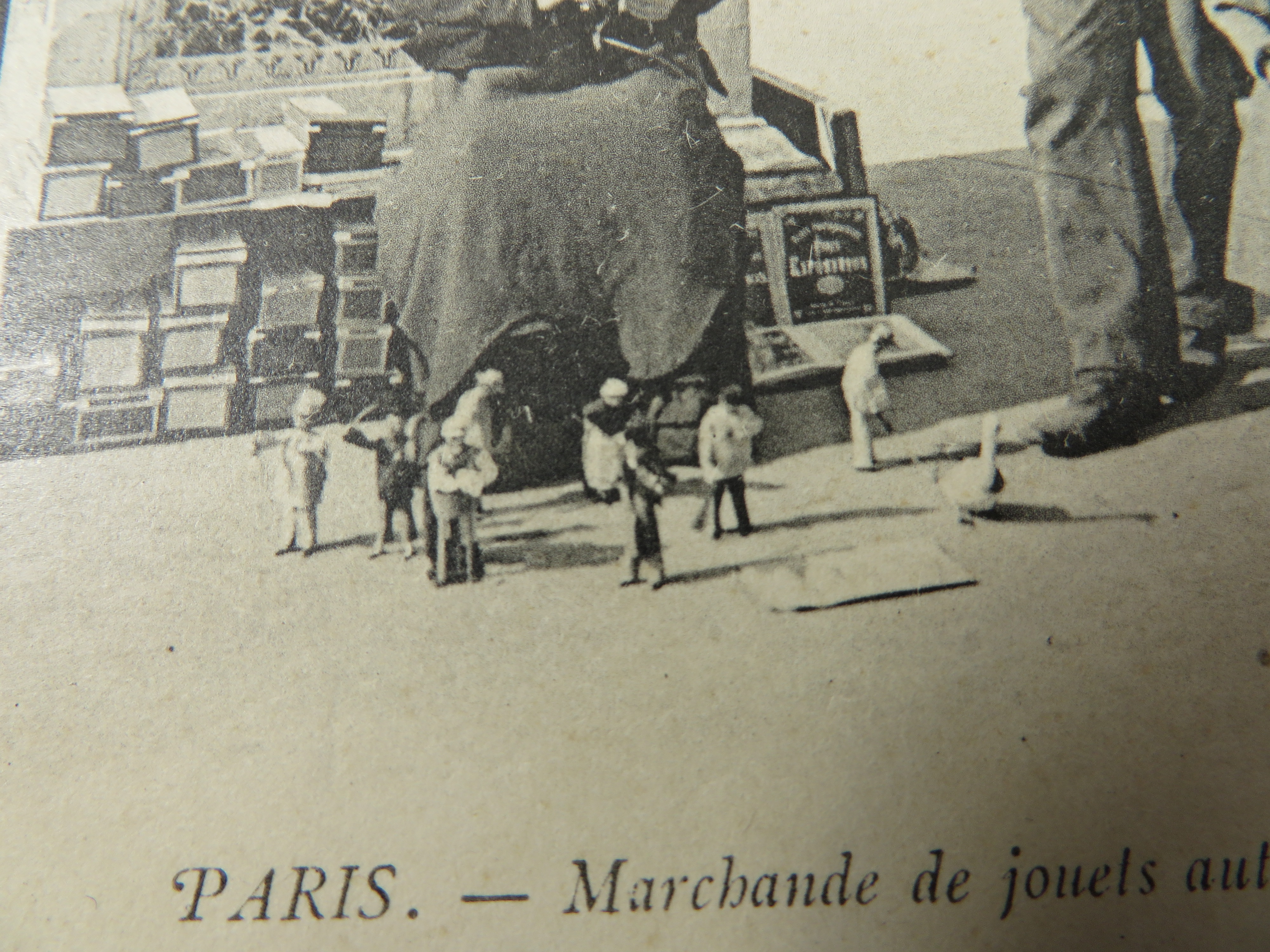
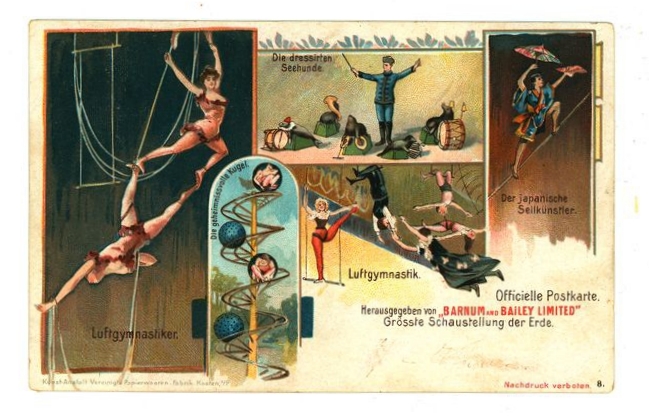
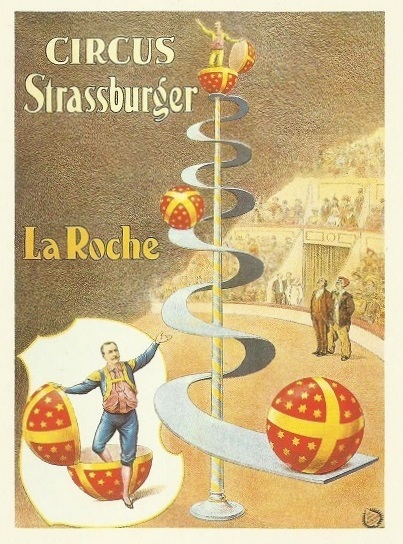
Very rare period silver print representing a traveling salesman of toys behind his stall in front of the many dreaming children. We see many toys of Fernand Martin, and if I look closely I recognize the Martin’s: (Mysterious ball – Cook – Pianist -Street sweeper – Gentleman Khaki) and from Lehmann: (Sailor, Li-La, Chinese) and others: the boxes of the toys are piled under the table. And on the right side next to the big pillar you see a second toy seller with Martin toys, you can easily recognize the Mysterious ball (La Boule Mystérieuse from 1906)
The shooting is around 1906 and located rue de Rivoli at the level of the Protestant temple in front of the Louvre in Paris.
On verso, author’s stamp and handwritten annotations. Format with margins 13.2 x 17.5 cm. Unfortunately the photo has been partly crumpled.
I am not surprised that it has already been sold within a few days.
Photos used with permission from François Binetruy
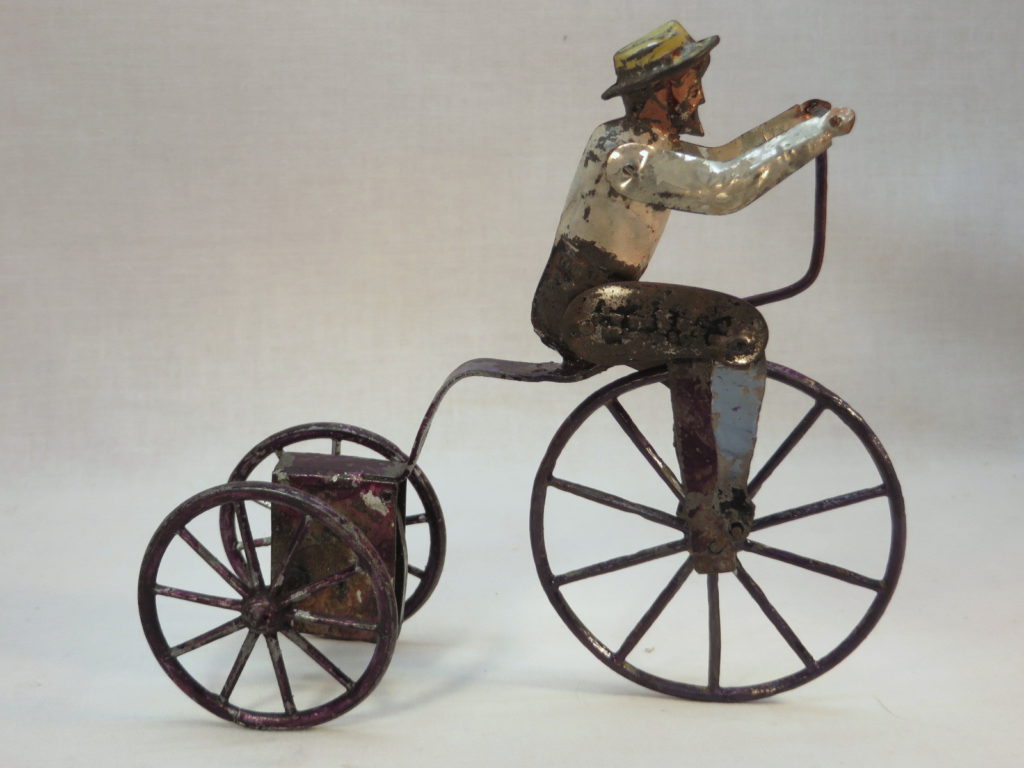
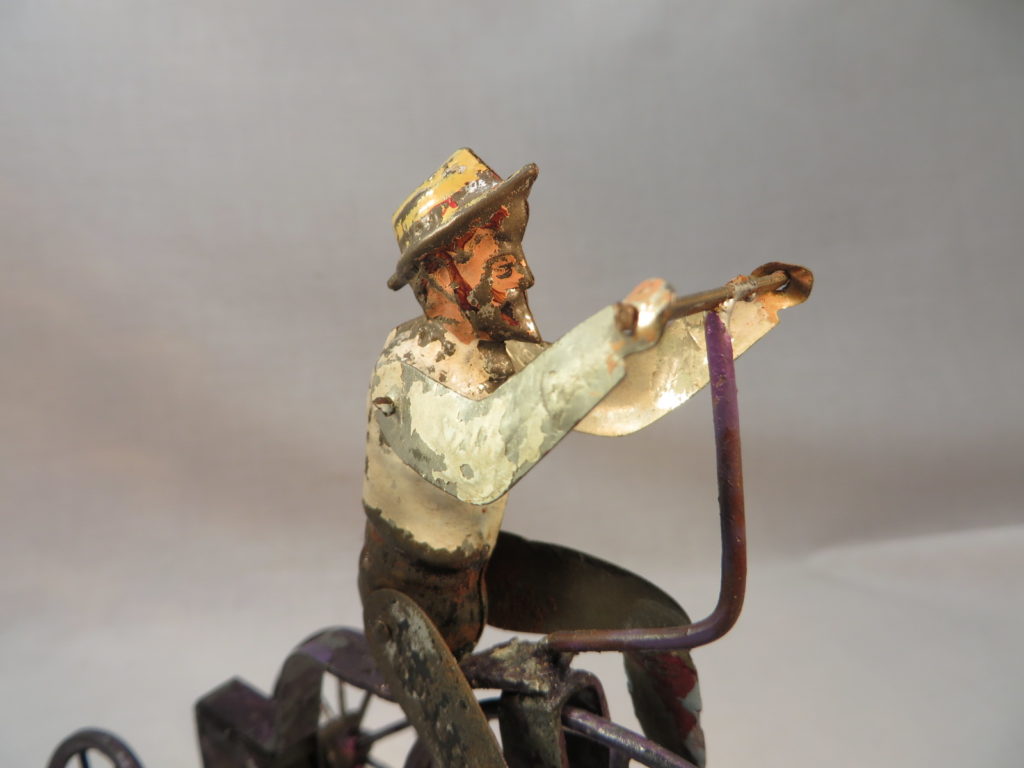
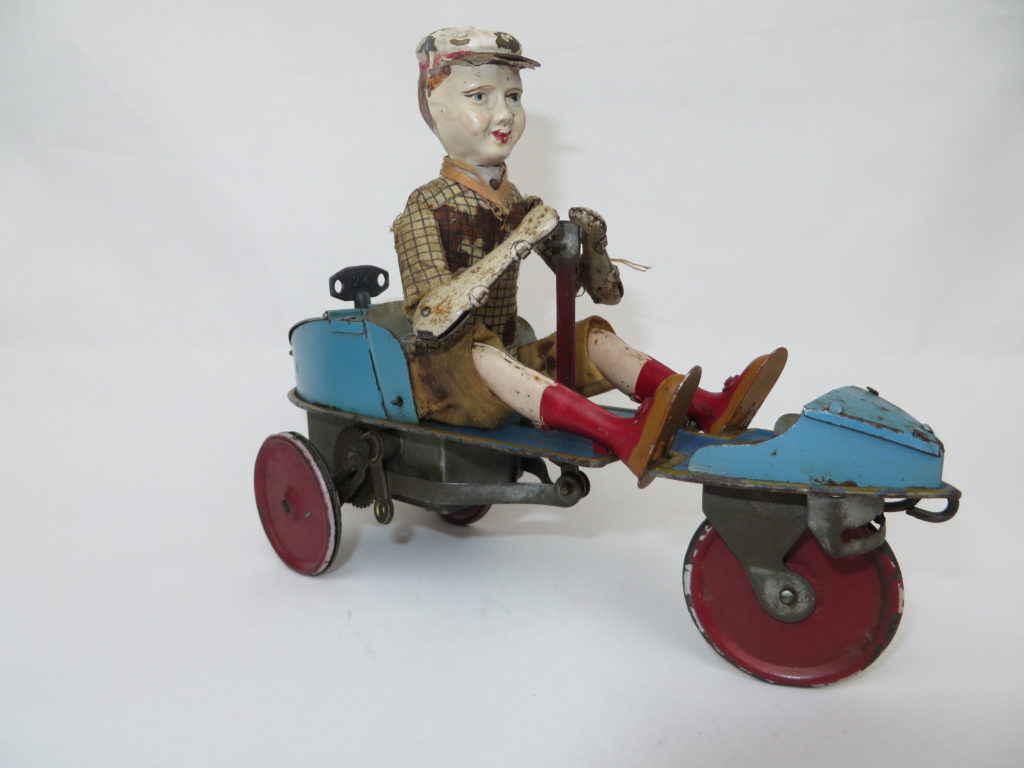
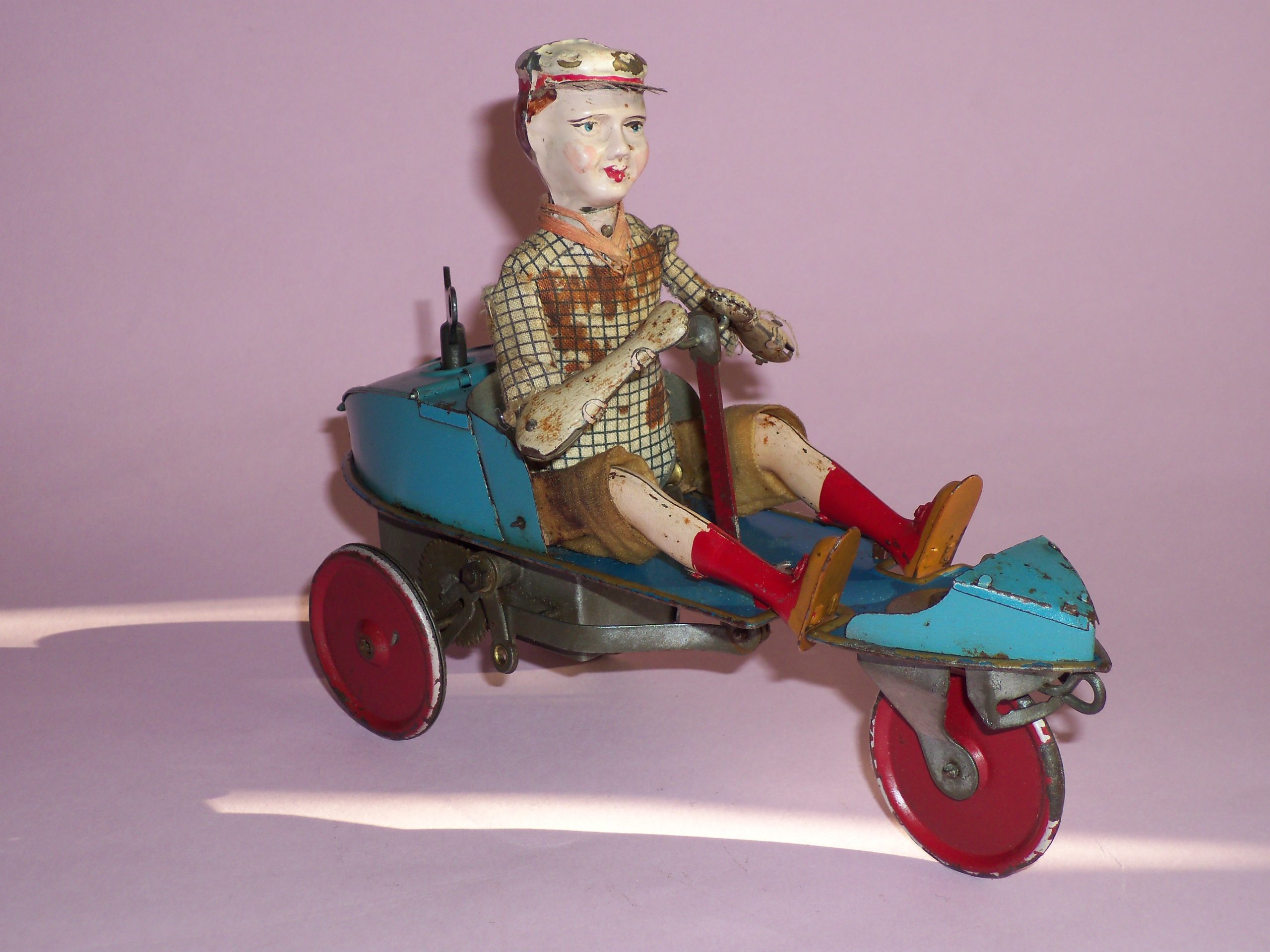
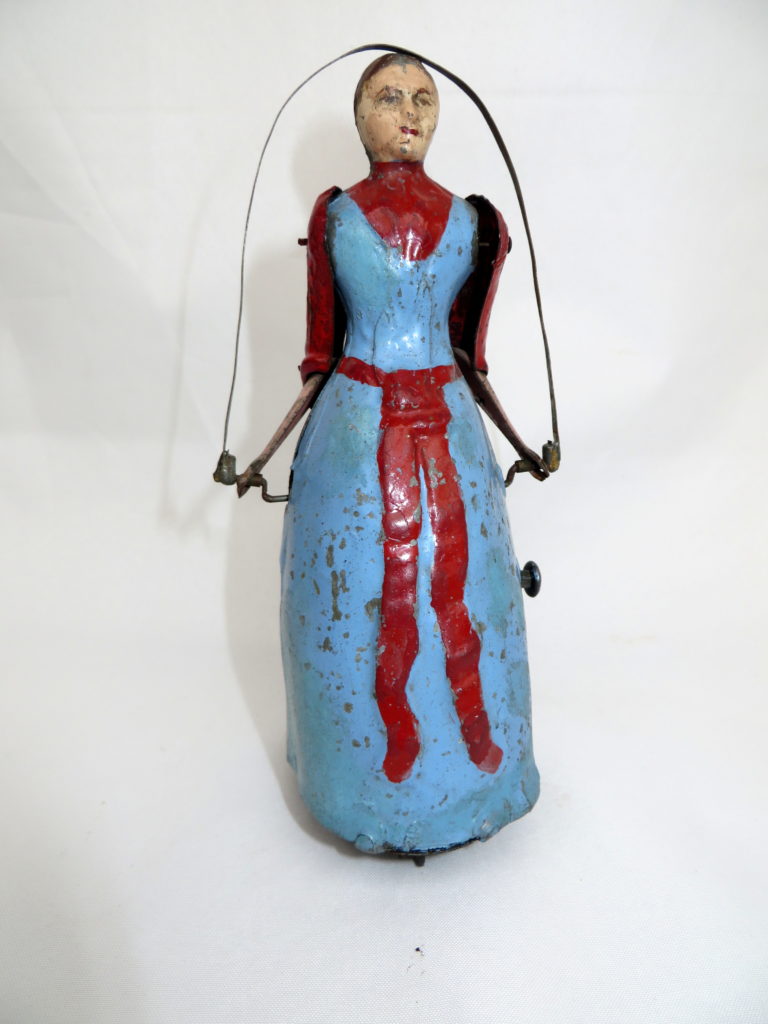
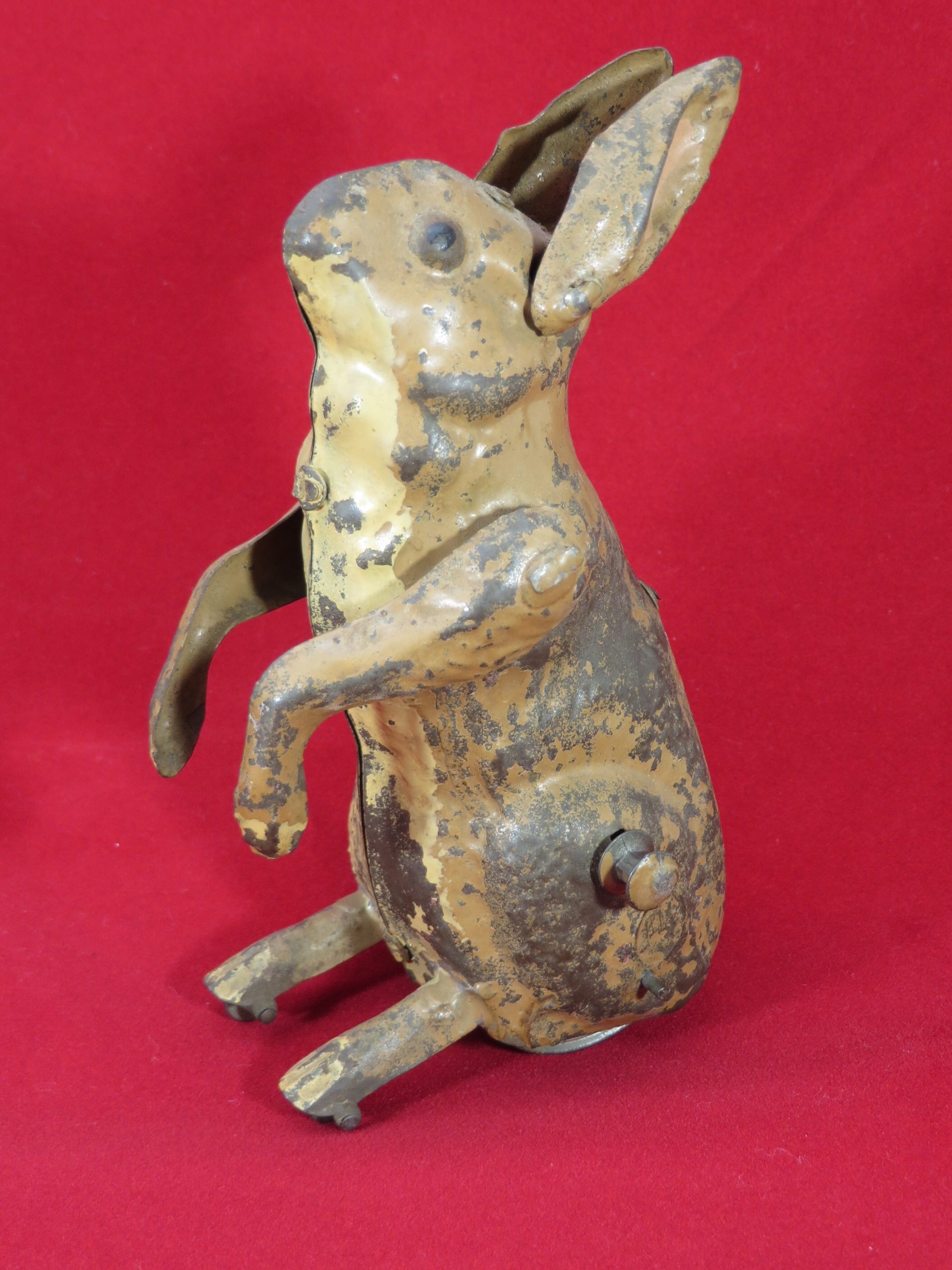
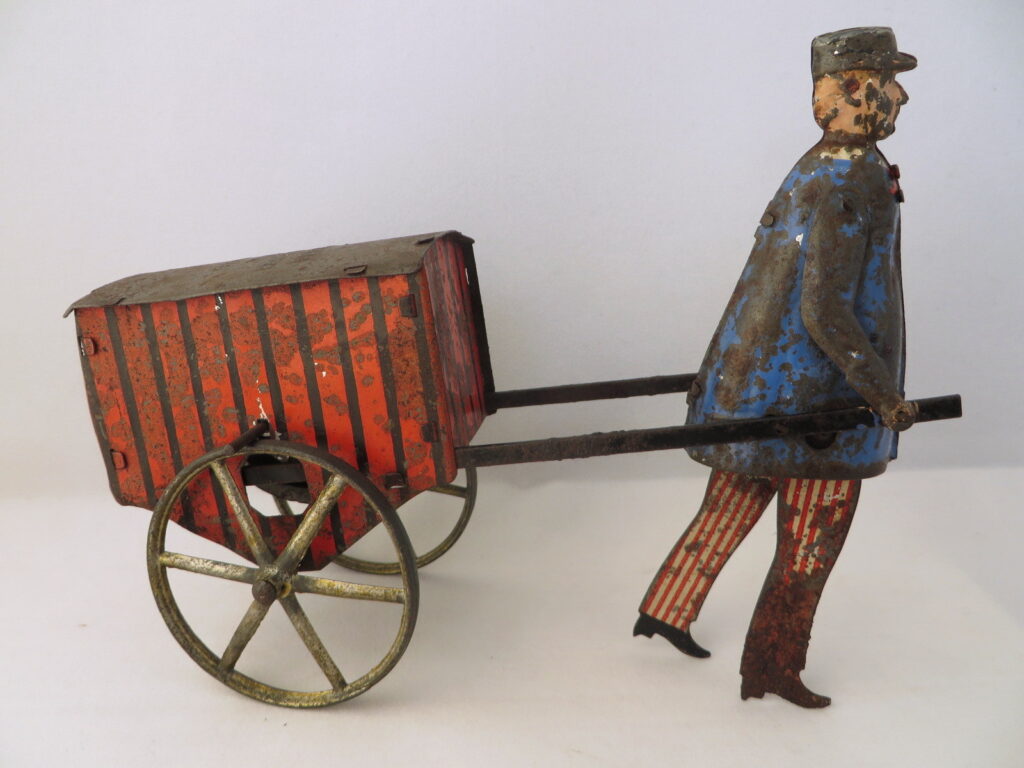
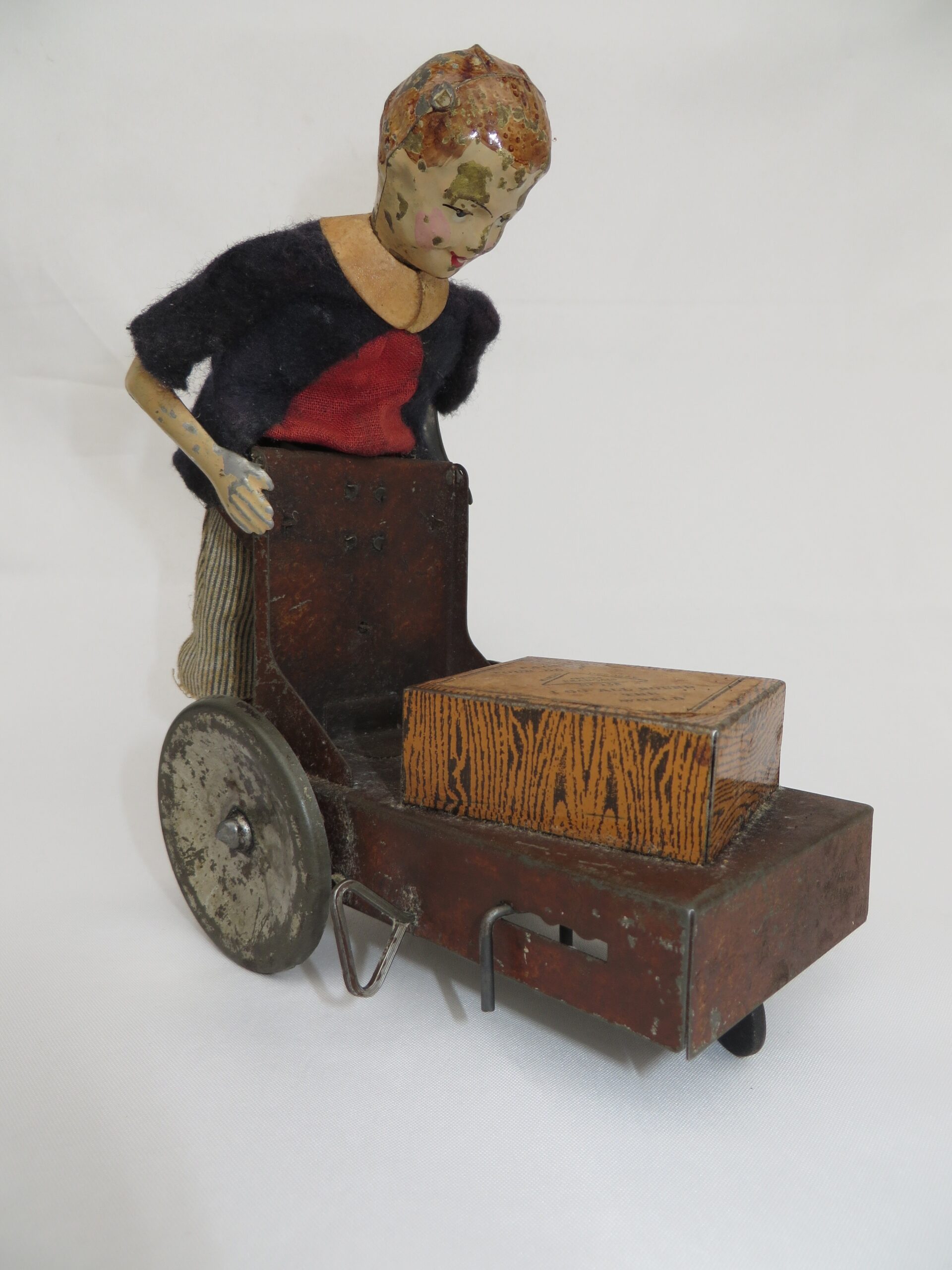
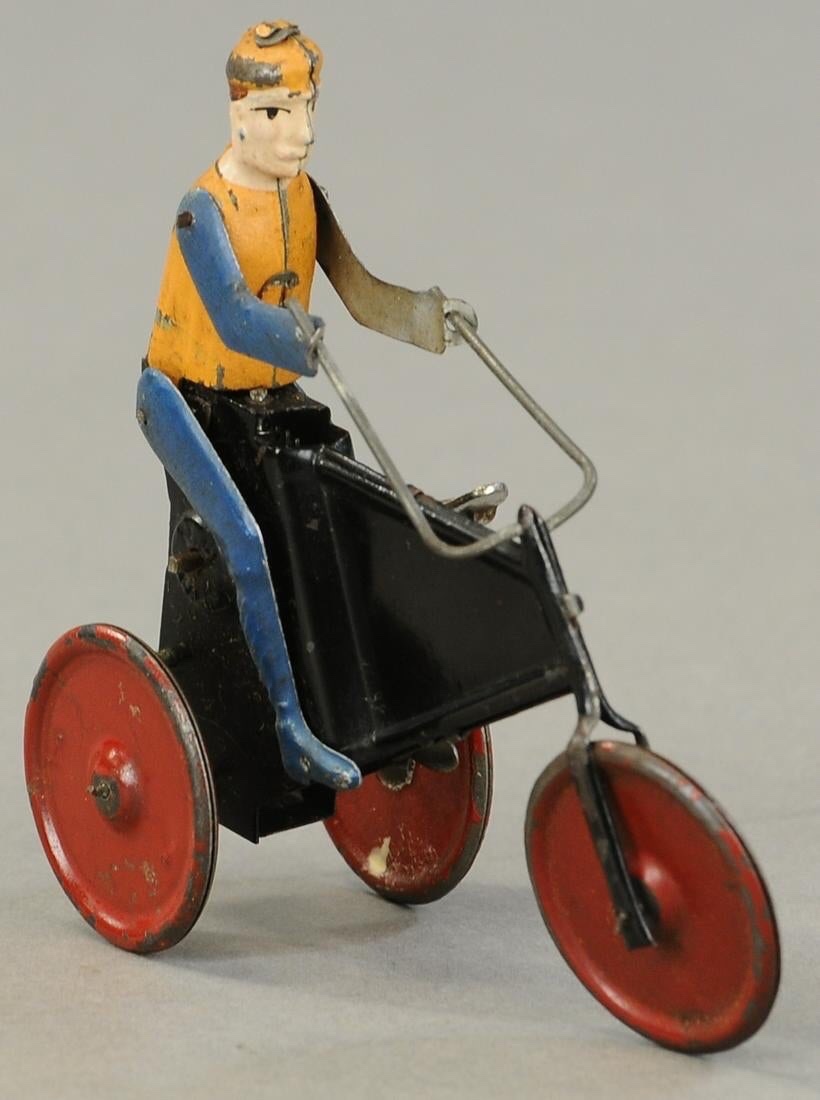
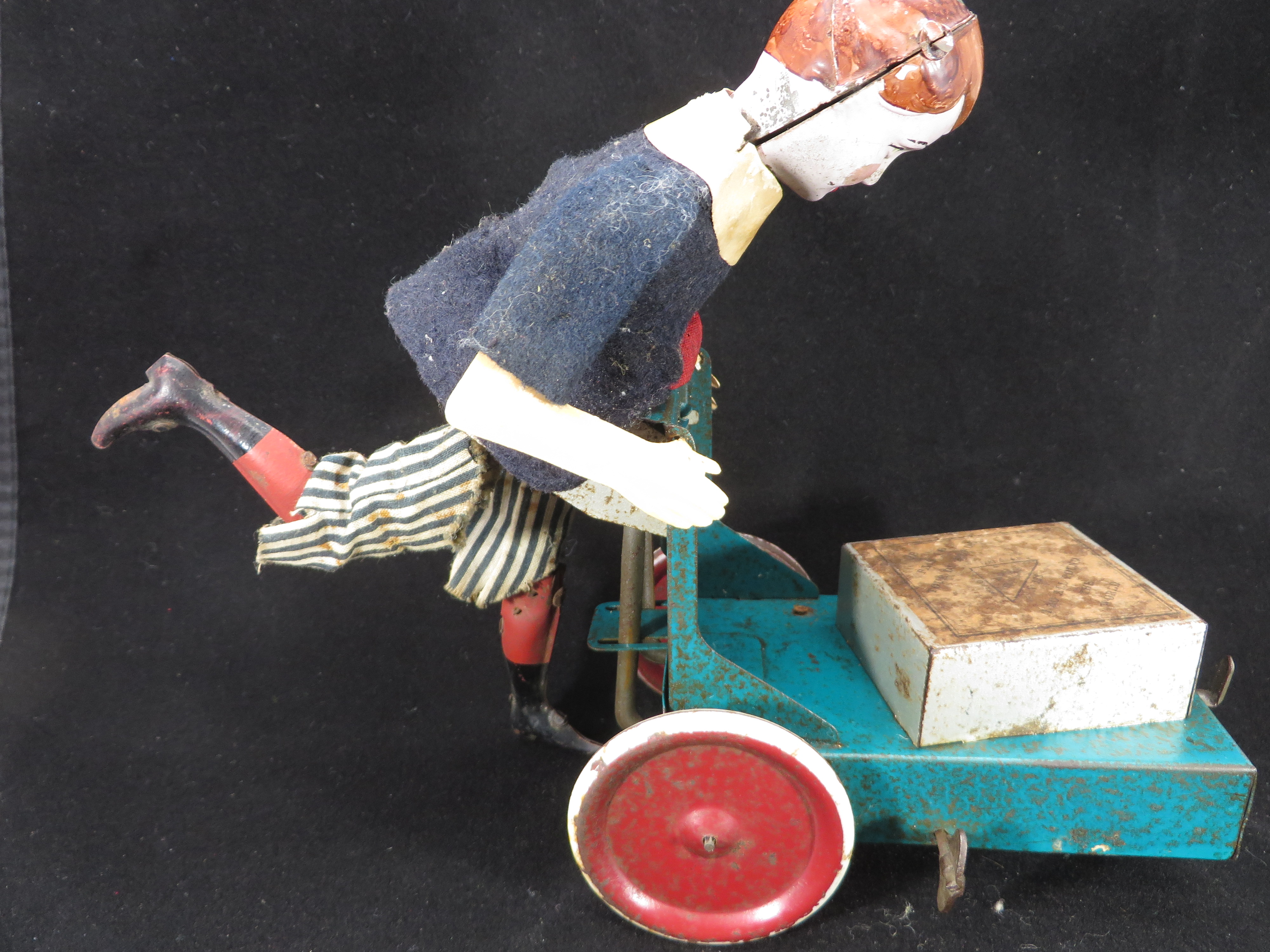
A few years ago, I came in possession of this very special toy and after closer investigation it turned out that it has a link to Fernand Martin. The seller could not give me any further information, he only knew that this toy was bought in France a long time ago.
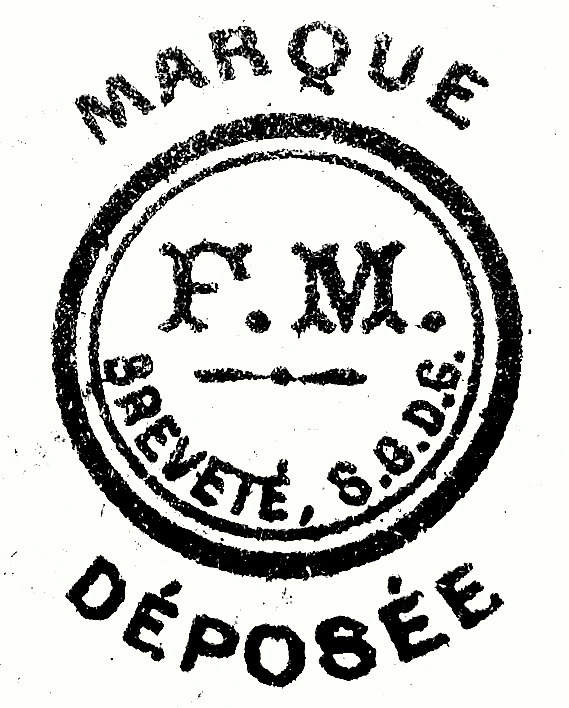
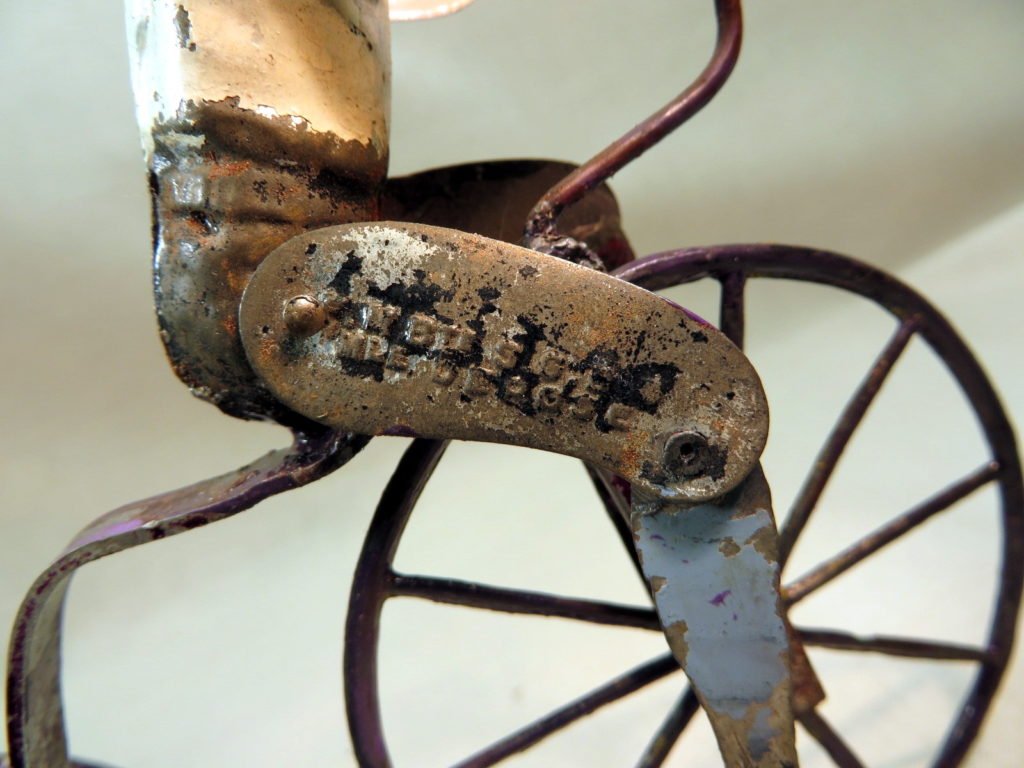
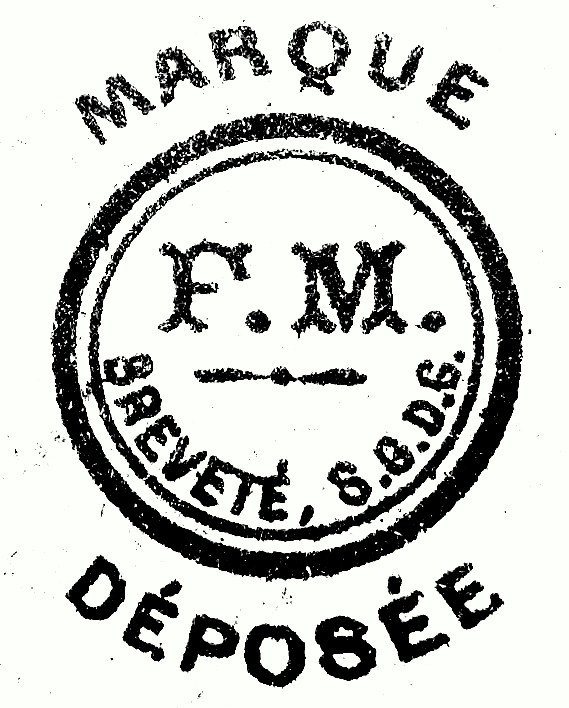
It is marked on one of the legs with: FM Bt. S.G.D.G. MRe DÉPOSÉE. and that means : (Fernand Martin, Patent without government guarantees and brand name is registered ) FM = Fernand Martin Bt > Breveté = patent S.G.D.G. = This owas a common abbreviation for “Sans Garantie Du Gouvernement“ (without government guarantees). MRe > marque =brand name DÉPOSÉE. = registered
Martin has used this description more often on toys such as on this toy with number 41 La bicyclette Martin.
La bicyclette Martin from 1892. Toy from the collection of the Toy Museum Soltau (“Spielmuseum Soltau”) in Germany
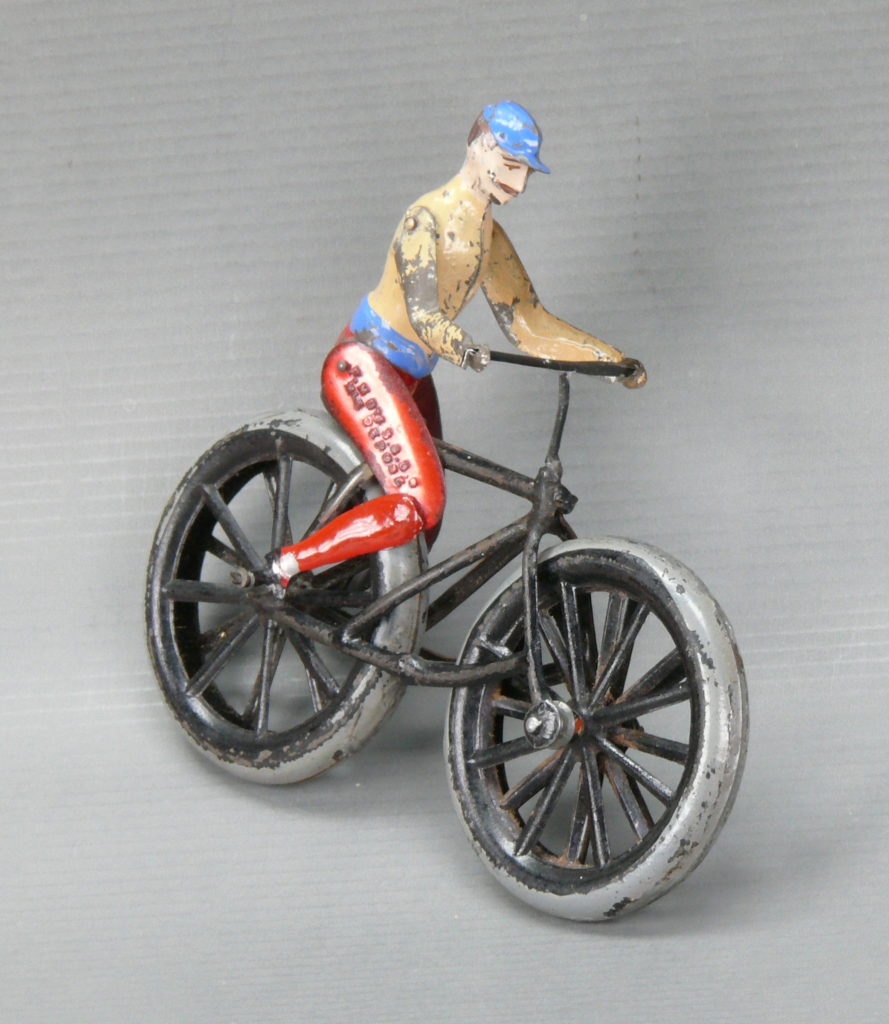
Fernand Martin has used almost the same man on several toys such as the:
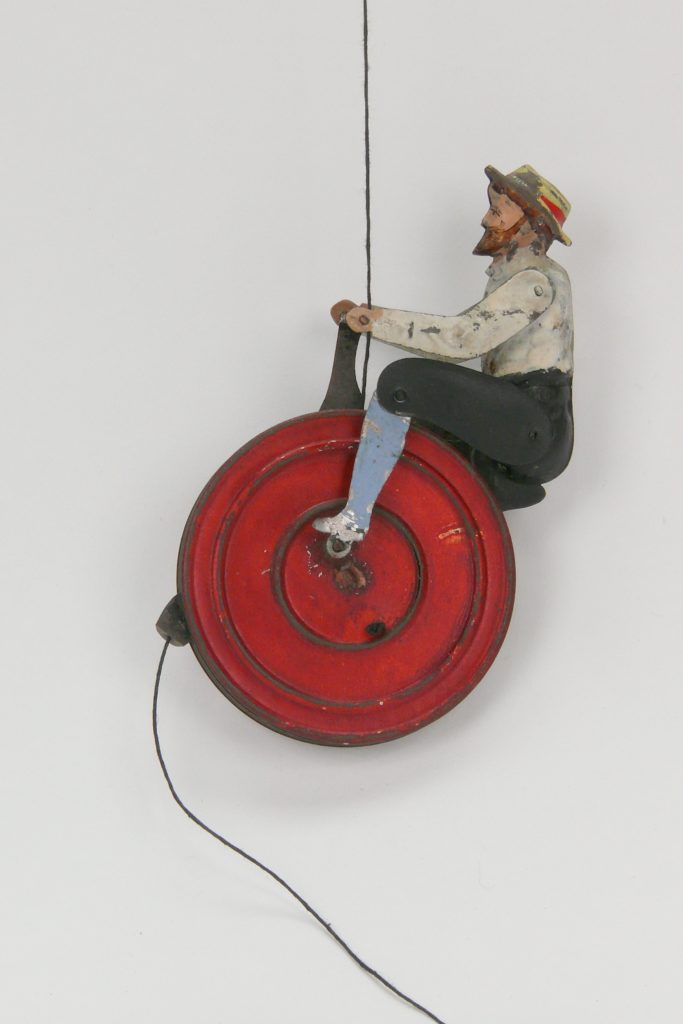
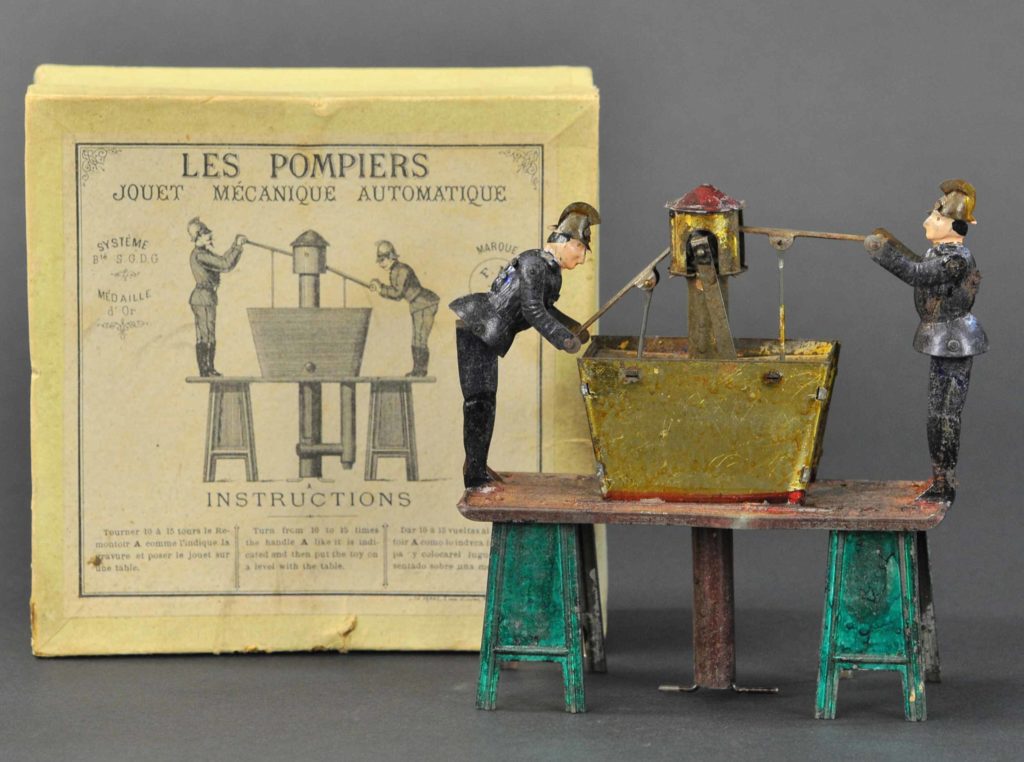
-old number 41, new number 121 -La bicyclette Martin 1892 -156 Le monocycle aérien 1896 -158 La famille vélo 1897 -159 La pompe 1897 -168 Le motocycle (has another hat)1898 So I estimate this unknown toy to be from around 1890 to 1900
Le monocycle aérien 1896 Toy from the collection of the Toy Museum Soltau (“Spielmuseum Soltau”) in Germany
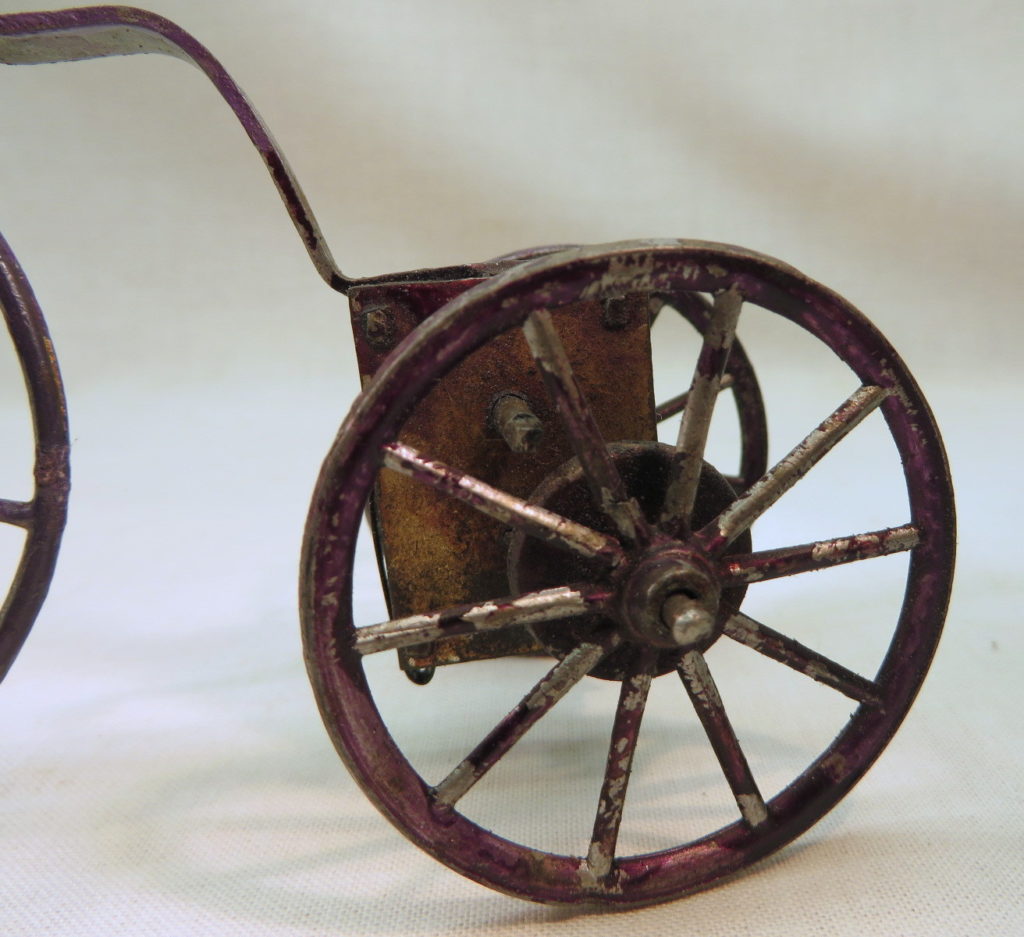
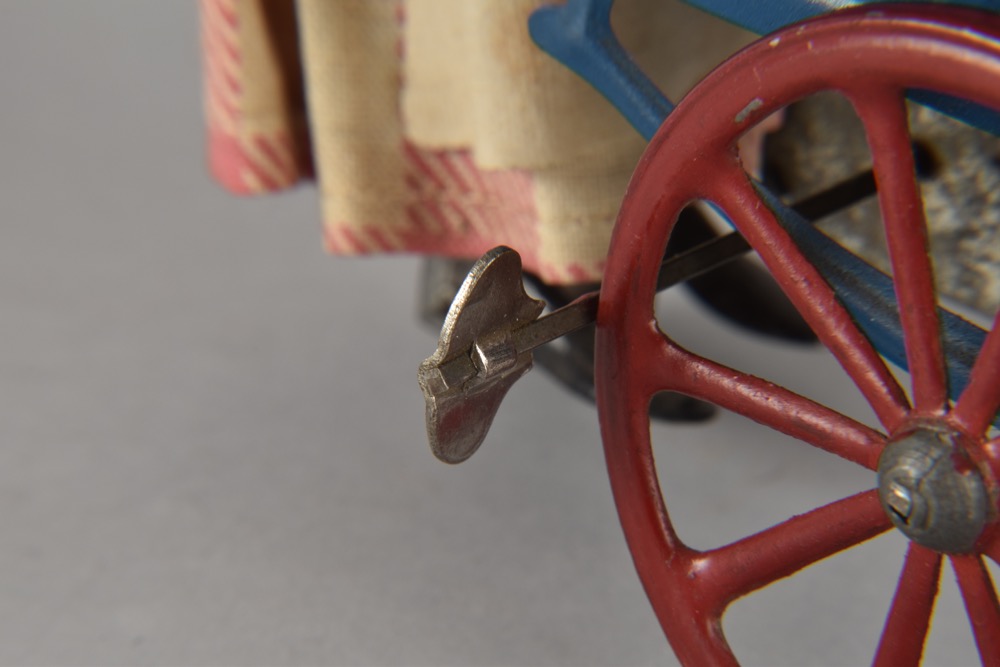
The dimensions are about 13 x 13 cm (5.1 x 5.1 inch) The drive is in the rear wheel and is based on a winding mechanism with a separate key, which was quite rare for Martin in that period. The key must be inserted between the spokes in the winding mechanism and turned up.
rear wheel with winding mechanism with a separate key
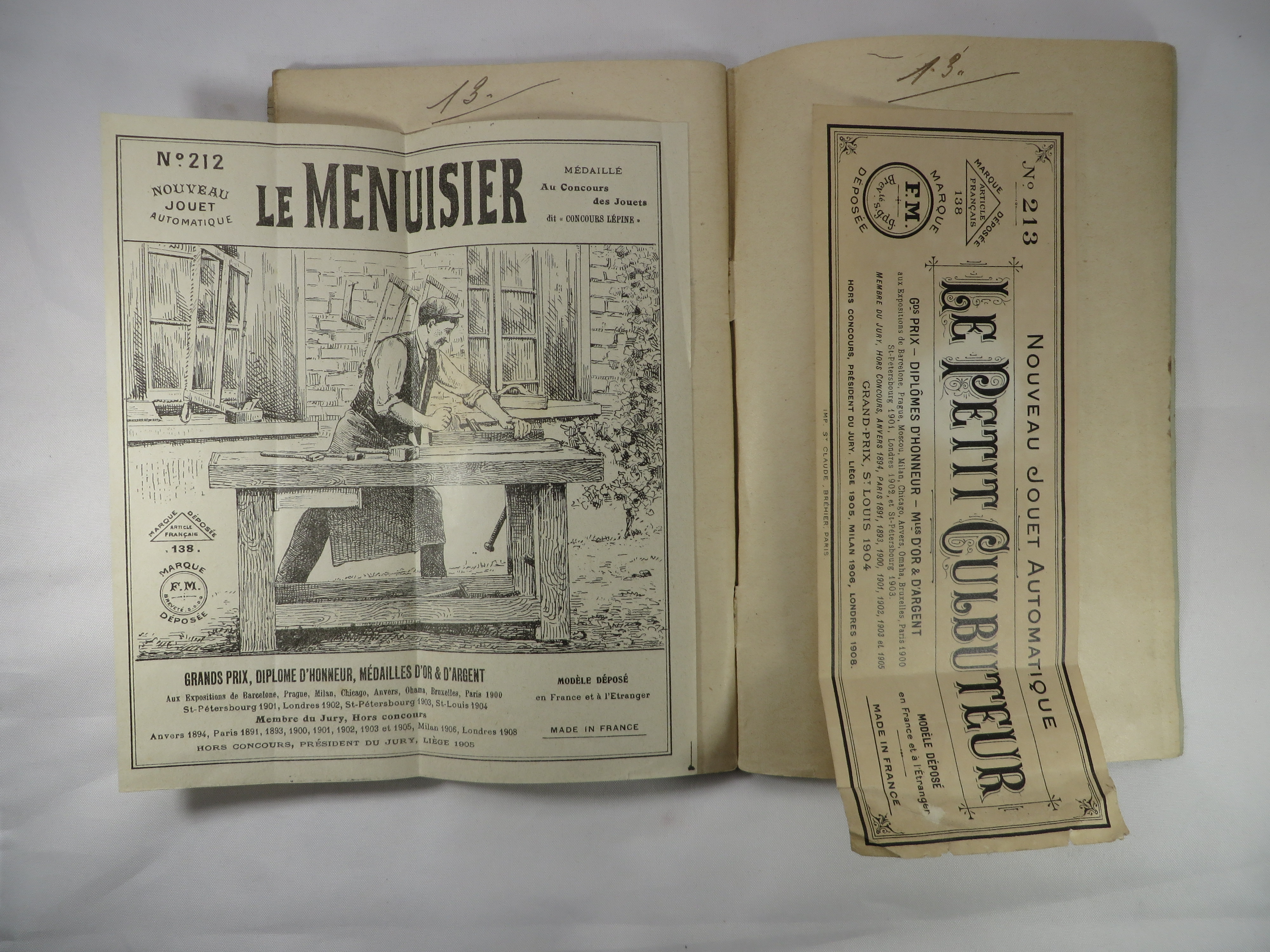
In the last years of the 19th century, Martin was due for replacement of the “rubber band” mechanism and the “flywheel” mechanism and was therefore probably experimenting with various mechanical windings. -Use the wheel as a key, see number 162 Les Boeufs and number 168 Le motocycle -A mechanism with a separate key. The only model with a separate key and made by Fernand Martin, is one in the second Martin period and that is the: Le petit colbuteur from 1908 with number 213. Martin’s successor Victor Bonnet often used the separate key. -A mechanism with a fixed key In the end he opted for a mechanism with a fixed key and used this for his “Bonshommes” models and very rarely deviated from that.
Hard to see but marked on one leg with: FM Bt. S.G.D.G. MRe DÉPOSÉE
Because this is an unknown toy, it must be carefully checked. This piece is first well checked with UV light to determine if this is old or new paint and if there are any younger paint repairs. It has turned out that it is original old paint and that there are no “touch ups” or repairs. But in consultation with a Dutch leading restoration agency, I have decided not to do any further profound research, such as a pigments test, because this is very expensive. An analysis of each paint sample must then be done. And there is another problem, the pigments that were used at the end of the 19th century can also be found in the 20th century. Even today, these older pigments are used. For example, the restoration agency can imagine that the white color could still be “lead white” that had been in use since the Middle Ages, but it could also be “zinc white” that was used from the end of the 19th century but is still being used today. The tricycle itself is painted with “peinture à l’alcool” this is an alcohol-based paint and was extremely popular at the end of the 19th century and used by many French and German toy manufacturers of that time, but again it is still used today. Fortunately, it is possible to discover with a UV lamp whether paint with old pigments were used at a later stage.
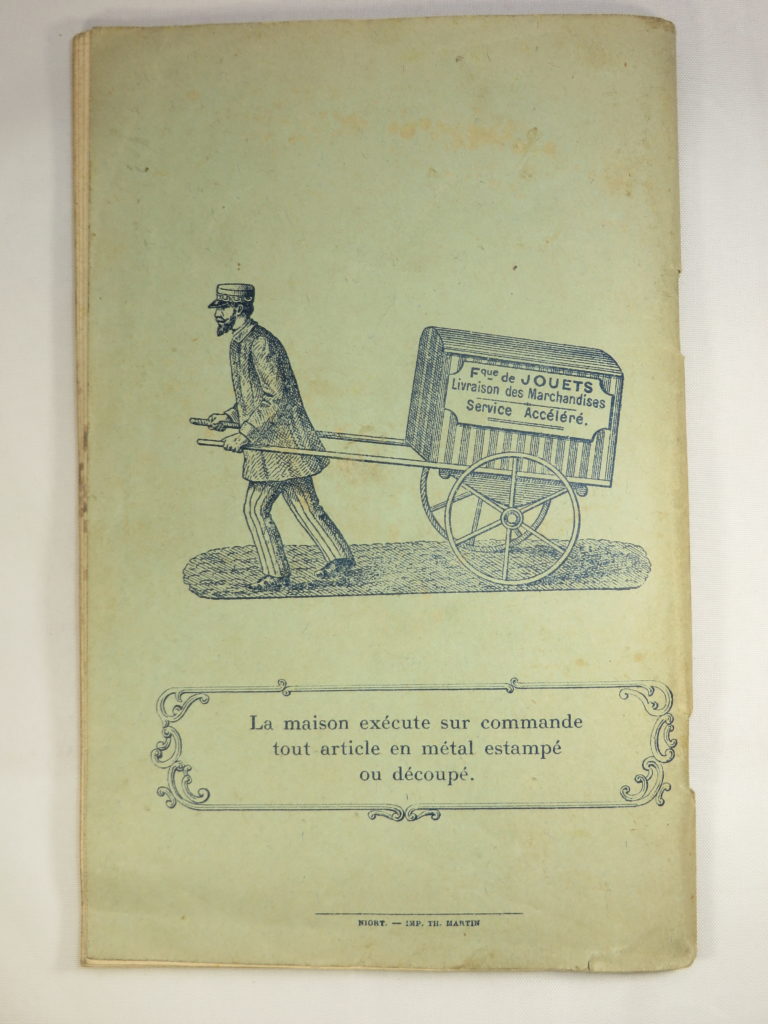
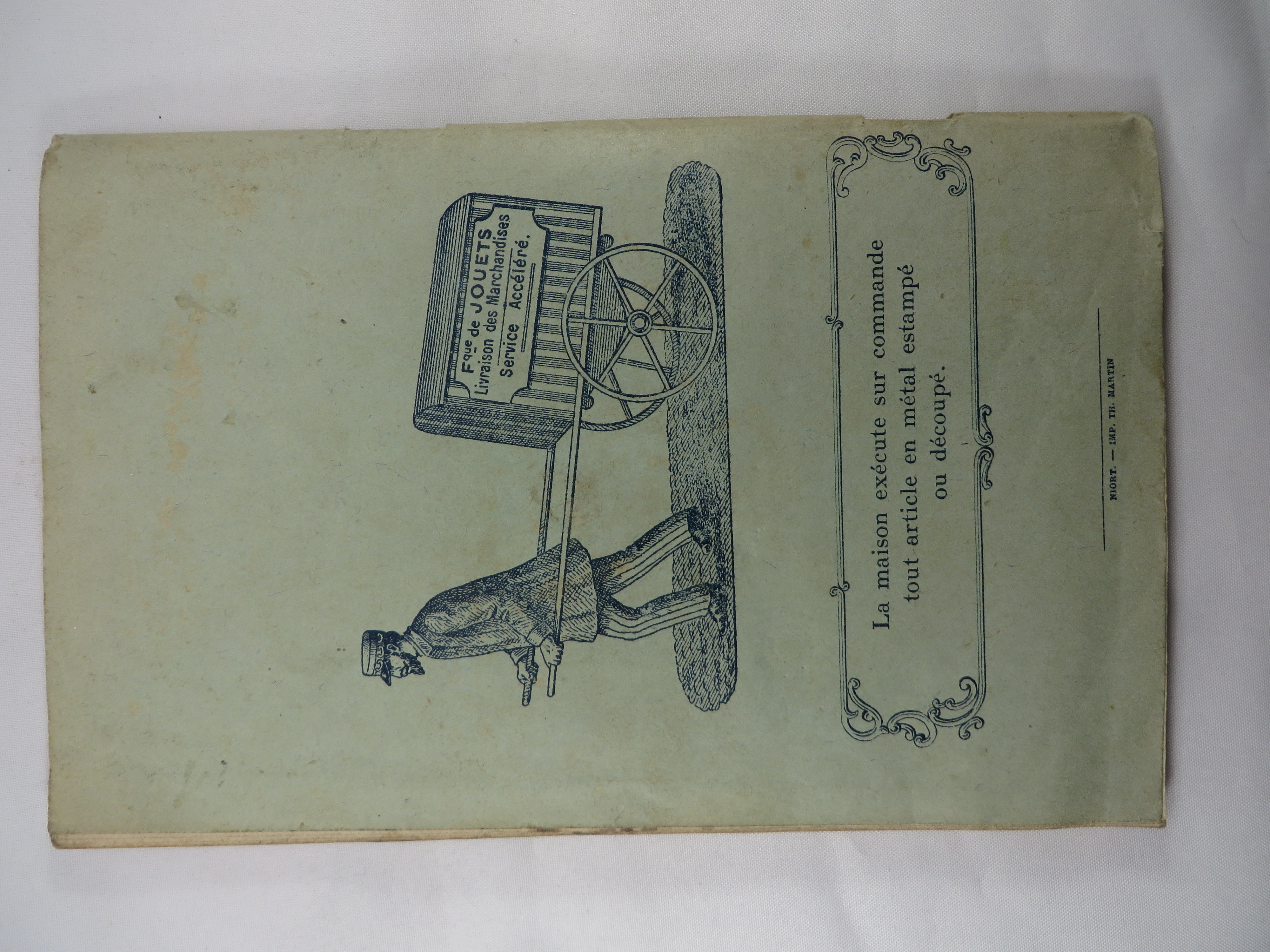
Till now this toy is nowhere to be found in old catalogs or documented in any other way. Fernand Martin was always busy designing new toys and it could have been an prototype by Fernand Martin. Or probably this is a toy that is made on “special request” and not in normal production. Martin has done this before and advertised on the back of his catalogs.
That Martin made these “specials” is also indicated in an article that is published in the March 2018 issue of the Antique Toy World Magazine and written by Renaud Fournier. We see an inscription on the back cover of the 1898 Fernand Martin catalog which states that the Martin company “executions, based on orders, all articles in stamped or cut metal ” In other words, the Martin toy company would execute special orders that were not necessarily part of their regular production runs. Read the complete article in the March 2018 issue of Antique Toy World Magazine.
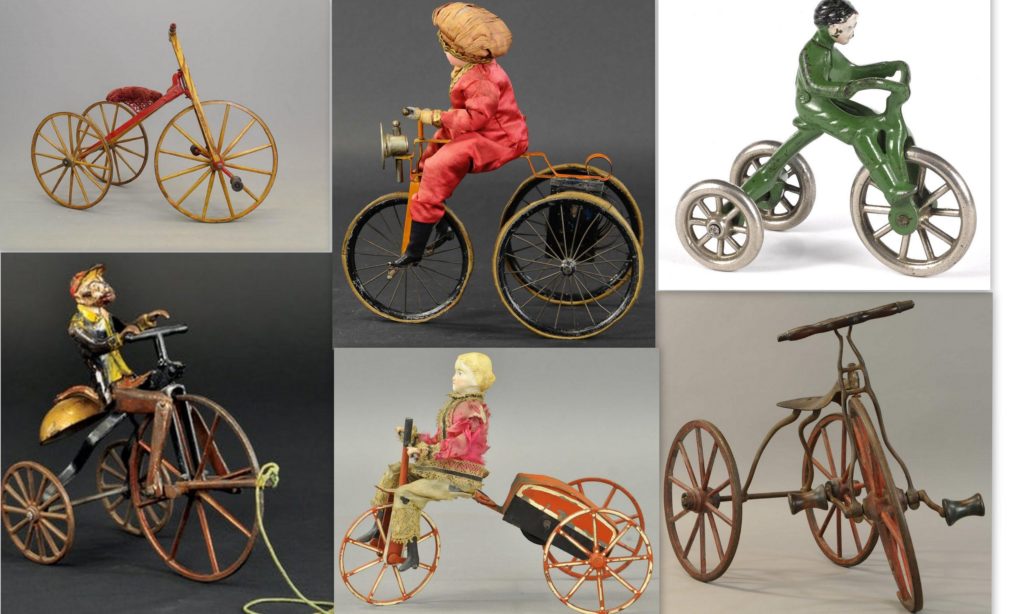
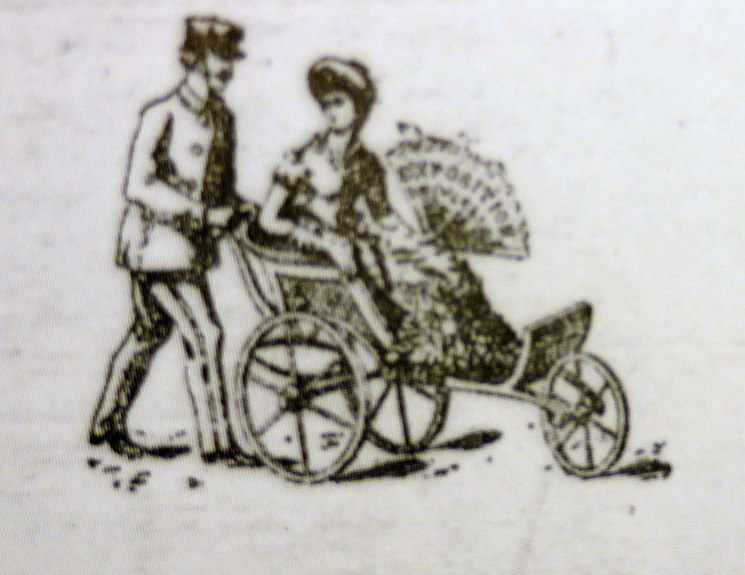
This model of tricycles was quite popular in the late 19th century and especially with women because of their clothing at that time and with older men who did not trust the stability of the bicycles at the time. Also in the toy industry this did not go unnoticed and they produced various toy models for the children to play and children’s tricycles on which the children could sit and propped with pedals in the front wheel. The current tricycles for children still resemble the 19th century version with the front wheel drive.
courtesy Michael Bartoia auctions
For this tinplate tricycle there are a few possibilities: -It could be a unknown Martin maybe one of the missing Martin numbers 144 -145 or 146 ? -Made as a special assignment. -As a prototype exemple. If there are collectors somewhere who have seen this toy somewhere else before or know more about this toy, please contact me.
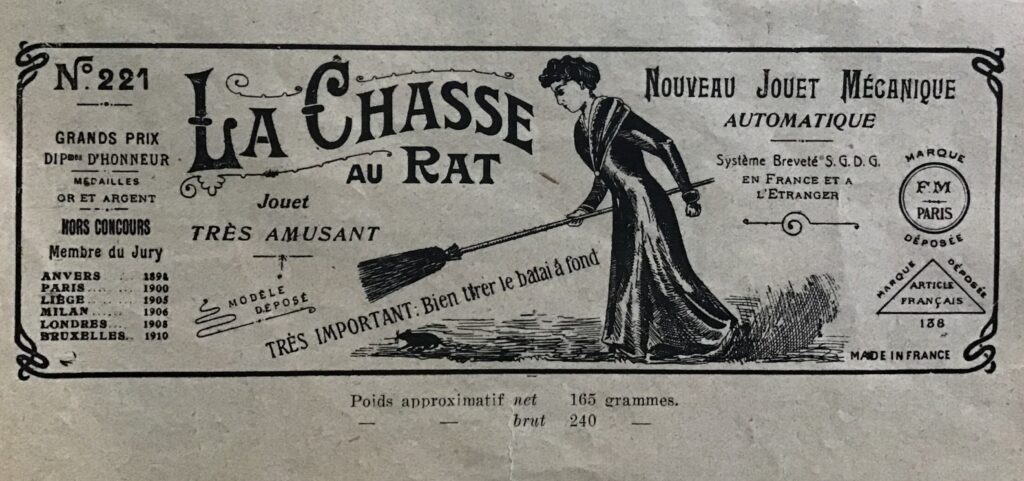
This beautiful toy was produced from 1910 Fernand Martin number 221
It was one of the many “Bonshommes” that Martin produced and with which he had a huge success. Martin was always on his way with his photo camera to photograph people in their daily activities and to design a nice toy from it.
Source La Nature: (Cnum – Digital Conservatory of Arts and Crafts – http://cnum.cnam.fr)
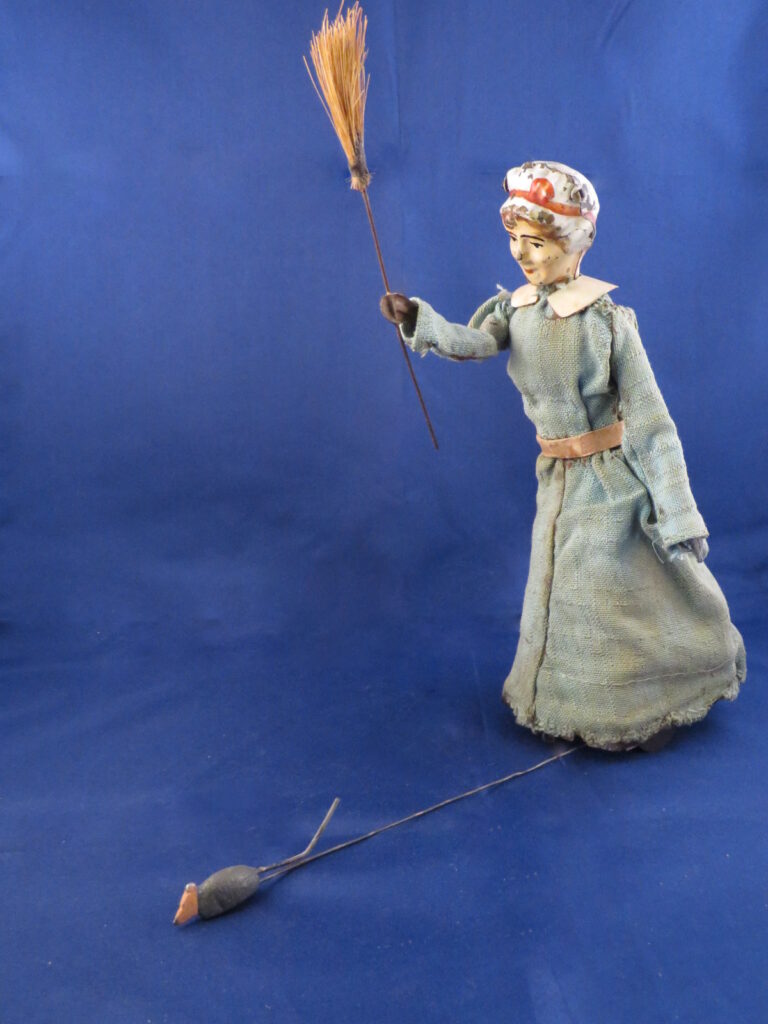
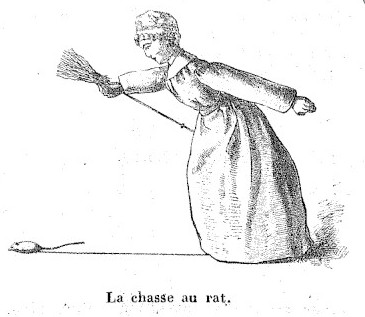
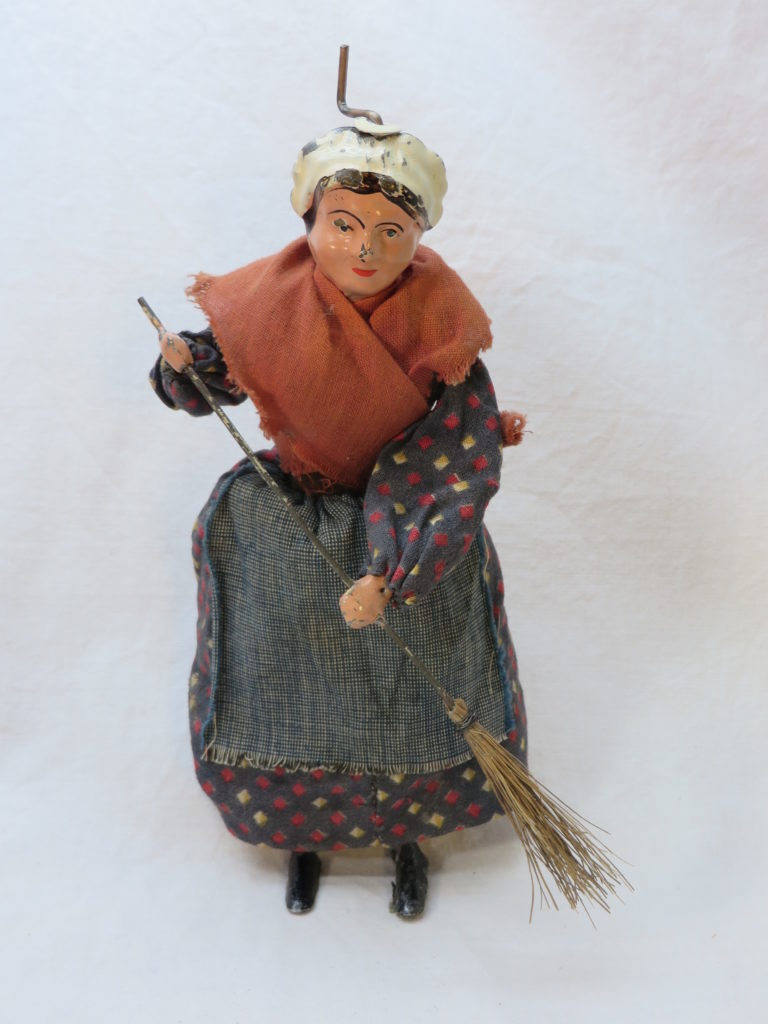
This figure represents a housekeeper who goes after a rat to chase him away. The movement is also fantastic, after winding up the female rises and bends down again to hit the rat with her broom, the rat also moves forward and back.
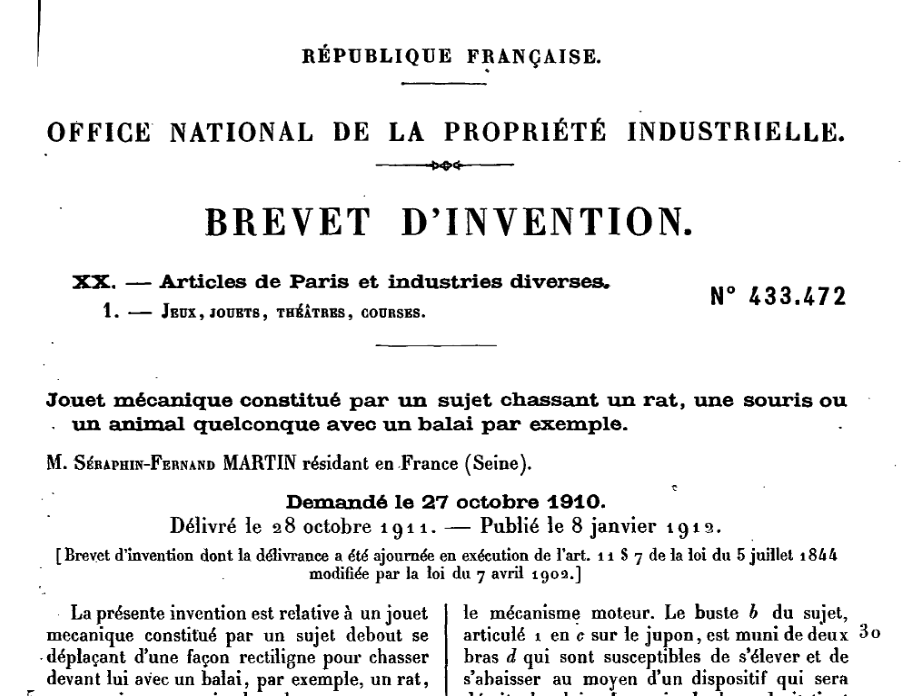
Martin has applied for a patent under number 433.472 with the name: Mechanical toy consisting of a person chasing a rat, a mouse or another animal with a broom for example. The application took place on October 27, 1910 Issued on October 28, 1911 Published on January 8, 1912
Free translation from French of part of the patent text: The present invention relates to a mechanical toy consisting of an upright subject moving in a linear fashion to hunt for him with a broom, for example a rat, a mouse or an animal. This mechanical toy, driven by the return loop of a spring, comprises a crankshaft that moves a connecting rod that moves the upper part of the subject so that, under the influence of the rods present, it moves up and down and alternates its broom on the rat. beats who runs ahead of her. This rat is connected by a stiff metal wire and a lever on a pendulum that gives this animal a little back and forth movement.
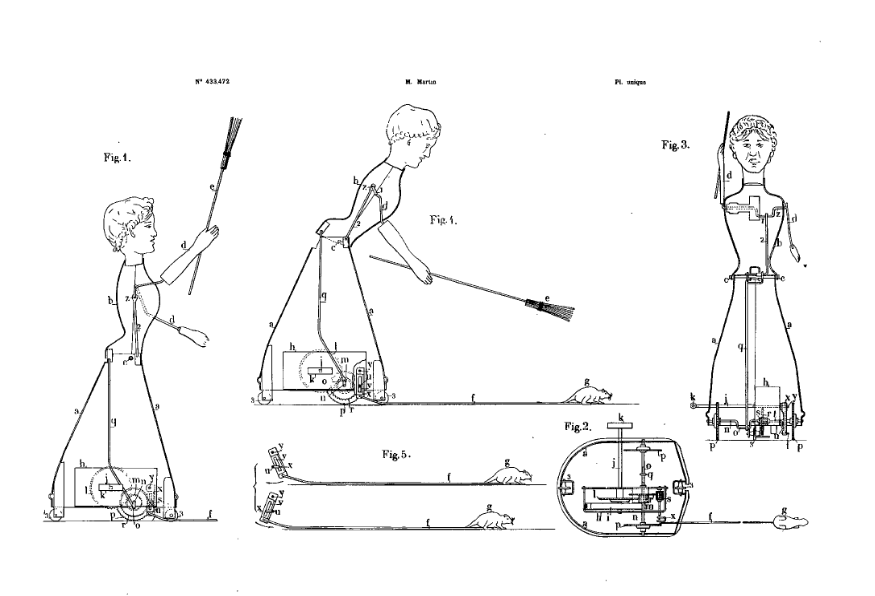
An invention with reference to the accompanying drawing in which: FIG. 1 represents this side toy; FIG. 2 is a bottom view; FIG. 3 is a front view in section; FIG. 4 is a section; FIG. 5 shows the movement from the rod to the rat.
As can be seen in these drawings, the toy in question preferably represents a standing woman wearing a sturdy petticoat.
After selling the Martin factory in 1912 to Georges Flersheim, Flersheim was the owner of all the patents and registered these patents in the register of the Paris industrial tribunal. This La Chasse au Rat was deposited on June 12, 1912 at the secretariat of the Paris industrial tribunal under number 3547
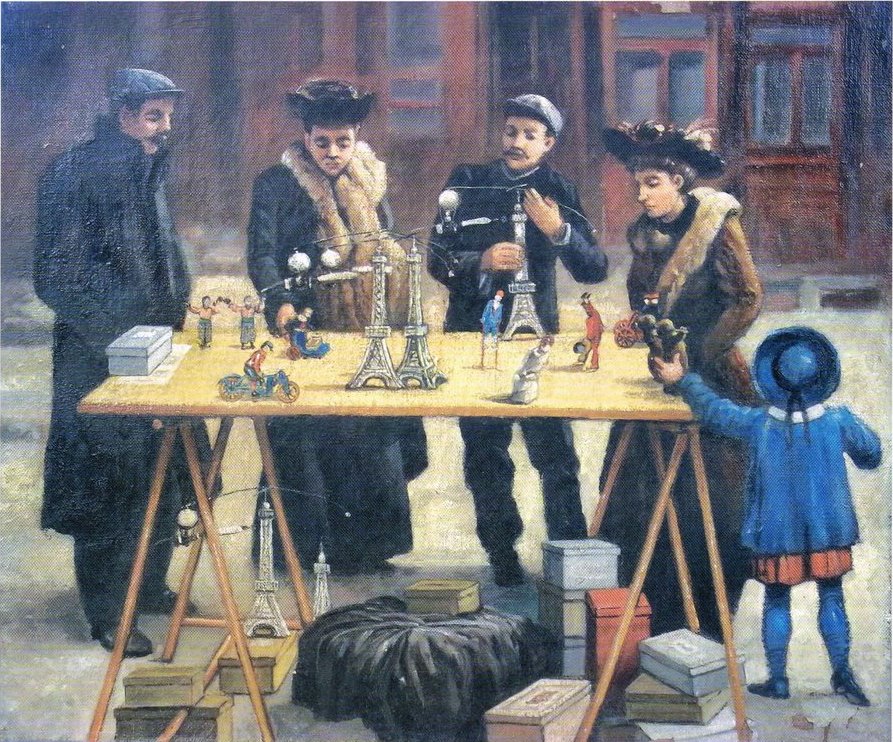
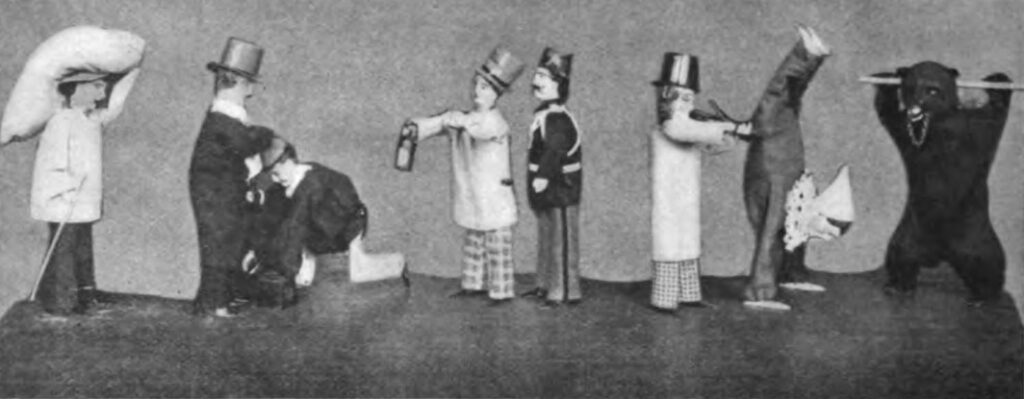
I found an very nice picture of a oil painting from around 1912 with a number of Martins on it.
It is a typical street vendor from that time, who has postponed his goods The painting was sold at a French auction a few years ago. Dimensions 46 x 38.5 cm
From left to right you can clearly see next Martins: -L’hercule populaire from 1904 -Le petit Livreur from 1911 -La course en sac from 1906 -Le clown from 1902 -L’ours Martin from 1903
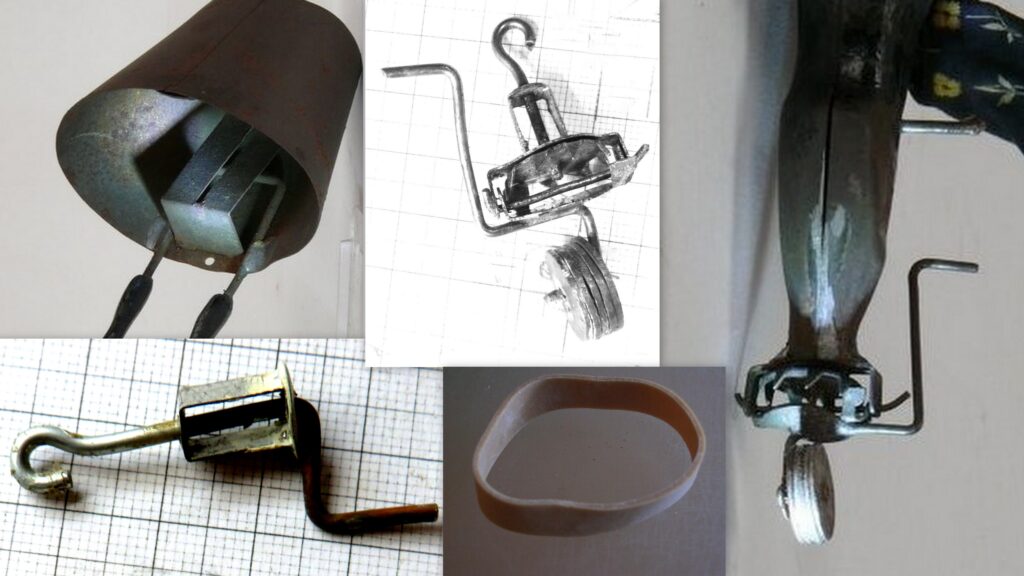
In the early days Martin used a rubber band (elastic) as the drive. By turning it on, the toy started to move. The system consists mainly of a crank, a rubber band and a movement mechanism. The drive mechanism was adjusted for each toy, such as up and down, right, left, spinning etc.
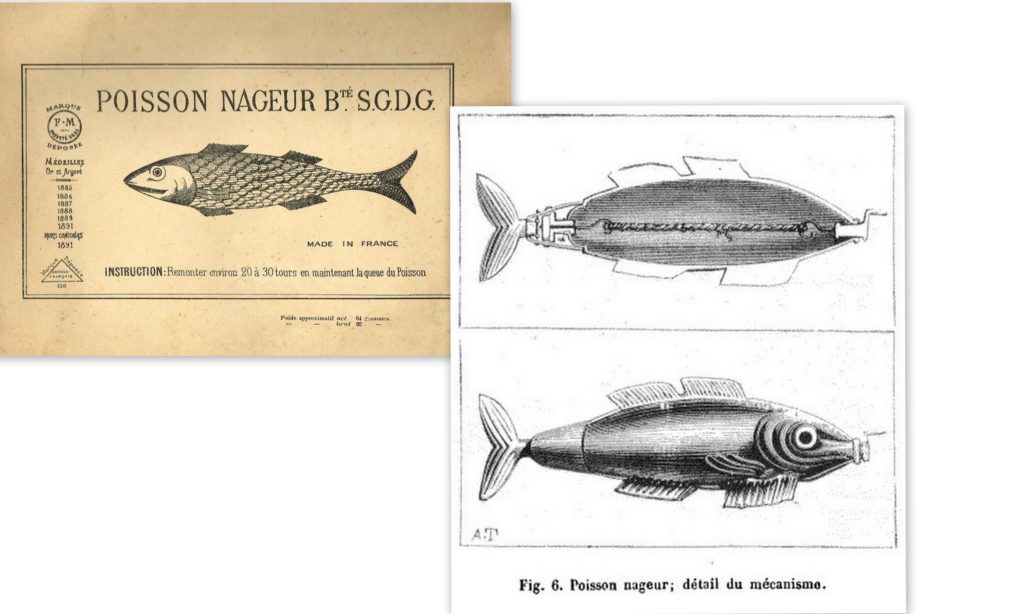
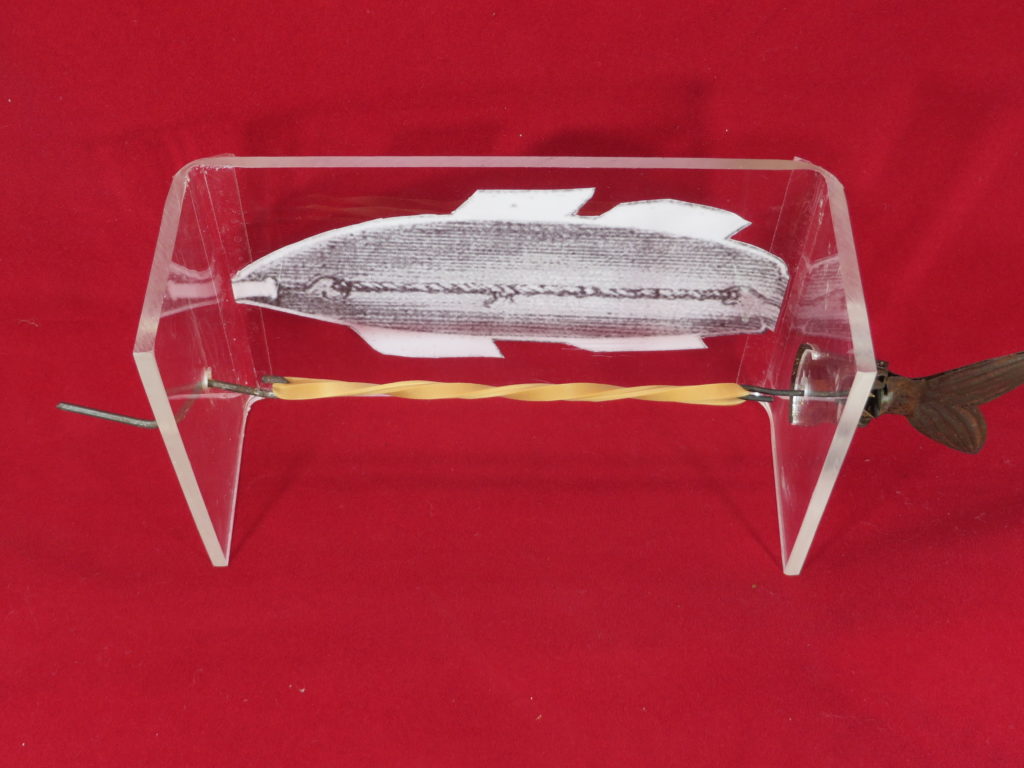
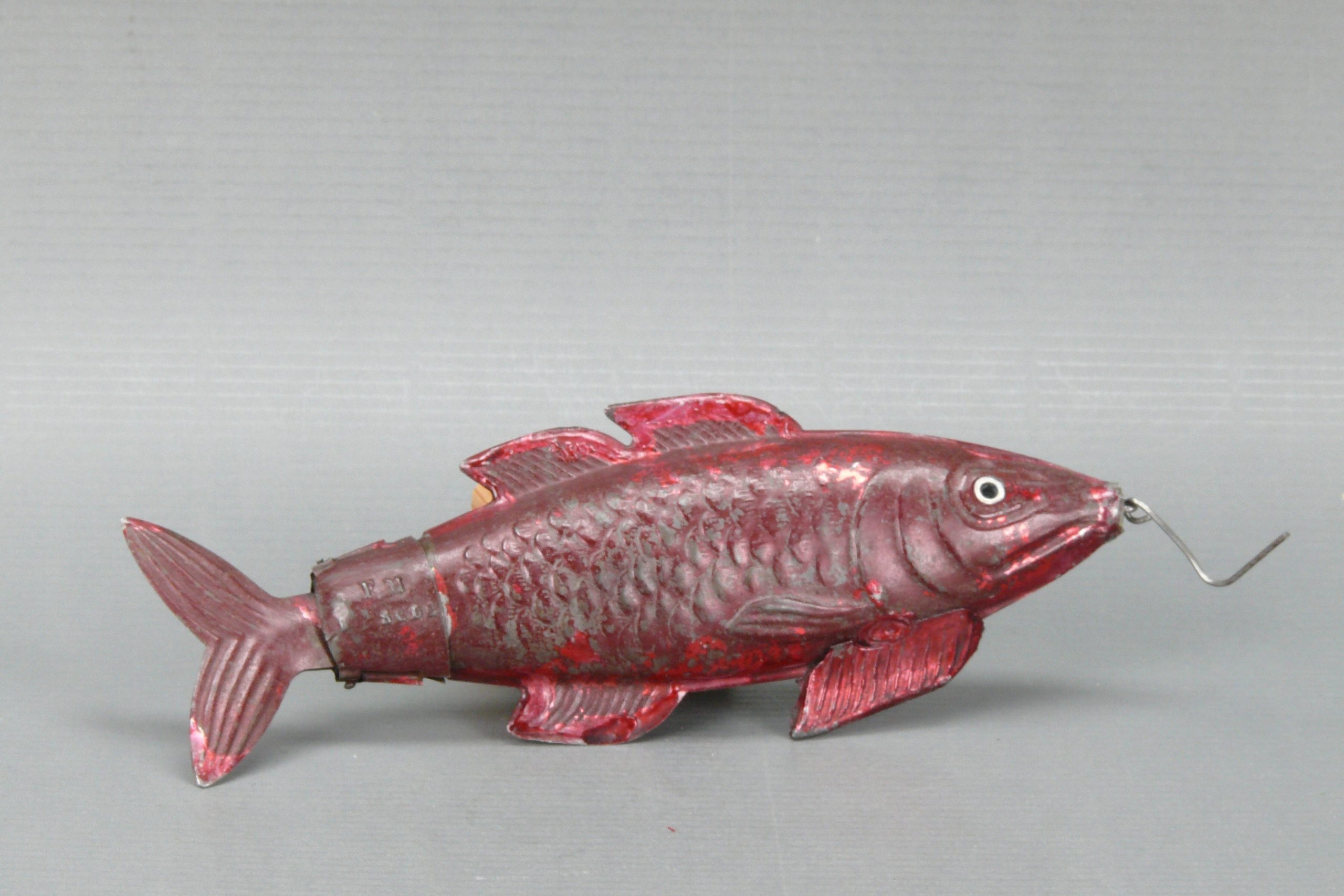
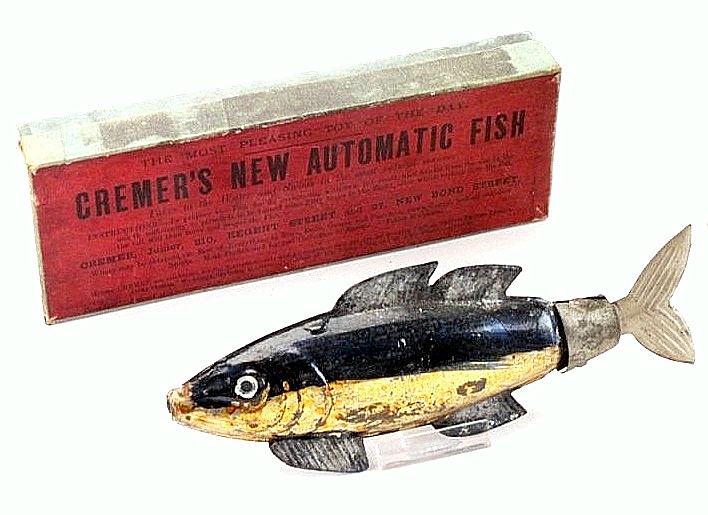
As an example, the first piece of Martin: the fish from 1878 Poisson Nageur
Drawing Source La Nature : (Cnum – Digital Conservatory of Arts and Crafts – http://cnum.cnam.fr) Catalog page from my personal collection
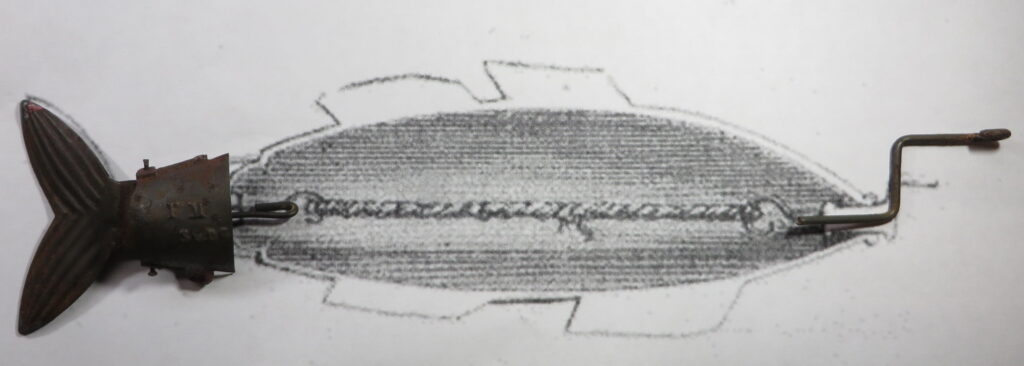
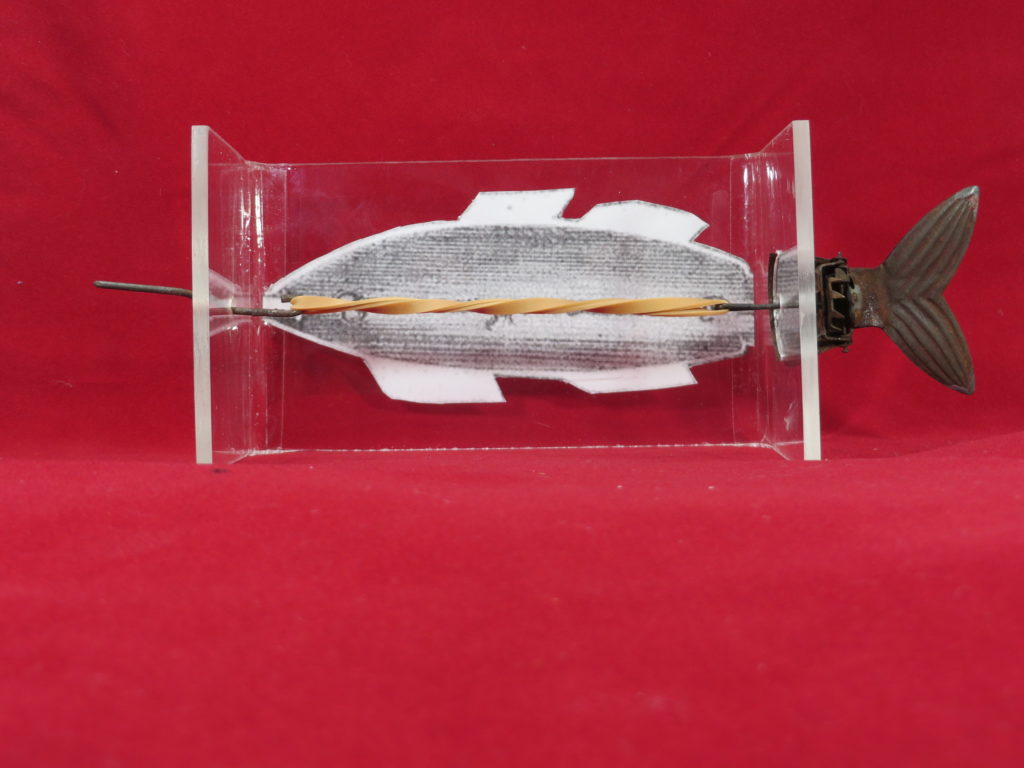
The crank is in the nose, inside the fish is the rubber band and the mechanism is on the tail.
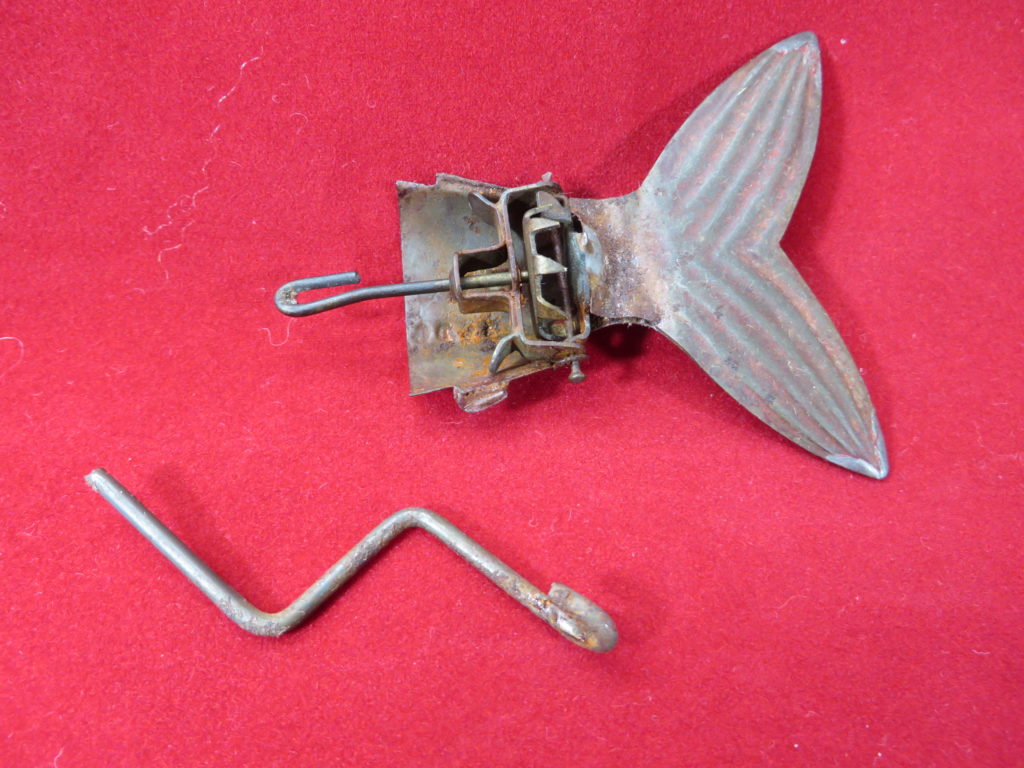
Parts: between the both hooks coms the rubber band, see below
This demo model is made with an original crank and the mechanism with the tail.
In this demo model you can see clearly the mechanism in operation, By turning the crank and hold the tail, the rubber band is tightened (twisted) The other side of the rubber band is hooked onto the movement mechanism, the tail. When you release the tail again, the tail swings from right to left so that the illusion of swimming is simulated. Simple but effective.
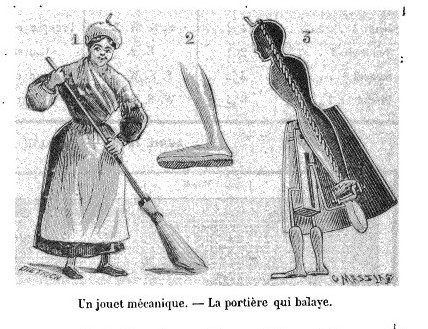
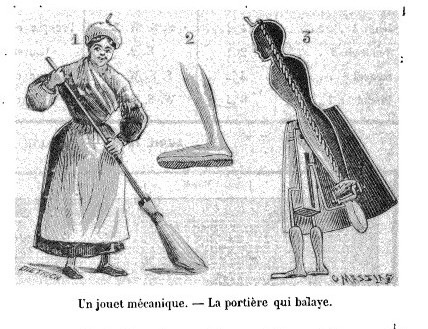
Another exemple The “Ma Portière” from 1895 > Source La Nature : (Cnum – Digital Conservatory of Arts and Crafts – http://cnum.cnam.fr)
In this example of the “Ma Portière” the upper body and the broom moves from left to right, the same movement as the tail of the fish “Poisson Nageur”, the crank is on top of the head.
The only drawback is that the rubber band can age and then break quickly. If it breaks, the hook and mechanism will fall off and mostly get lost.
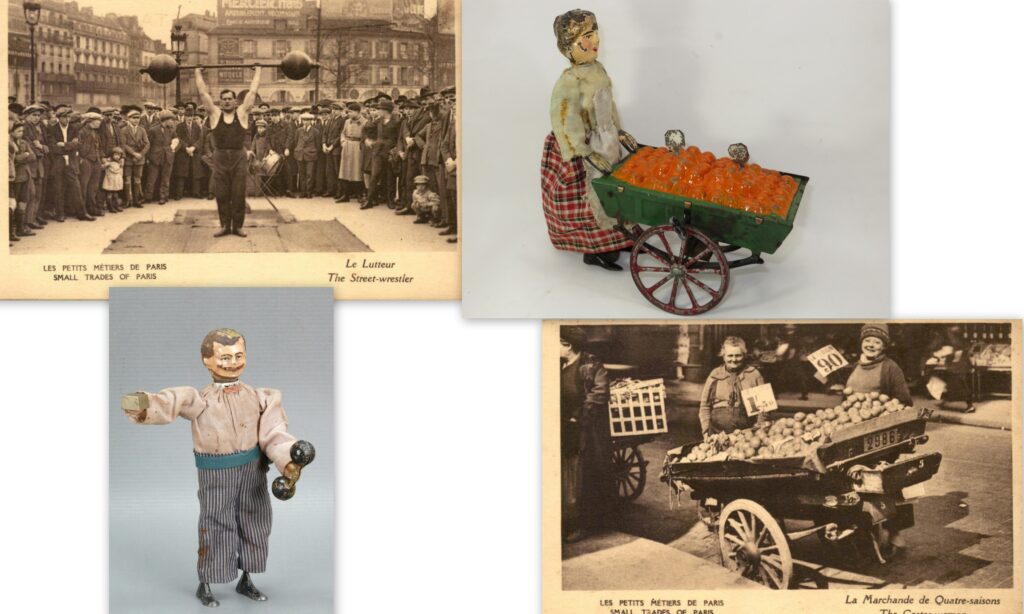
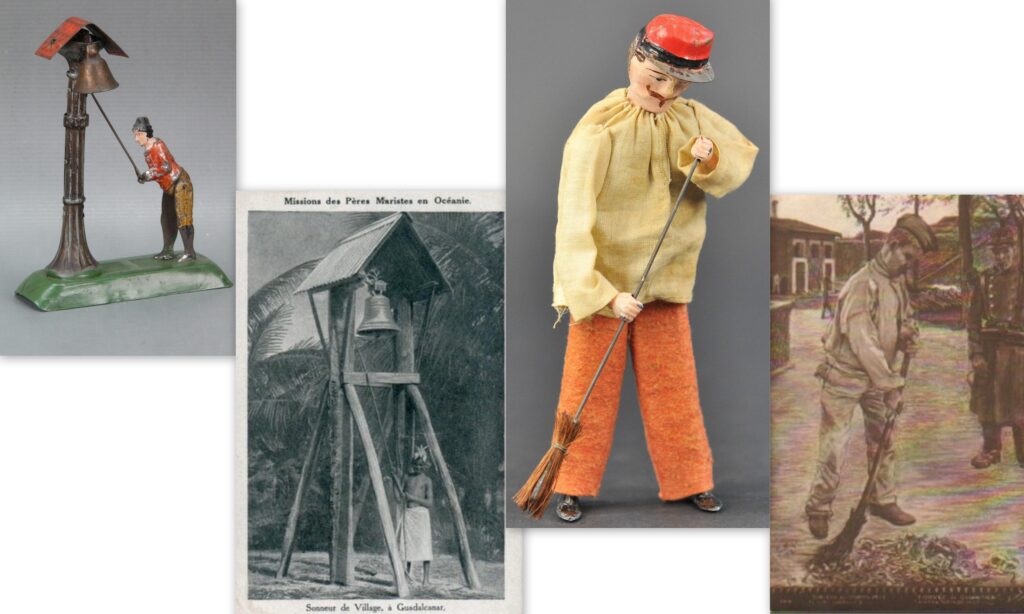
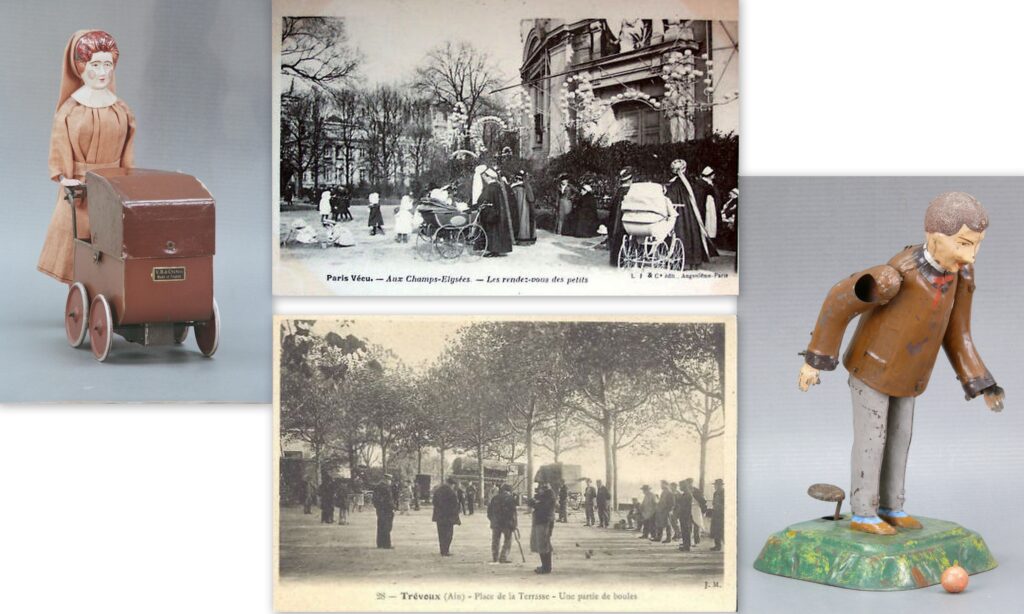
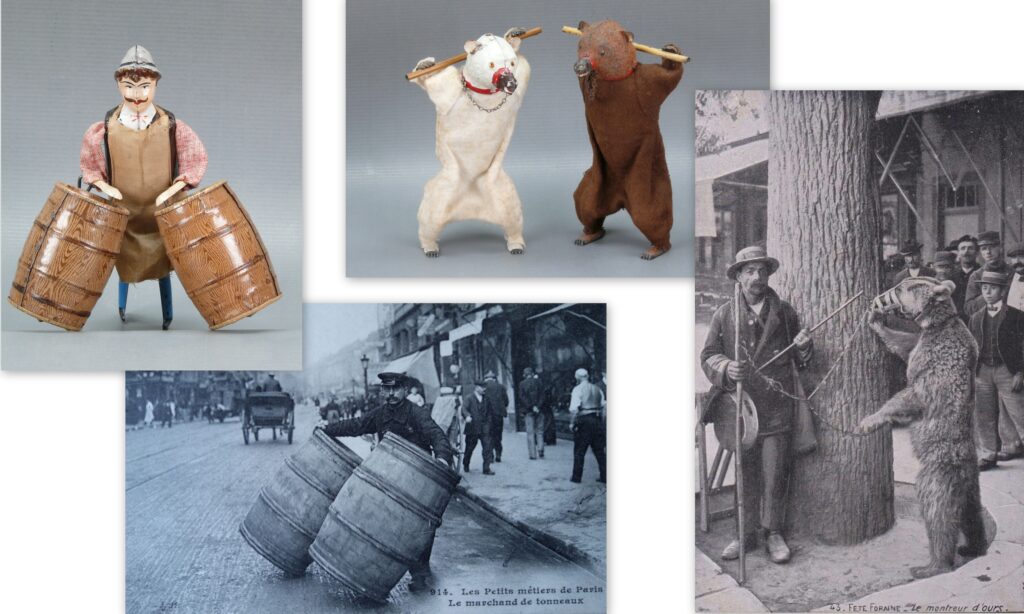
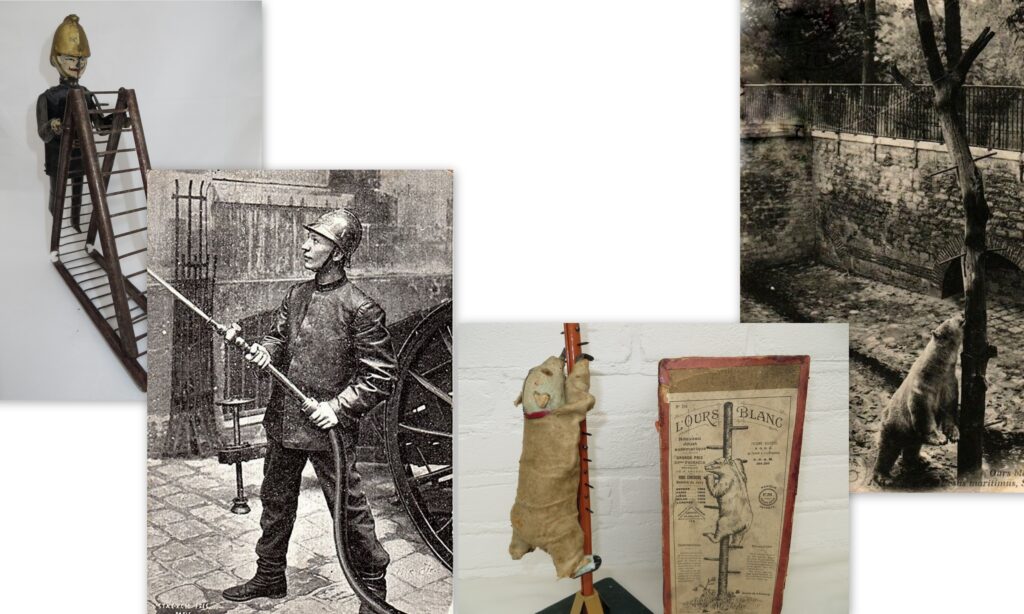
Where did Martin, Flersheim and Bonnet get many of their ideas?
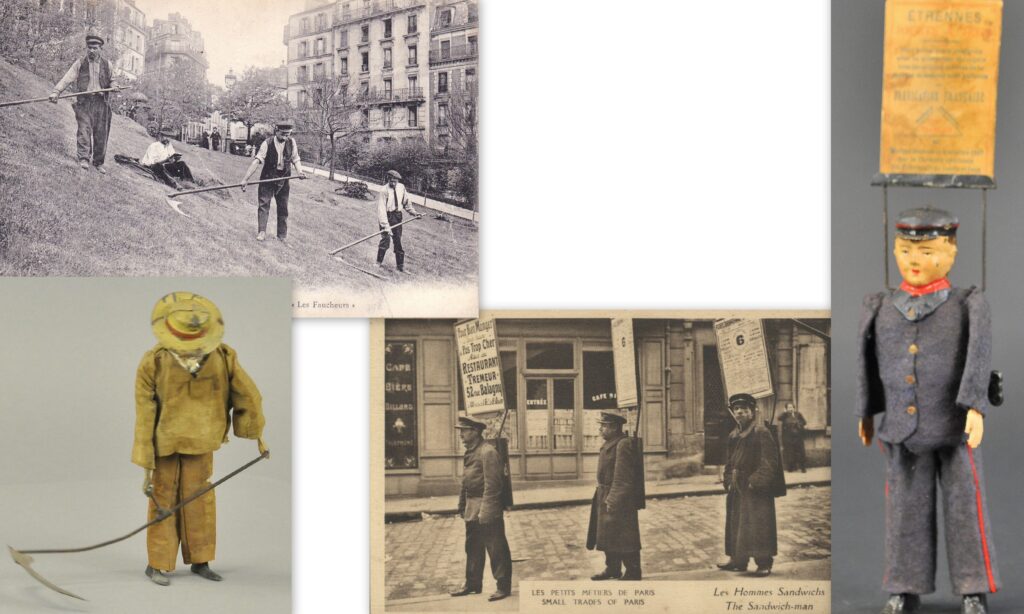
A compilation of Martin, Flersheim and Bonnet toys with authentic postcards from the end of the 19th century and early 20th century. These postcards and pictures have images of everyday street life from that time. Martin, Flersheim and Bonnet have gained many ideas for there “Bonshommes” in daily street life but also during travels and probably also from magazines, postcards and newspapers.
Pictures from the toys: Courtesy of Toy Museum Soltau (“Spielmuseum Soltau”) in Germany, Bertoia Auctions and my own collection
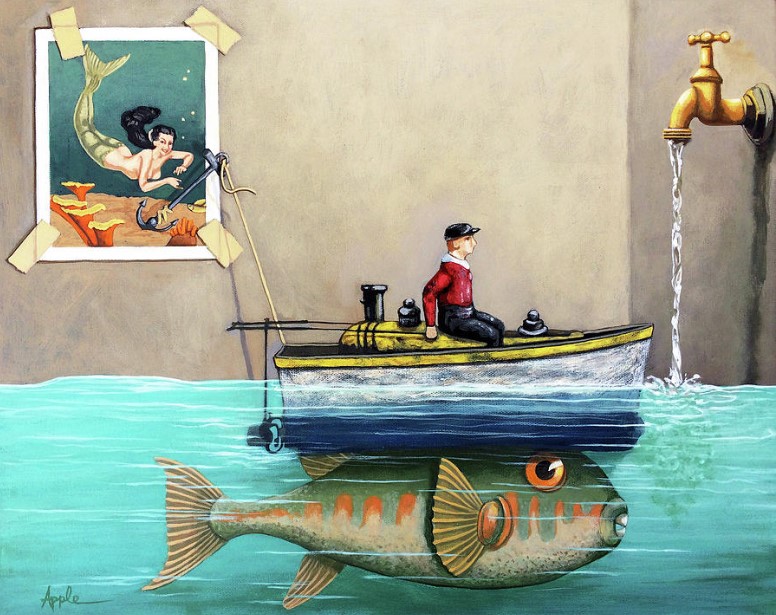
TITEL: Anyfin Is Possible – Fisherman toy boat and Mermaid whimsical storyteller still life
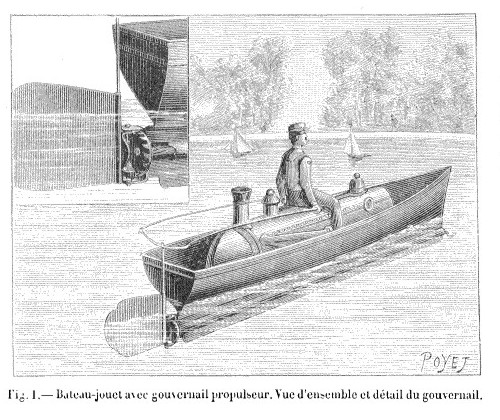
The very rare boat on this picture is made by Fernand Martin and first produced in 1893 The name is: LA CHALOUPE A VAPEUR. The length is 27.5 cm (10.63) inches
This very rare model lacks the steering and drive. On display in the Toy Museum Soltau (“Spielmuseum Soltau”) in Germany Image courtesy of Bertoia Auctions
The boat normally has a “rubber band” drive, but if the “rubber band” breaks the mechanism will fall apart and get lost very easily. The winding handle is at the front of the tip of the boat, the “rubber band” goes through the type of pipe at the bottom of the boat to the rear, there is the mechanism to convert the rotating movement into a pendulum movement. This pendulum movement is transmitted to the rudder and to the two rods that run to the arms. It then seems as if the man himself steered the boat by the arm movements.
Drawing from the magazine “La Nature 1894” Source: (Cnum – Digital Conservatory of Arts and Crafts – http://cnum.cnam.fr)
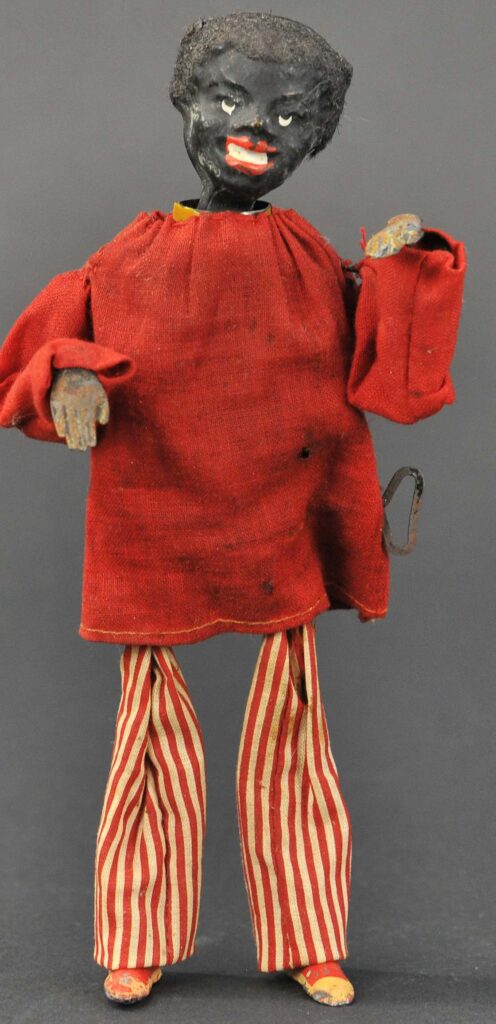
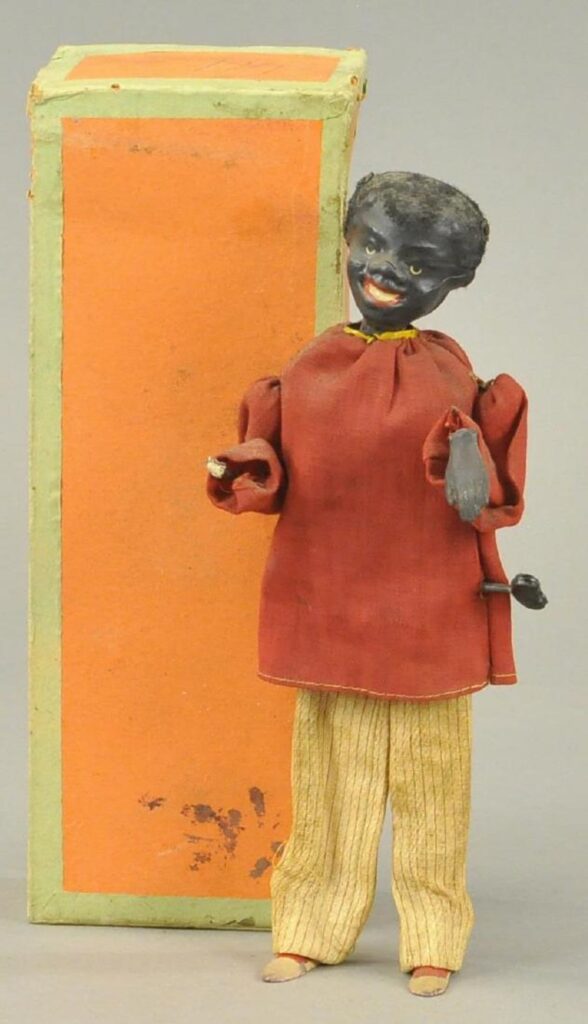
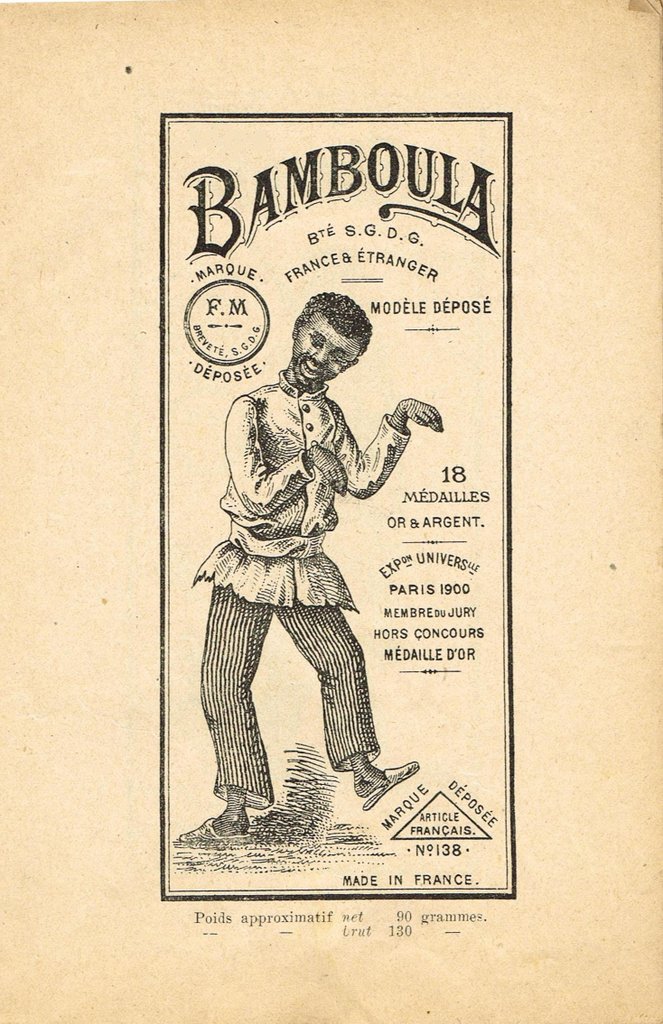
The Bamboula is the representation of a dancing black person from 1901. Martin article number 179 The height of this figure is 20 cm (7,8 inch), after winding his body waggles from left to right and his arms moving up and down. This “Bamboula” dance form dates back a long time
Both images courtesy Bertoia Auctions
The first figure is produced by George Flersheim and the other one by Fernand Martin, recognizable by the shape of the keys
A peace of history:
The bamboula, from the Bantulanguages of central and southern Africa, is derived from kam-bumbuluand ba m’bula, meaning a drum fashioned from a section of giant bamboo with skin stretched over it, as well as the rhythmic danceaccompanied by music from these drums.
Originally from Africa and although today is said to be related to the African Bomba from Puerto Rico. The bamboula shape appears in a Haitian song in 1757 and made its way to New Orleans even before the 1791 slave revolt. The bamboula became a dance performed to the beat of the drums, usually during festivals, celebrations and ceremonies. The Haitian Revolution (1791–1804) was a slave revolt in the then French colony of Saint-Domingue and led to the free black republic of Haiti. At the beginning of the revolution, thousands of Haitian immigrants included many free people of color, whites, and enslaved Africans had fled the colony and a large number of them settled in Louisiana and set up new plantations there. In 1803, Napoleon authorized the “Louisiana Purchase”, leaving a huge area west of the Mississippi in the hands of the United States. The enslaved Africans gathered during festivals, celebrations and ceremonies in New Orleans at the Congo-Square on the edge of the French Quarter area to dance the bamboula together.
1895 Print Bamboula African Slave Dance Drums Black Americana E. W. Kemble Art With tanks to “Period Paper” that I may use this picture
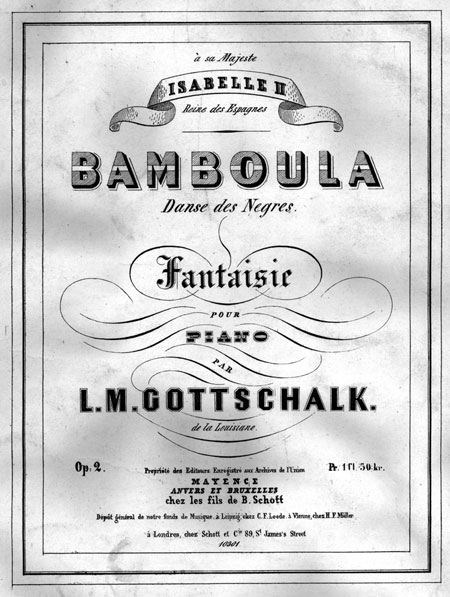
The American composer Louis Moreau Gottschalk, born in New Orleans composed in 1848 a piece for Piano entitled Bamboula “Danse des Negres”.
Sources: From Wikipedia, the free encyclopedia, and tanks to “Period Paper” that I may use the picture from 1895 print.
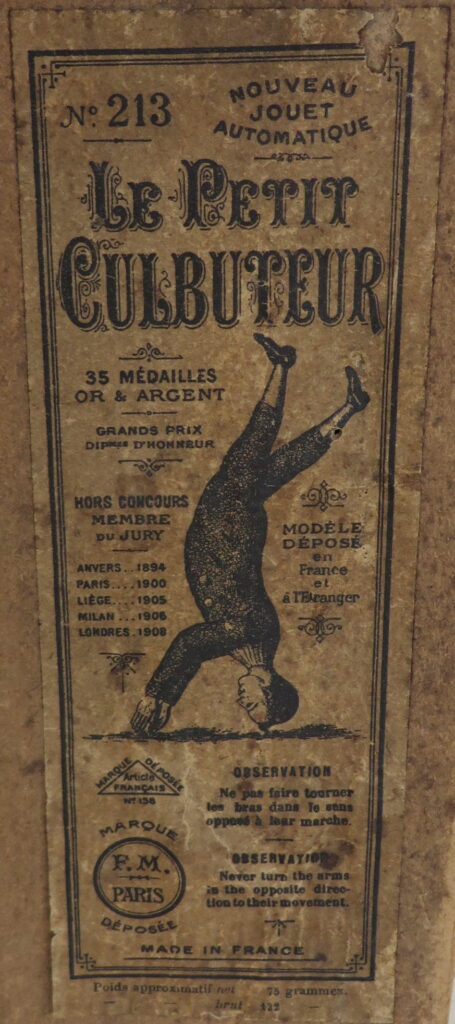
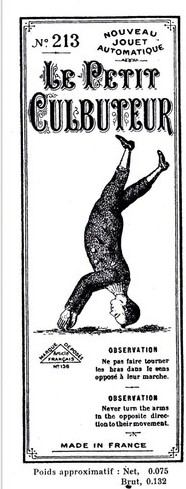
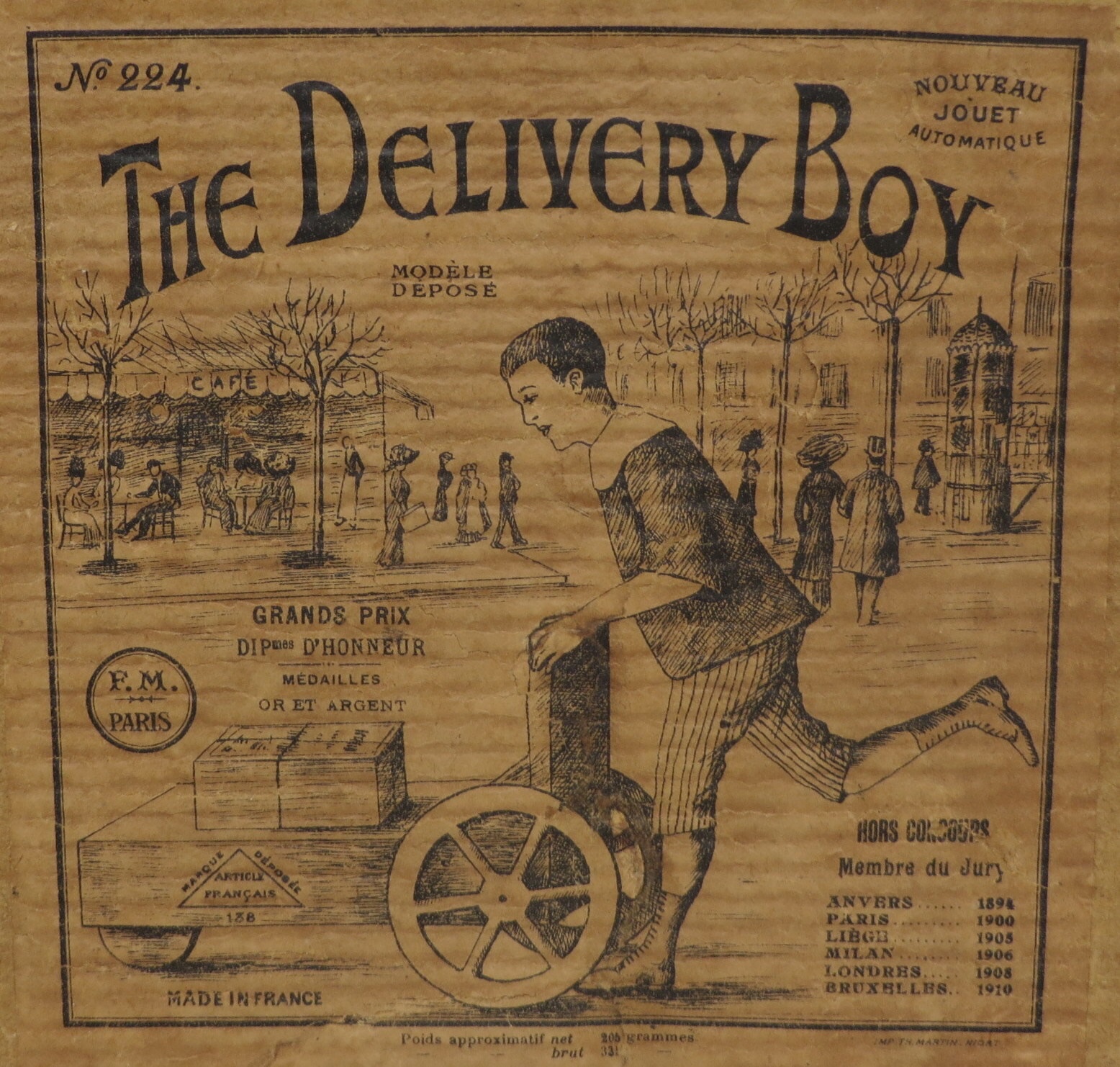
Is it a catalog image or a box label ? Note these images, as you can see there are clear differences between a box label and an image from a catalog.
Original box label from 1908
A Victor Bonnet & Cie catalog image from about 1927 And is this specific image also used as a box label? Maybe, but I don’t know, I haven’t come across an original box with this label yet.
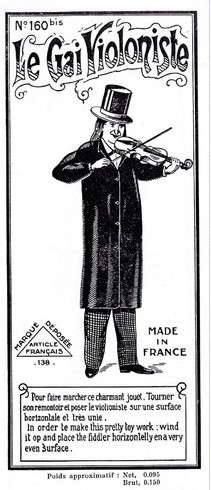
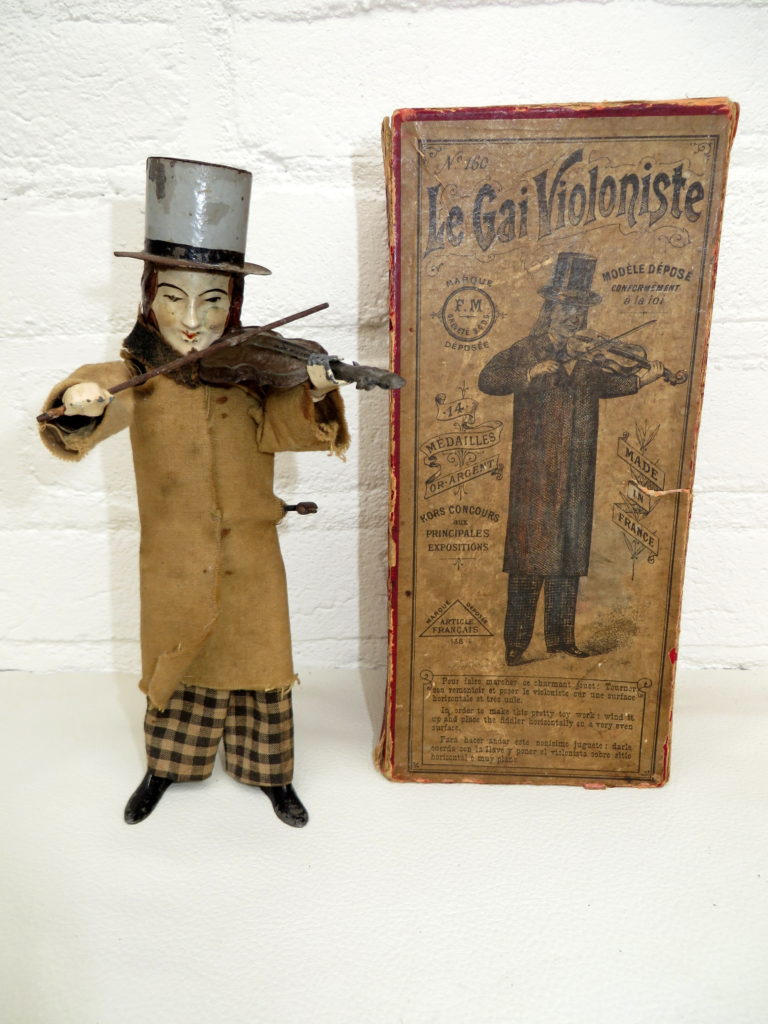
Last time I took the L’Ours Martin, the Le Pochard and the Le Gai Violoniste as an example, now you see the Le Petit Culbuteur as another example of the differences between box label and the catalog image. In the old Martin catalogs the differences are often minimal but in the later Victor Bonnet & Cie catalog the differences are many more larger as this example shows.
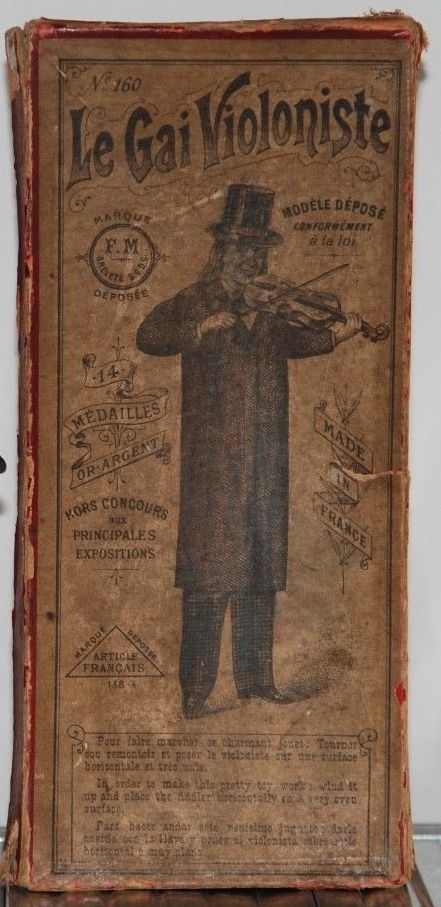
Is it a catalog image or a box label ? Note these images, as you can see there are clear differences between a box label and an image from a catalog.
Original box label from 1897
Catalog page from the Victor Bonnet &Cie catalog arount 1927 And is this specific image also used as a box label? Maybe, but I don’t know, I haven’t come across an original box with this label yet.
Last time I took the L’Ours Martin and the Le Pochard as an example, now you see the Le Gai Violoniste as an example of the differences between box label and the catalog image. In the old Martin catalogs the differences are often minimal but in the later Victor Bonnet & Cie catalog the differences are many more larger as this example shows.
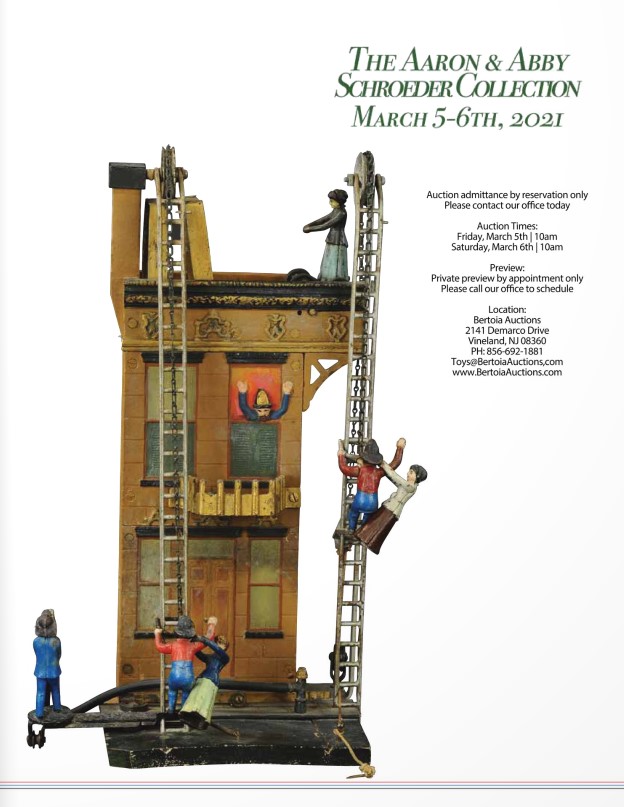
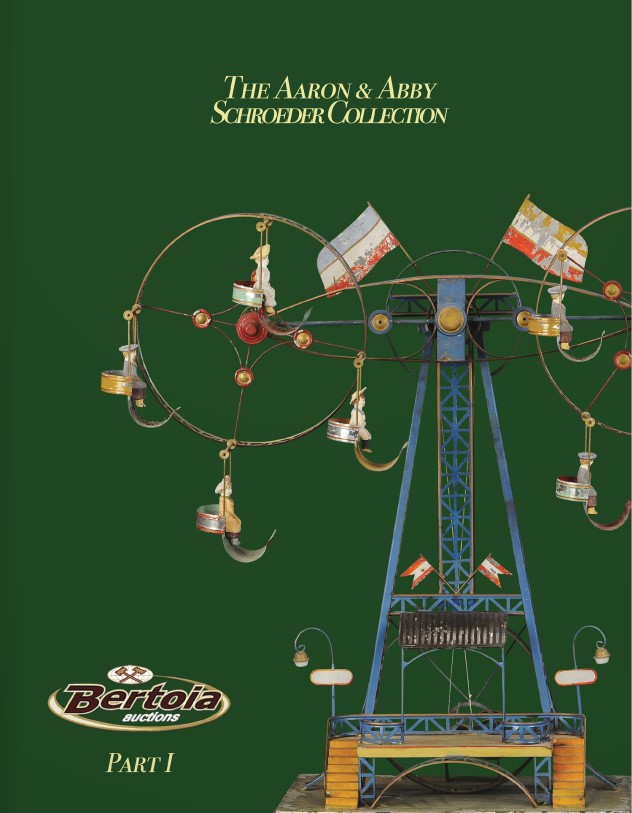
Considered one of the greatest toy and bank collections in existence, this collection is the epitome of good taste and quality. From near mint mechanical banks to cast iron toys, American tin to European toys, aficionados of fine pieces will find the Schroeder collection to be the perfect combination of elegance and condition. Bertoia Auctions is honored to handle this legendary sale and welcome all collectors to participate in making history this Spring!
And this time with many Martins up for auction, some of which are extremely rare! watch the catalog with this link:
The Martins in this auction are listed below including the “Martin” number.
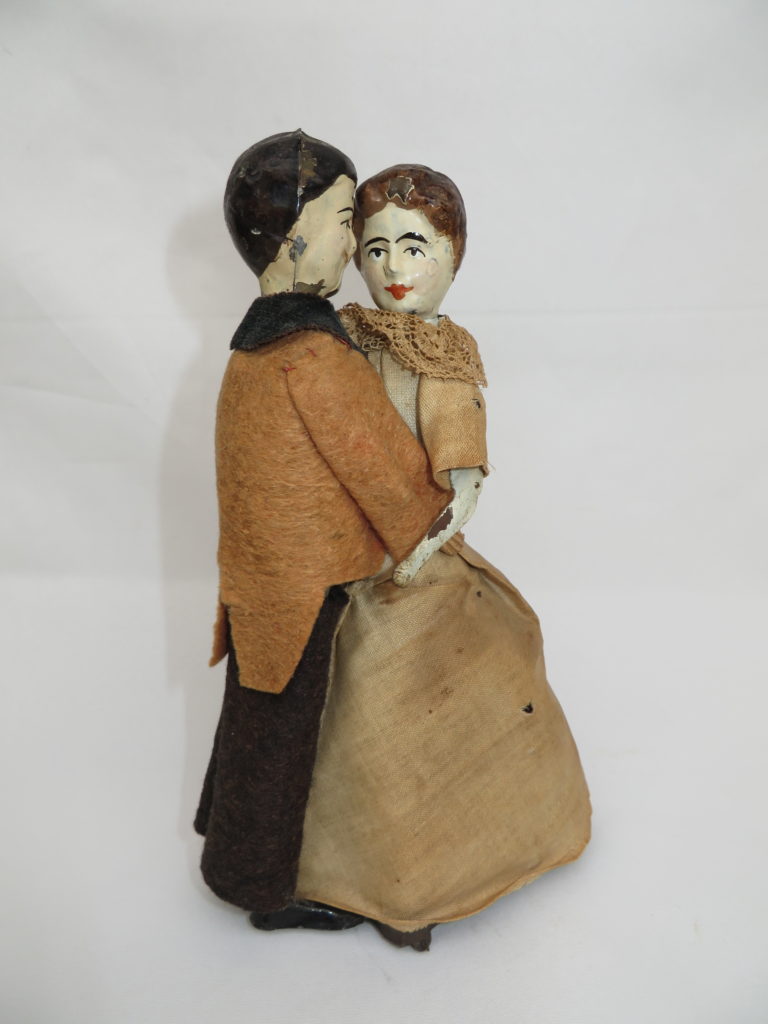
425 L’éminent avocat – Martin number 202 426 L’ intrépide jockey – Martin number 225 427 La conquête du pôle nord – Martin number 217 428 Les valseurs – Martin number 15 429 Le petit cuisinier – Martin number 198 430 L’entravée – Martin number 220 431 Au parfait pêcheur – Martin number 209 432 Attelage flamand – Martin number 45 433 Les joyeux danseurs – Martin number 23 434 Le sonneur endiablé – Martin number 14 435 Les courageux scieurs de long – Martin number 18 436 Les sauteur intrepide – Martin number 148 437 Pompier l’échelle (Victor Bonnet) – Martin number 197 461 Le treuil – Martin number 149 462 La blanchisseuse – Martin number 171 463 Le petit Livreur – Martin number 224 464 L’autopatte – Martin number 218 465 The policeman – Martin number 180 466 L’artiste capillaire – Martin number 196 467 La boule mystérieuse – Martin number 204 468 Le gai violoniste – Martin number 160 469 Le livreur – Martin number 22
The Bertoia team is dedicated to offering our quality customer service, experience and support. Do not hesitate to contact us for assistance with registration, bidding or any other questions.
After the auction, I will publish the realized prices for these Martins.
Regarding the objects described in this article, I do not make a statement about condition or value. I advise interested collectors always do to research yourself, to view the object or to contact the seller / auction
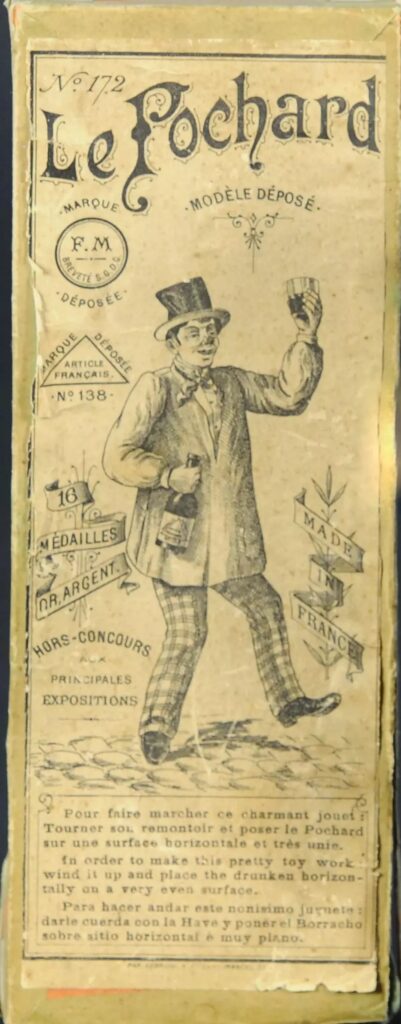
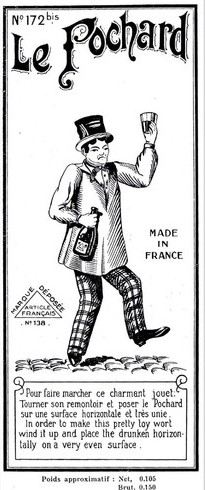
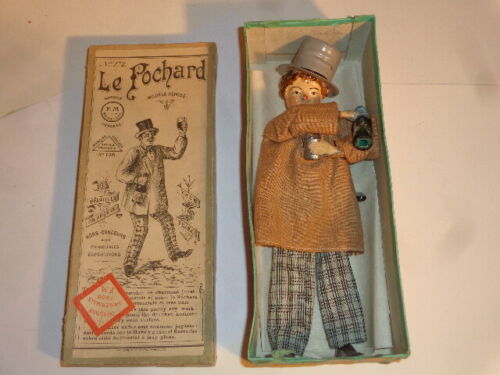
Is it a catalog image or a box label? Note these images, as you can see there are clear differences between a box label and an image from a catalog.
Original box label 1899
The page from the Victor Bonnet & Cie catalog from around 1927 And is this specific image also used as a box label? Maybe, but I don’t know, I haven’t come across an original box with this label yet.
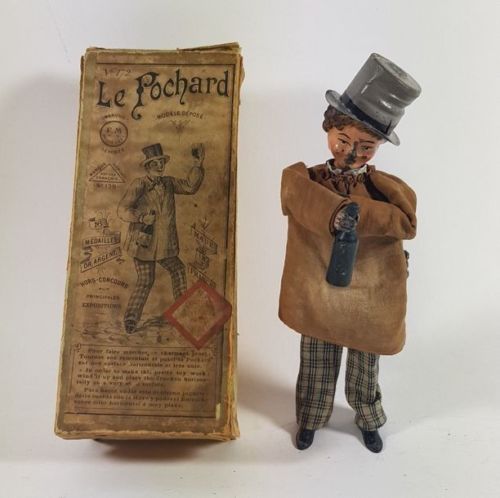
Last time I took the L’Ours Martin as an example, now you see the Le Pochard as an example of the differences between box label and the catalog image. In the old Martin catalogs the differences are often minimal but in the later Victor Bonnet & Cie catalog the differences are many more larger as this example shows.
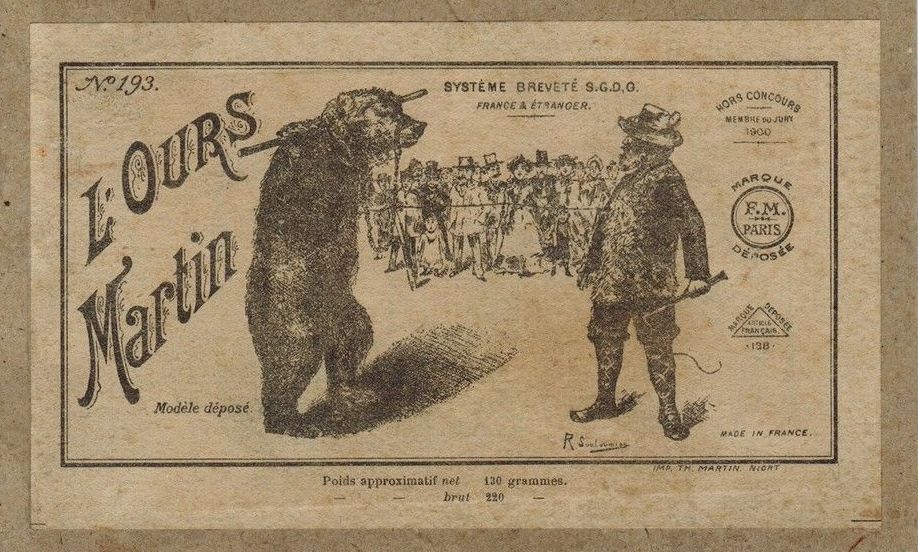
Is it a box label or a catalog image? Note these images, as you can see there are clear differences between a box label and an image from a catalog.
Original box label 1903Picture from de Victor Bonnet & Cie catalog around 1927 And is this specific image also used as a box label? Maybe, but I don’t know, I haven’t come across an original box with this label yet.
This L’Ours Martin is taken as an example, of many more Martin toys are examples of the differences between the box labels and the catalog images. In the old Martin catalogs the differences are often minimal but in the later Victor Bonnet & Cie catalog the differences are many more larger as this example shows.
The history of Fernand Martin toy manufacturer in Paris. Part four: The Victor Bonnet period.
In the most relevant books about Martin are the toys that are made by Martin and his successors divided into four periods.
According to the latest state of insight, these periods might be classified as follows Period 1 from 1878 – 1894 Period 2 from 1895 – 1912 Period 3 from 1912 – 1919 Period 4 from 1919 – 1933
The fourth period from 1919 – 1933:
François Victor Bonnet: Born November 30, 1872 – Paris 6ème Died 21 November 1951 – Vincennes – France From 1896 to 1905, He held the grand bazaar, rue de la constitution in Avranches then back to Paris.
Francis Victor Bonnet took over the Martin company on March 29, 1919.
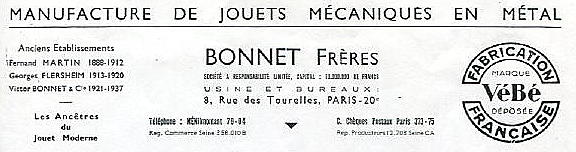
Header of a leaflet from the late 30’s
On the left-hand side of this original old leaflet from the late 1930s, the Victor Bonnet & Cie factory is mentioned from 1921 till 1937. See under “anciens etablissements” (translated: former facilities). The text on the leaflet also states that the factory of George Flersheim existed from 1913 till 1920, so until 5 years after his death, but that isn’t correct.
The reason for this false statement, made by the designer of this leaflet, may be due to the following dates: In the “Register Analytique” of the Paris Commercial Register is states that the Victor Bonnet factory official is registered under the number 92537 date: December 29, 1920, so almost 2 years after the acquisition in 1919.
Le “Registre de Commerce et des Sociétés” (RCS) The RCS is introduced in France by the law of March 18, 1919, supplemented by the decree of March 22, 1920 creating the RCS. This law required all French and foreign companies to be registered in this register from 1920 on. This Registre Analytique is a officializing that Victor Bonnet & Cie, which was created in March 1919, was registered in 1920 under number 92537 to comply with this law. The RCS is both a registration system organized by the public authorities in view of making certain legal acts known to interested third parties and a means of knowing officially the existence of French or foreign traders with either their main establishment or a branch in France. New traders has one month after the opening of his business to register.
The Victor Bonnet Factory started the production in 1919 In a French patent application (patent number 576,723) for the first Victor Bonnet toy produced (Auto Transports model: Le Déverseur , number 246) mentions a date of April 12, 1921, the publication was on August 25, 1924 The patent application in Germany was on April 21, 1921 under patent number 363805 But many manufacturers have already started production from or before the moment of applying for a patent. There were sometimes many years between the application and the final commitment and publishing.
The date 1937 mentioned in the leaflet is the end of the Victor Bonnet period, on 30 December 1937 Victor Bonnet donated the factory to his two sons Robert and René, the company name was changed to Bonnet Fréres (Bonnet brothers).
In addition to the F.M. logo came the new “Victor Bonnet et Cie” logo. Often only the “Victor Bonnet et Cie” or “V.B. & Cie” or “V.B.” logo was used on packaging, bills, letters, toys etc.
A part of a payment certificate from 1933 of the factory at the old location, before its administratively registered dissolution.
In addition to the beautiful and often technically high-quality toys that were designed by themselves, they also produced many successful older models of toys from Martin and Flersheim.
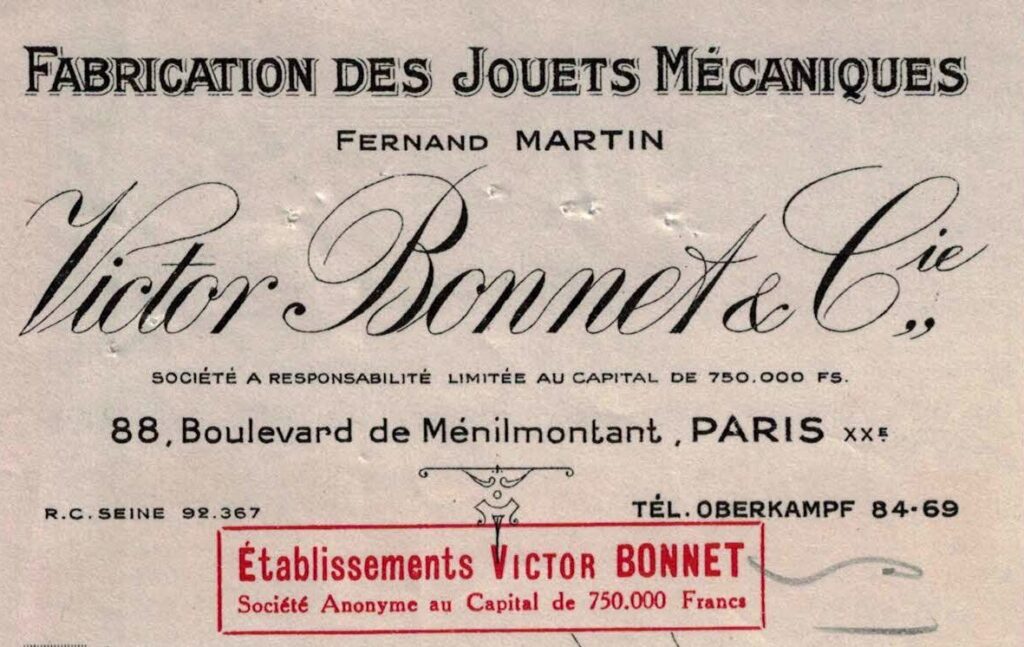
Here the list of toys we know, produced in the period on the 88 Boulevard de Menilmontant From 1919 up to 1933.
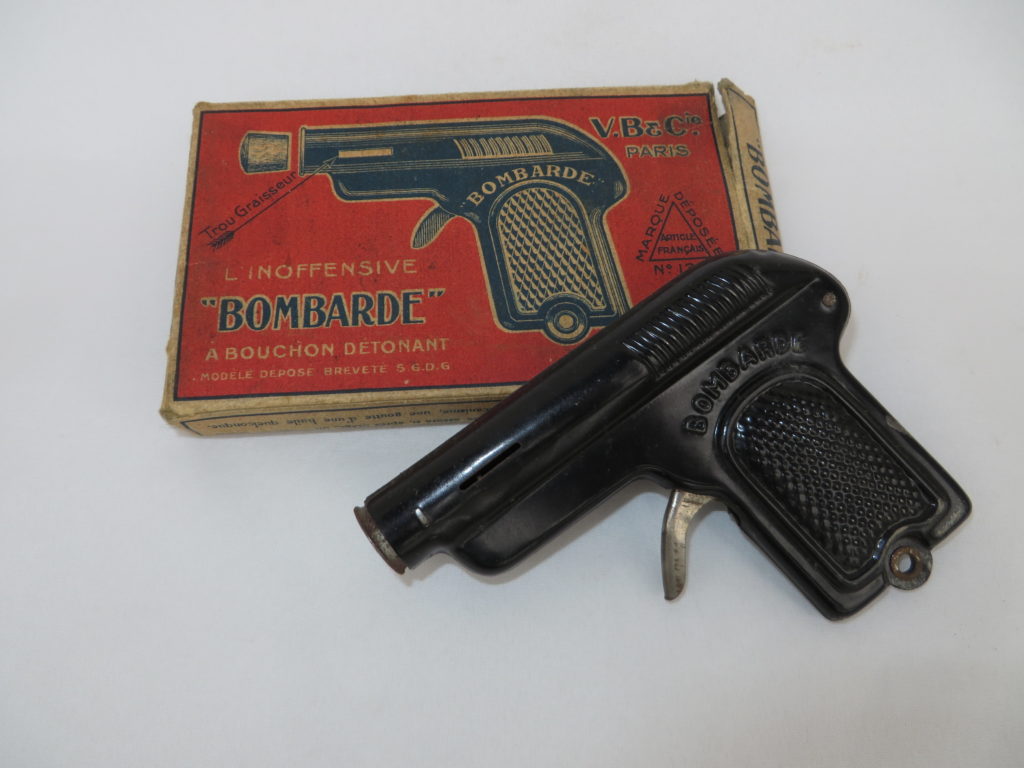
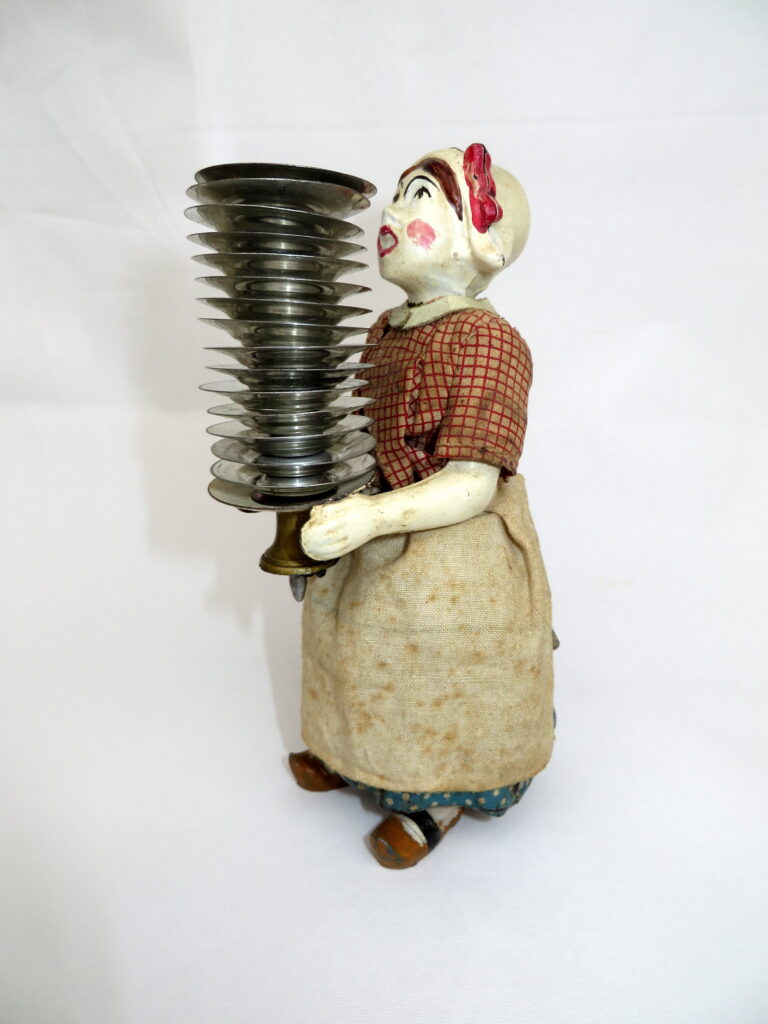
246 Le Déverseur 247 Le Pan Pan 248 Tracteur 249 Camion 250 La Remorque 251 Le Ramier 252 L ‘Homme Toupie 253 Le Clown Orchestre 254 Le Train Tortillard 255 La Charette Paysanne 256 Flac 257 Bombarde 258 Le Pétard 259 L’Entraineur “Skiff” 260 Madelon Casseuse D’Assiettes 261 Gros Camionnage 262 Tape Fort 263 La Patinette 264 Le Sans Balle 265 Voiture Nounou Poupon 266 Le Costaud And a few names of toys, whose numbers are not yet known to us: ( and do you know any of these numbers? Please let me know ) ??? Le Epervier ( Flying disc launcher ) ??? Le Corsaire ( a pistol ) ??? Auto-fusée ( a race car )
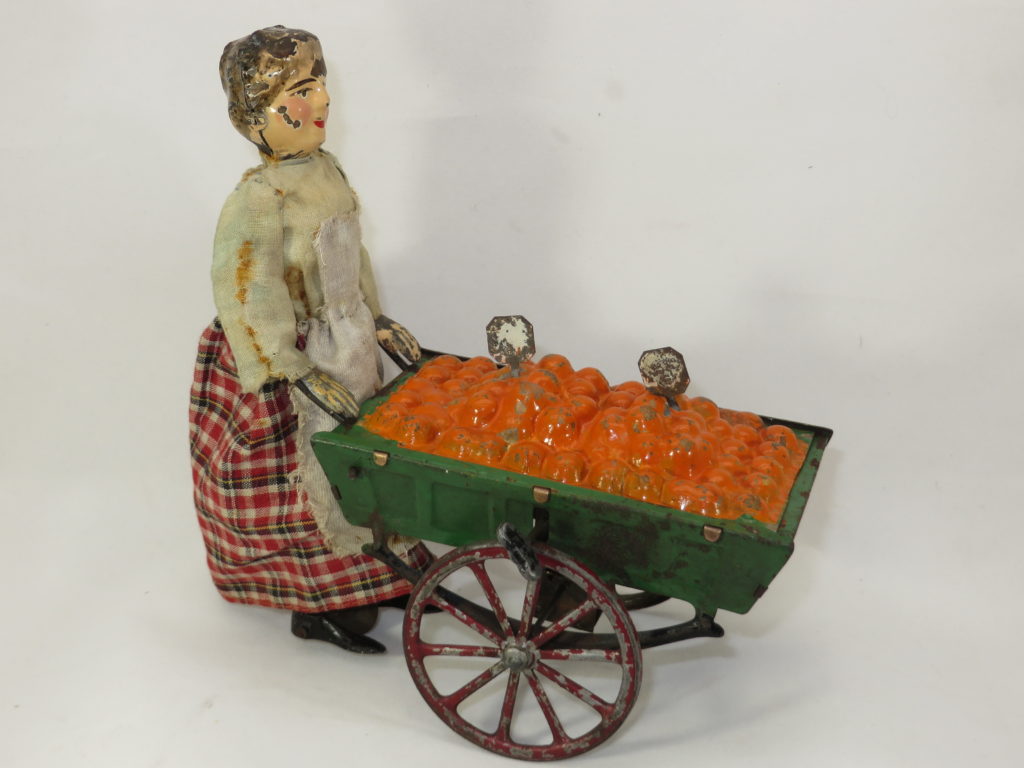
Below are some of the old successful toys by Martin and Flersheim that were produced by Bonnet again: L’Ours Blanc number 193 ( bear in white ) Le Pompier L’Echelle number 197 (with another ladder) La petit Marchande number 185 (with a different face) Le petit Livreur number 224 Le Motocycliste number 231 (with closed wheels) Le Gai Violinist number 160 La Pochard number 172 Madelon Casseuse D’Assiettes number 260 (with fabric clothes) But these toys can always be recognized by the typical Bonnet key
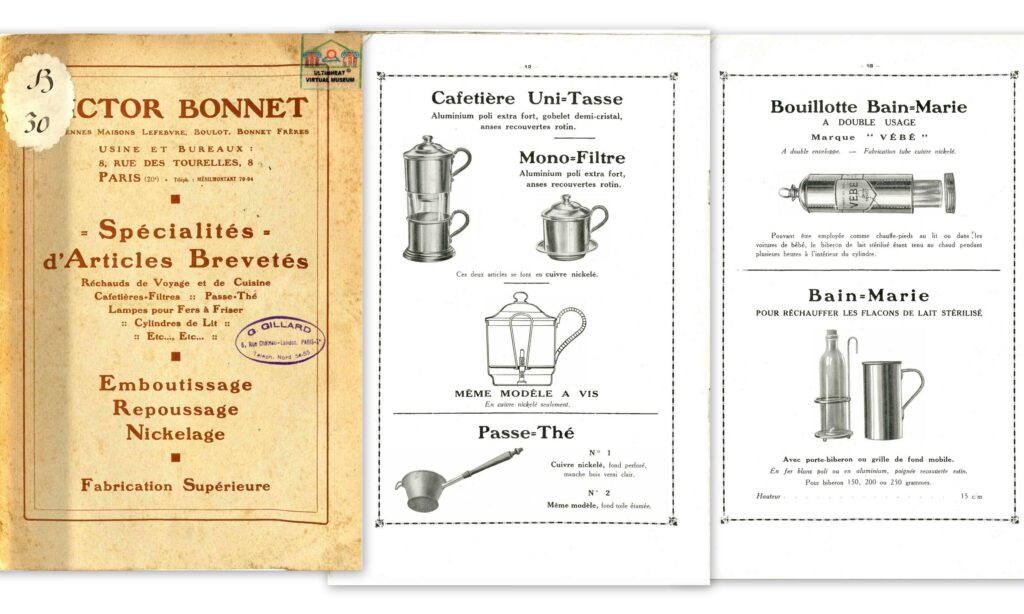
Victor Bonnet & Cie has been administratively dissolved in 1933. So its entry in the official administrative records has been then deleted. During these administrative dissolution process some of Victor Bonnet & Cie’s assets were transferred to Victor Bonnet’s privately held company that had been installed 8, rue des Tourelles in the early 1920’s This Victor Bonnet’s privately held company was producing household items.
With permission of : Collection Ultimheat Museum
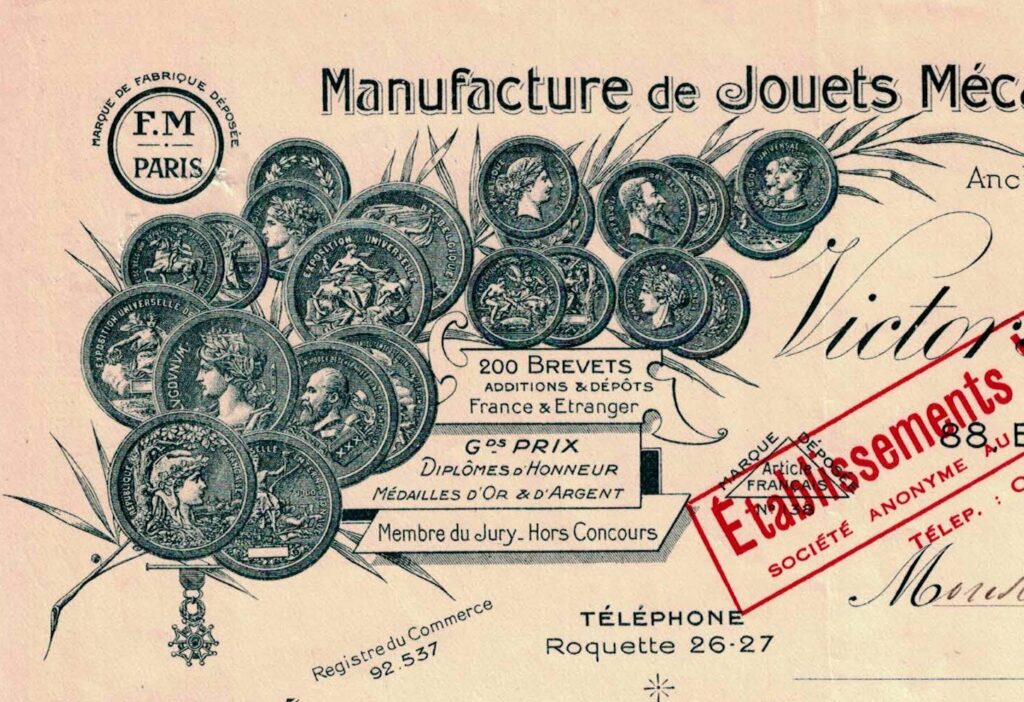
It is also very likely that Victor Bonnet’s privately held company (8 rue des Tourelles) acquired in this liquidation process not only the rights of the tin automatons but also the corresponding tooling equipment to produce them at the 8, rue des Tourelles facility. Until the end of the factory at the old location, Victor Bonnet still used the old Fernand Martin logo and on one of his bill’s shows that he also advertised that he had over 200 Patents, additions and deposits in France and abroad, but that includes the patents from Fernand Martin, George Flersheim and Victor Bonnet. With the relocation of the production of the Victor Bonnet factory in 1933, the Fernand Martin 88 blv Ménilmontant period was also closed.
Part of the account overview of December 1, 1933
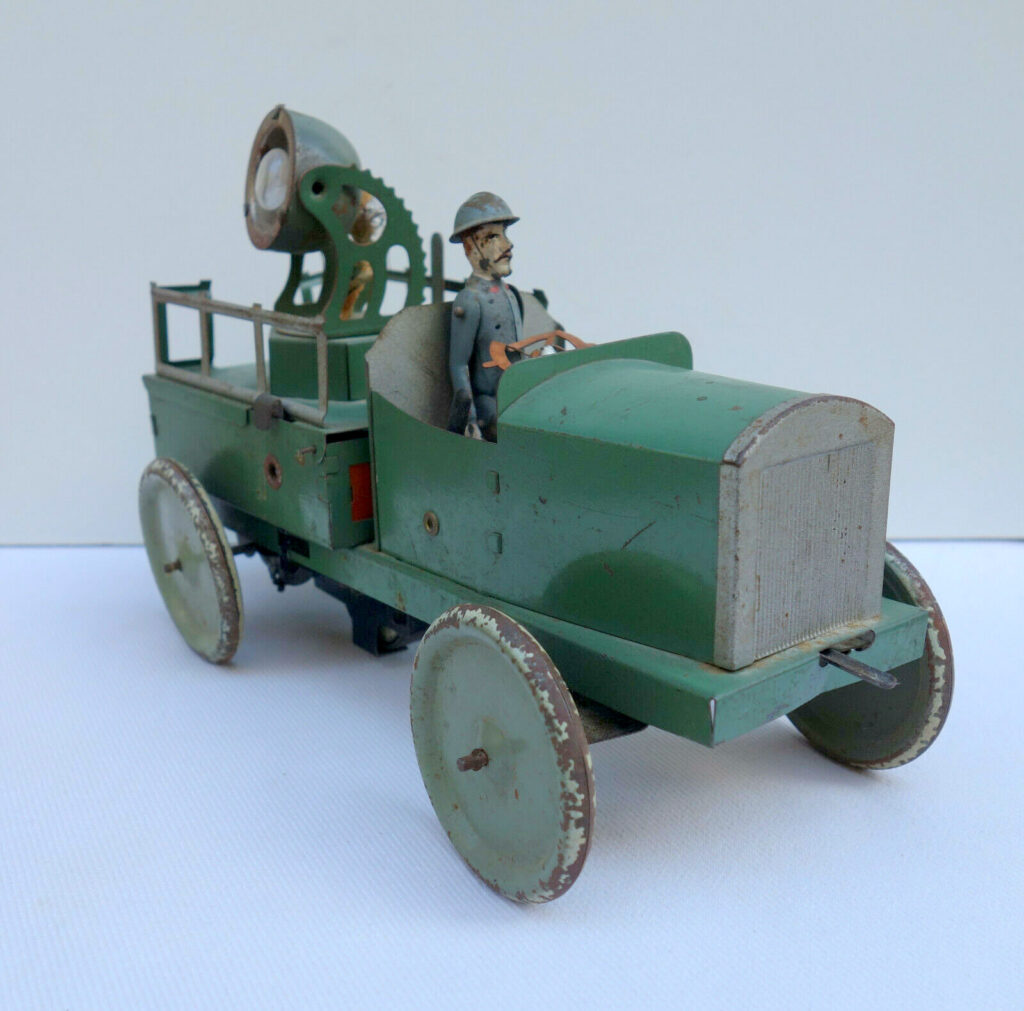
Victor Bonnet started a new numbering after the relocation, he started with number 1: a light green awning torpedo truck .
Picture courtesy : Boutique “Quand j’étais petit garçon” Paris
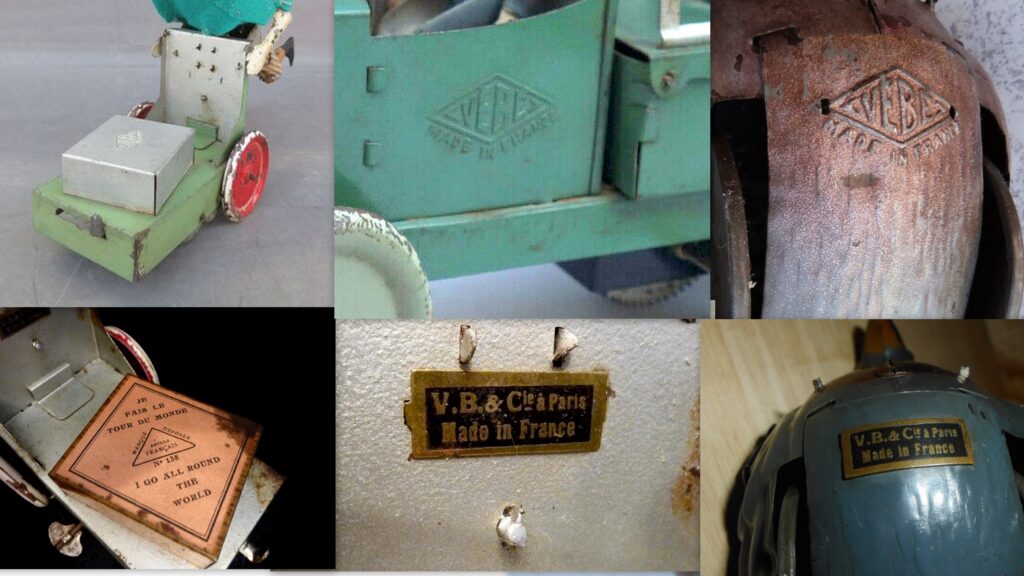
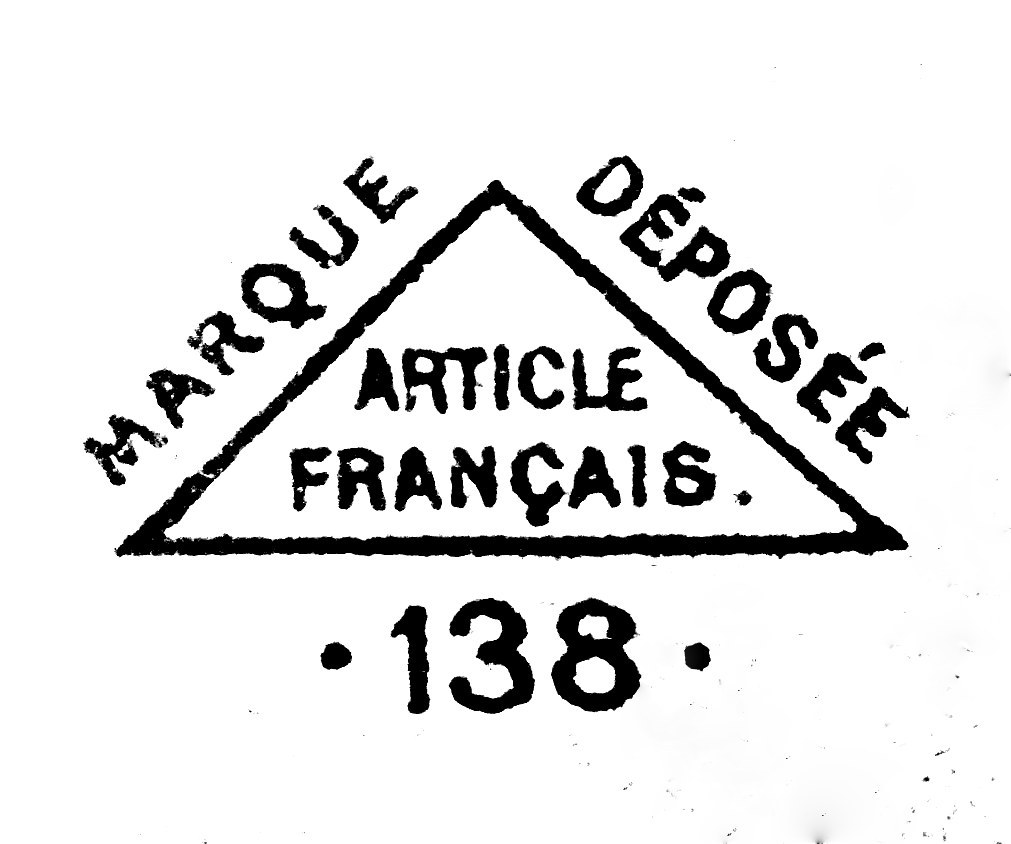
After the relocation the logo “Victor Bonnet et Cie” disappeared in favor of the logo “Vébé” This logo was already used from 1929, for the household items produced in the location: 8, Rue des Tourelles, Victor Bonnet also no longer uses the old FM logo and the triangular logo with no 138 underneath after 1933. They continued to produce some of the old toys after 1933 with the logo “Vébé”.
Above: The Le Petit Livreur , Torpedo truck and the Pigeon with the VéBé logo after 1933 Below: The Le Petit Livreur label, Le Petit Livreur with the V.B.& Cie logo and the Pigeon with the V.B.& Cie logo before 1934
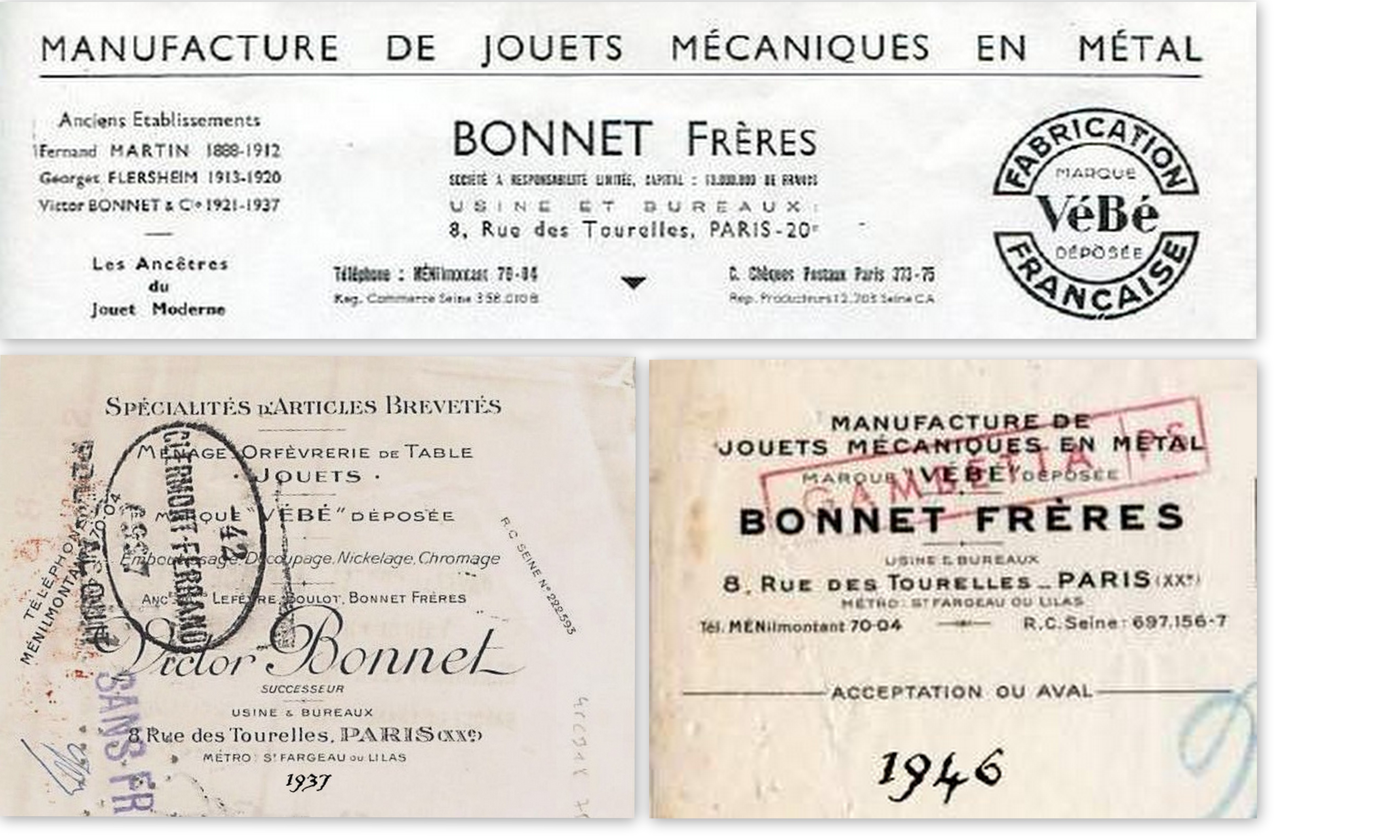
At the top: the VéBé logo from 1934 found on a leaflet from the late 30s. Below : two parts of different payment certificates one from 1937 so before the name was changed to Bonnet Fréres and one from 1946 so after the name was changed
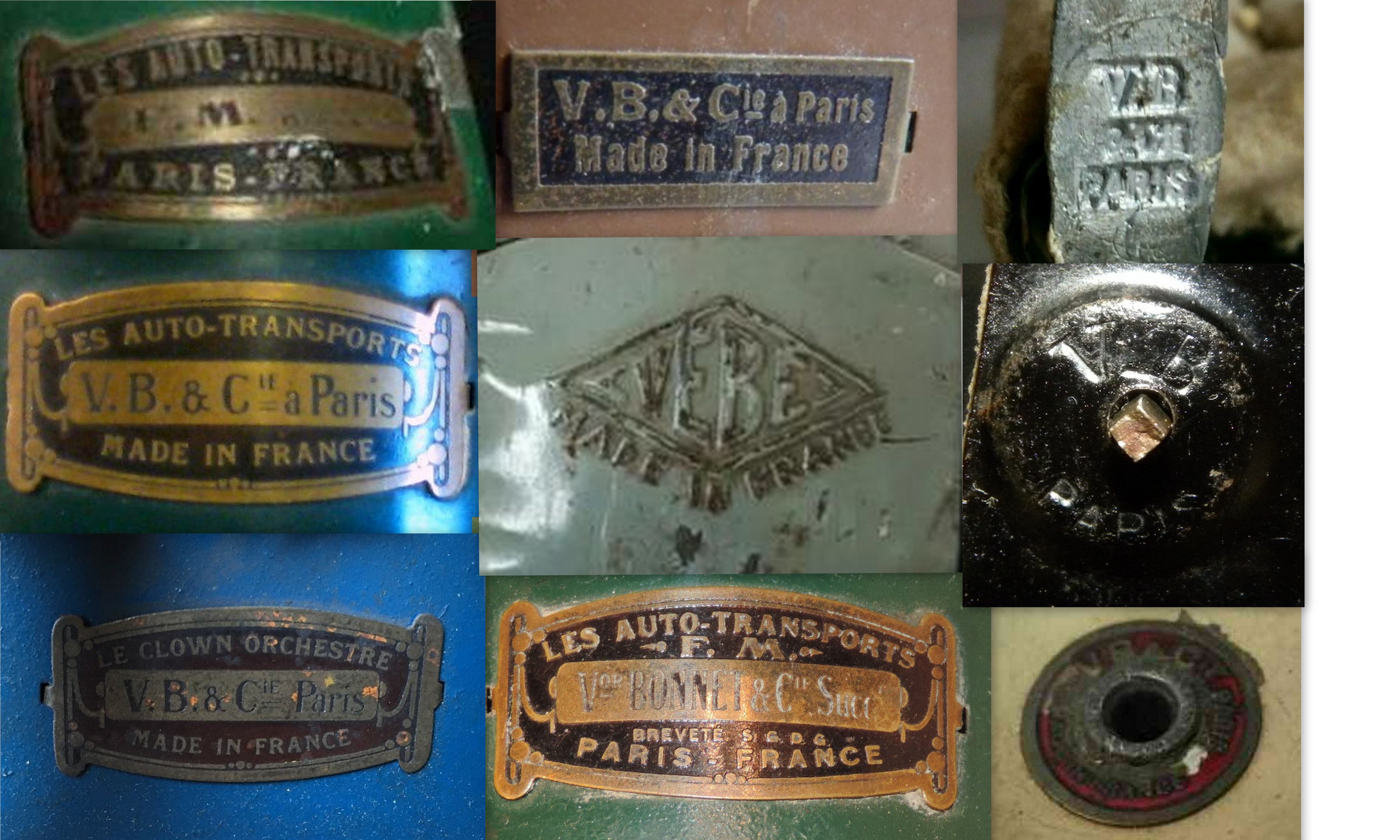
Some of the name plates that Victor Bonnet used
On December 31, 1960, Bonnet received the addition “S.A.R.L.” (Société à responsabilité limitée) Translation : Limited liability company, but in 1964 the company Bonnet finally closed.
Special thanks with the help, texts and image I received from Francois Mesqui
With this description we conclude the series of four articles about the history of the Fernand Martin toys.
All toys with without reference are from my collection
Vrolijk Kerstfeest en een Gelukkig Nieuwjaar Merry Christmas and a Happy New Year Fröhliche Weihnachten und ein glückliches Neues Jahr Joyeux Noël et Bonne Année Feliz Navidad y Próspero Año Nuevo Buon Natale e Felice Anno Nuovo Boas Festas e um feliz Ano Novo Kala Christougenna Ki’eftihismenos O Kenourios Chronos God Jul och Gott Nytt År Glædelig Jul og godt nytår Geseende Kerfees en ’n gelukkige nuwe jaar Hyvää joulua ja onnellista uutta vuotta
And stay healthy in these difficult pandamic times
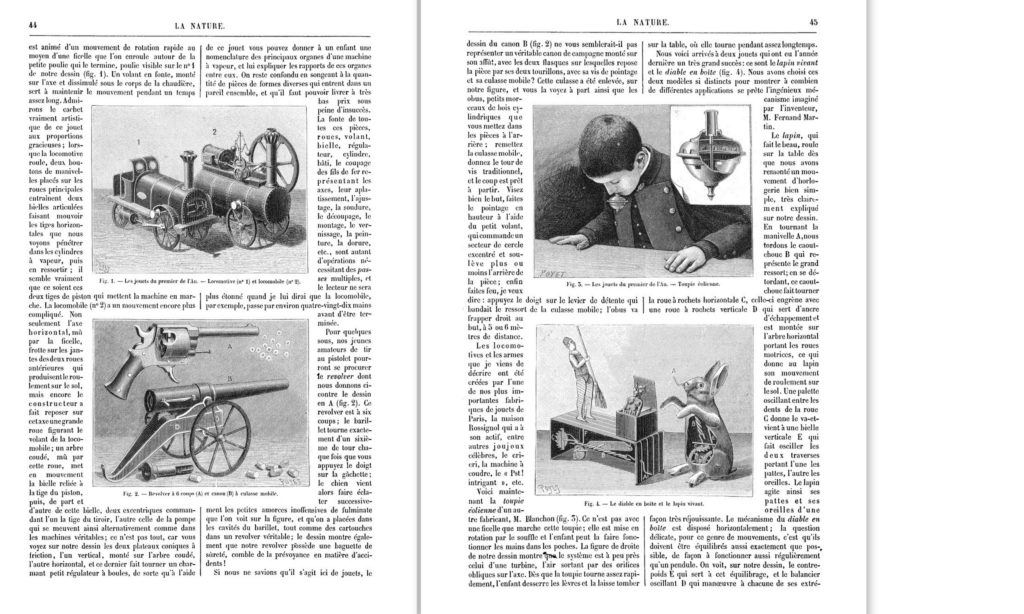
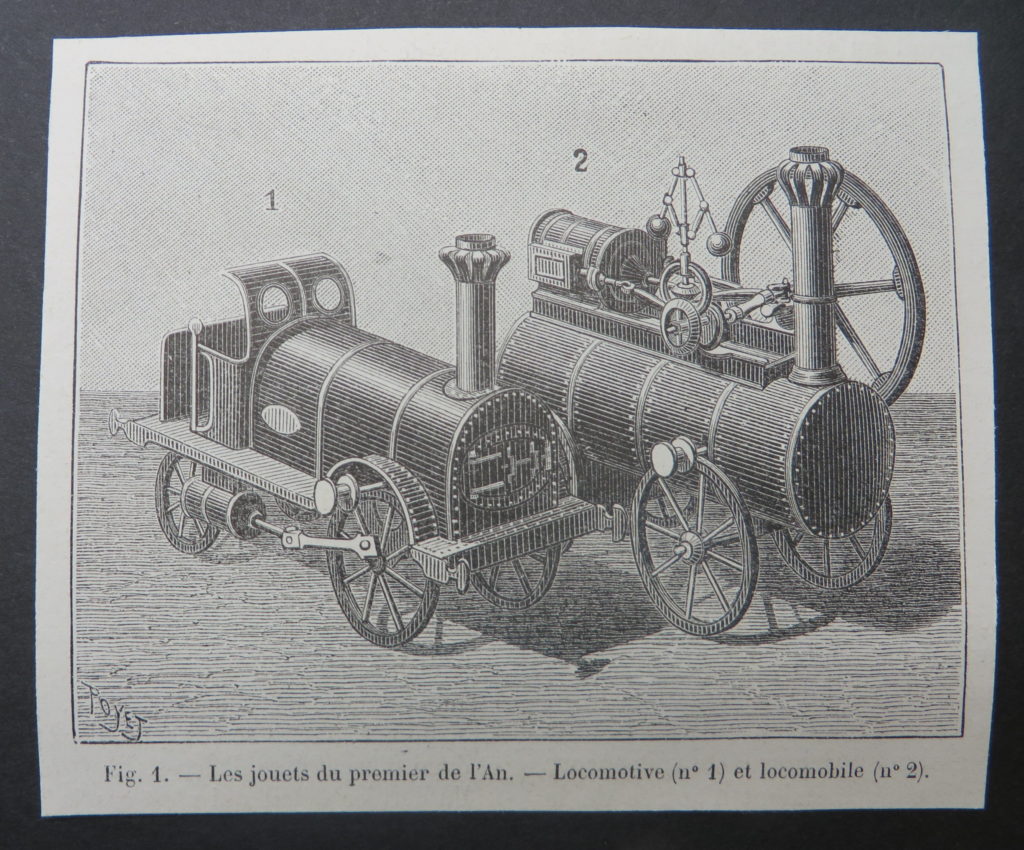
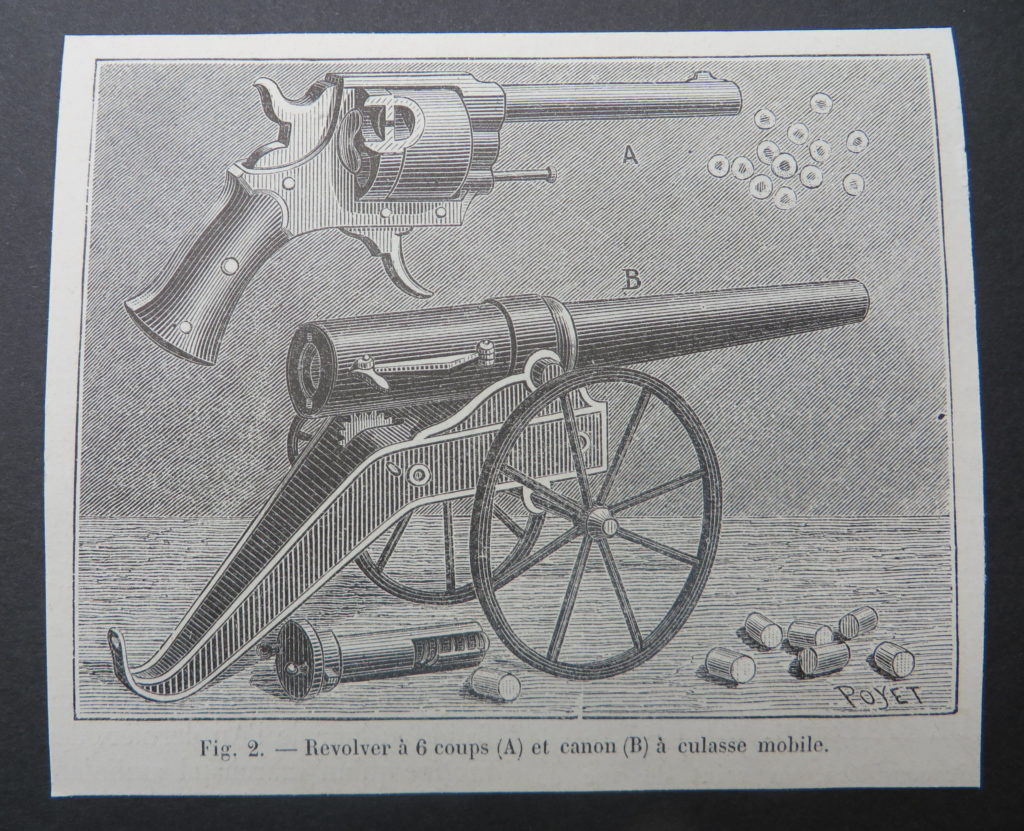
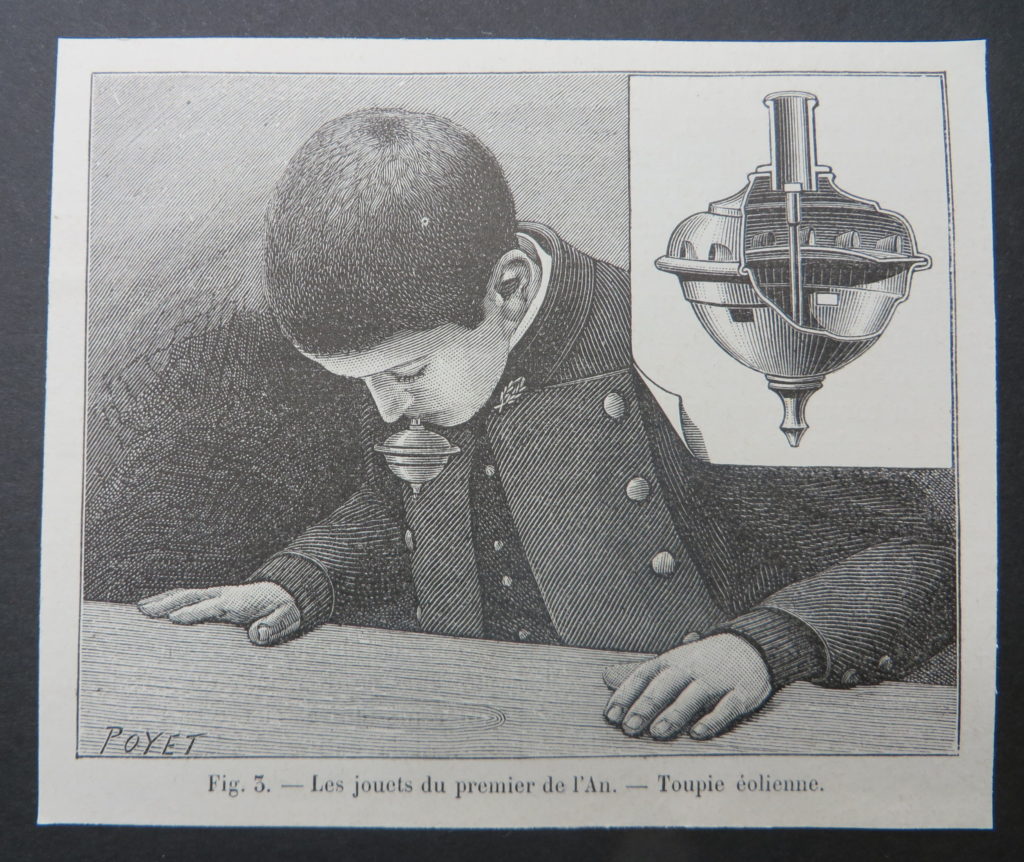
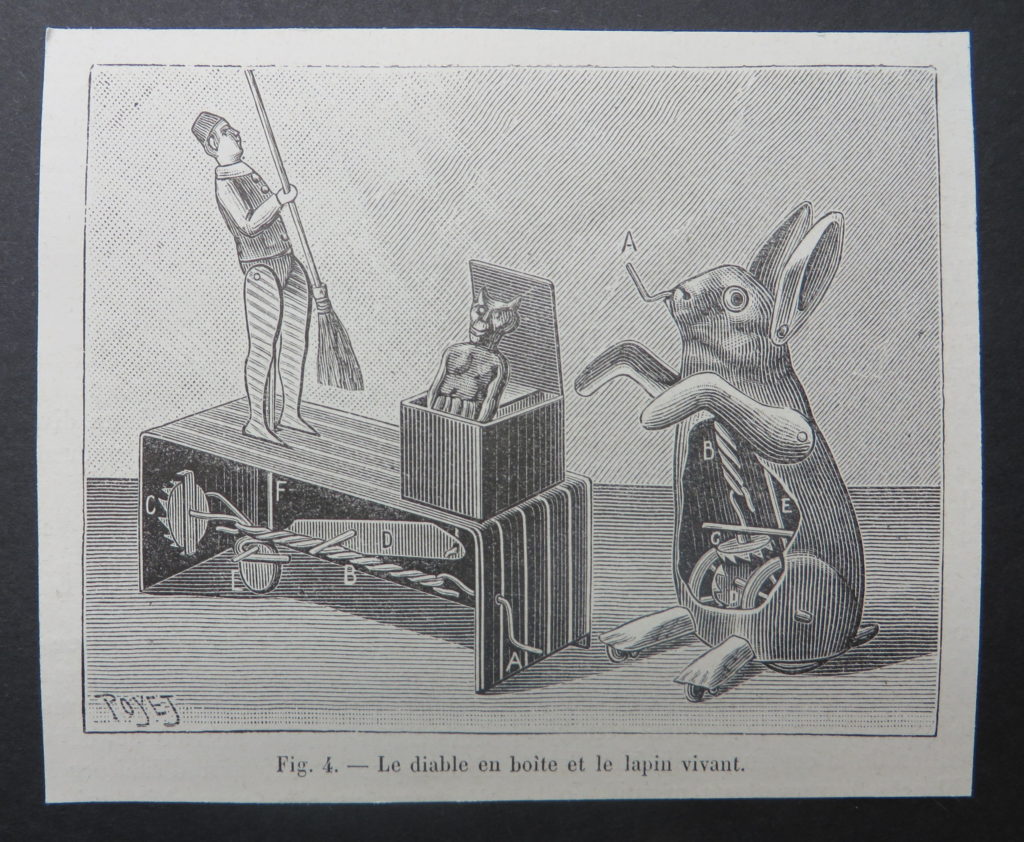
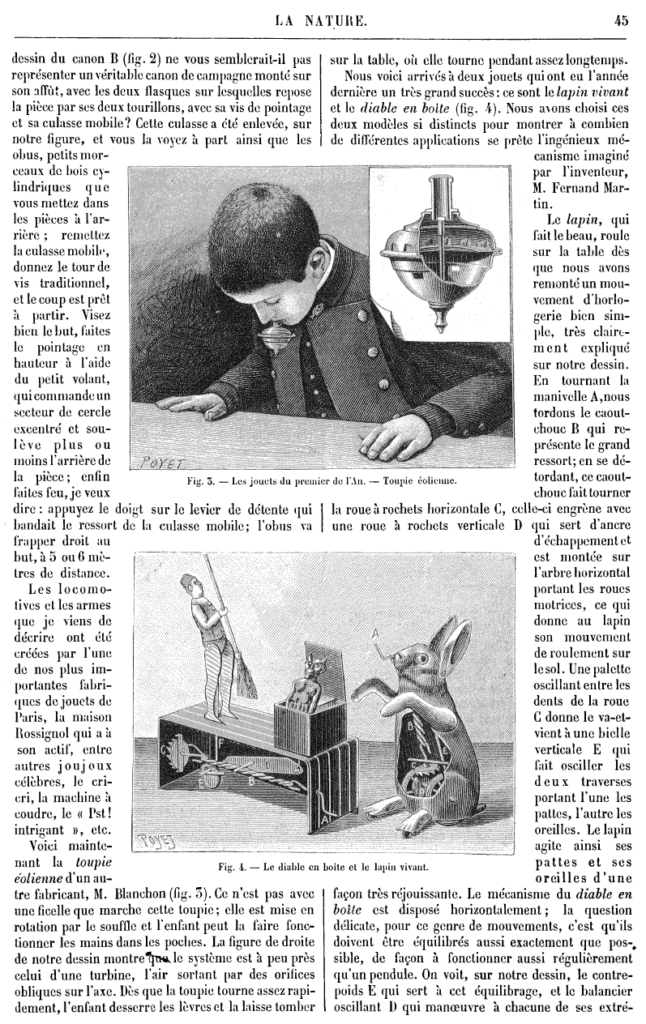
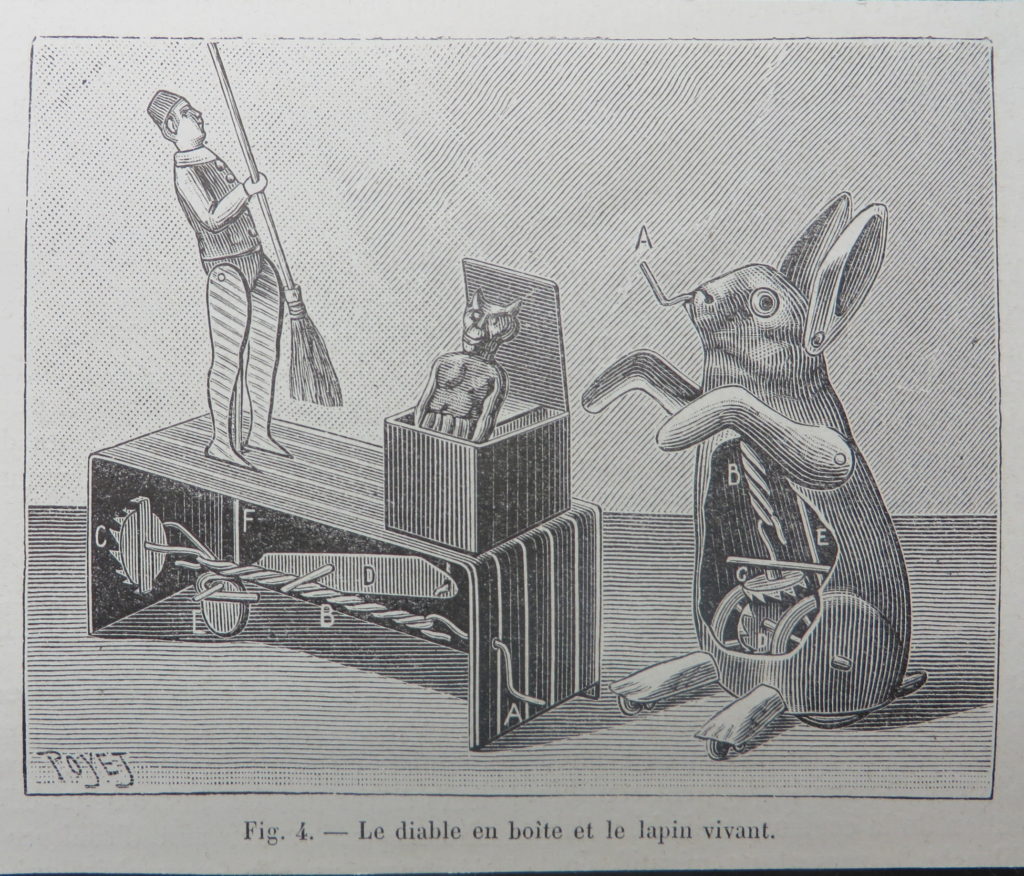
During my search for Martin toys and related matters, I found on a website at a dealer of antique drawings and etchings four different small etchings with toys on it. These etchings are original and no copy, if you move slowly over the drawing with a sharp needle you can feel the ink lines. I don’t know how many of them were printed, they are not numbered They are made by the famous French etcher Louis Poyet, more about this etcher see my blog Louis Poyet and Fernand Martin from 31 May 2019.https://www.fernandmartintoys.nl/poyet/ The measurements are 8.1 x 9.8 cm (3,19 x.3,85 inch) each.
La Nature 1892
When I saw these etchings the firts time, they seemed familiar to me. After a brief investigation, it appeared that they had already been published in the year 1892 in the French technical year magazine: “LA NATURE” on page 44 and 45 The four sheets contain drawings of toys at that time:
-A locomotive and a Locomobile from the well-known toy manufacturer C Rossignol.
-A revolver and a cannon, these are also made by C Rossignol.
-A spinning top, this is from the French toy manufacturer M Blanchon.
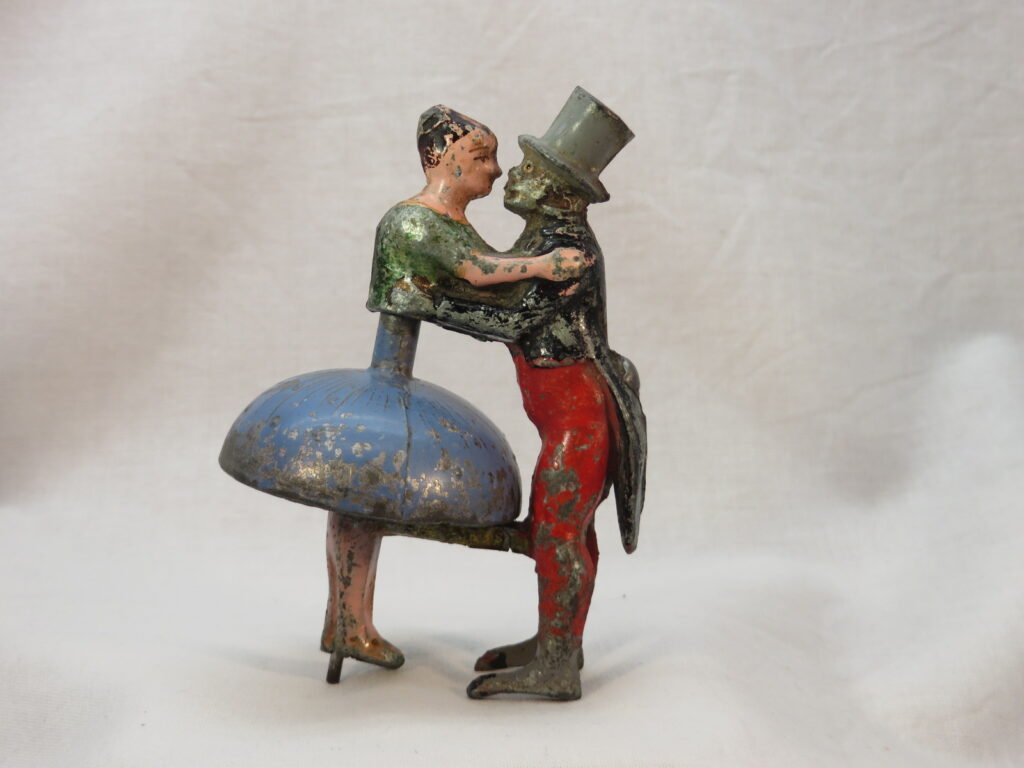
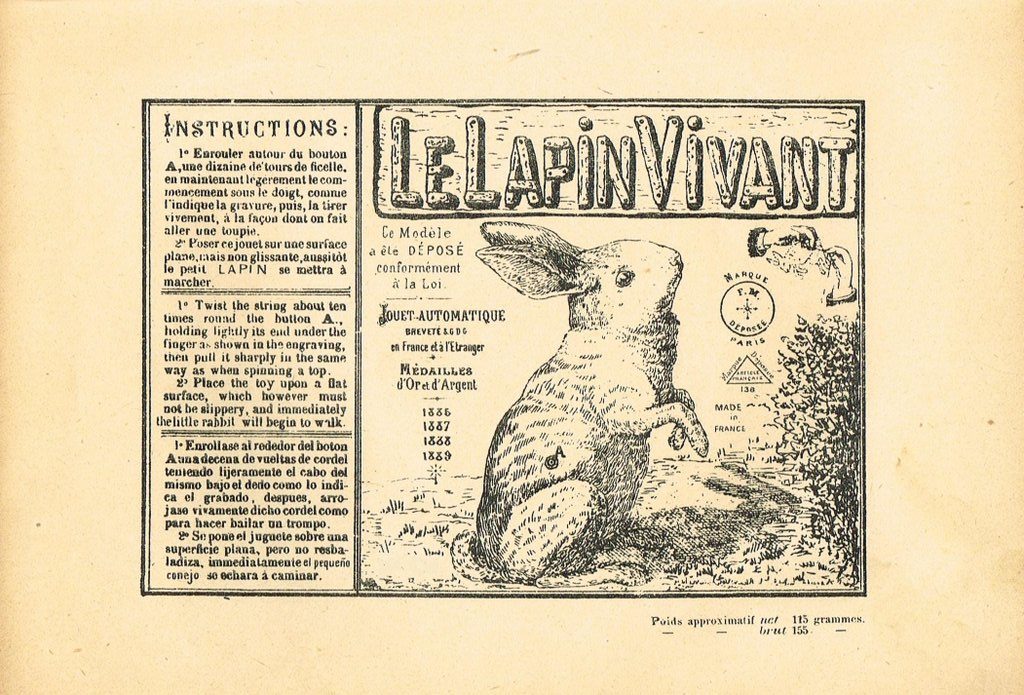
-Fernand Martin with two figures, the “LE LAPIN VIVANT” Martin number 32 and the “LE DIABLE EN BOITE” Martin number 33
What is particularly interesting about the etching with the Martins and the spinng top is that these drawing are made so that you can see the mechanism and see how they work. Both two Martin toys were driven with the famous “rubber band” drive.
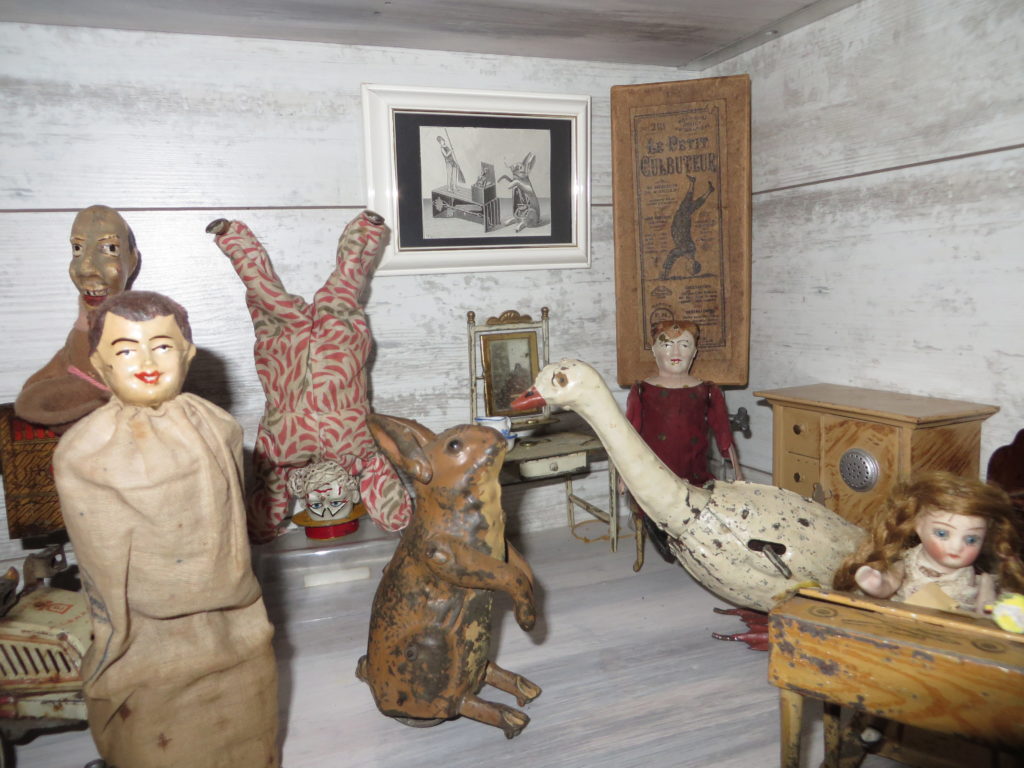
I have placed the etching with the Fernand Martin images in a small frame and added them to my collection of antique toys. Now I can enjoy it every day.
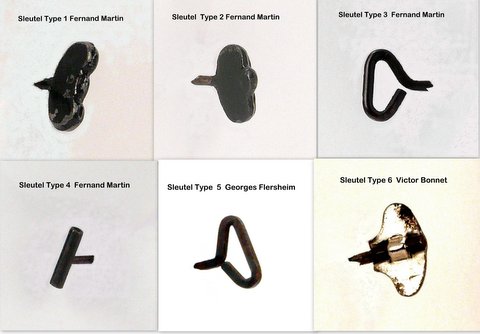
I wrote this blog over a year and a half ago but since there are questions about keys and readers also consider other types of keys for “Martin” keys, I have rewritten this blog and added the latest knowledge. Not every key with the text “FM” on it is a Martin key. With the Martin toys from the first and second period, so until 1912, there is only one toy with a separate key, see explanation below. Victor Bonnet has made more toys with a separate key. So pay attention to the key as best you can and don’t believe every seller.
In the base there are 6 recognizable keys The first 4 are typical of the Martin keys. Key 5 is typical of Georges Flersheim Key 6 belong to the Victor Bonnet toys.
The numbers 3 and 5 seem the same but key 3 is made of round wire and key 5 is made of square wire
But of course there are exceptions. I have searched in my photo archive or around 7,500 photos for different use of keys. Here the exceptions that I have found (up to now) in my archive, in collections and in old Martin catalogs.
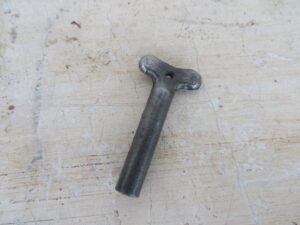
Fernand Martin: Martin used a different key that is not listed in the picture above. For example; Le Traîneau Russe La Perruche Le Facteur De Chemin De Fer And the numbers 131 till 137, (in the book Fernand Martin Toymaker in Paris on page 101) Sujets Avec Et Sans Mécanique One Martin toy has a separate key (number 213 Le Petit Culbuteur ), this is the only model from Martin with a separate key (see photo below) this key was connected to the box with a ribbon. (I have found this model key more than 5 times in the past with this toy complete with the box and some still attached with a red ribbon to the box, so I am pretty sure it is the original key)
Original Martin key from the Le Petit Culbuteur
Georges Flersheim: Flersheim has produced at least 20 own toy models of which: -10 models have a model 5 key that we are now for sure, -1 a fixed key (number 246 Je Sonne La Paix) -With 4 we don’t know for sure, these are soldiers with the numbers 235 – 236 – 244 and 245 The next 4 have Martin keys: -Number 228 Le Motocycle Enragé -From the Le Motocycliste number 231 two keys are known, the Martin key and the Georges Flersheim key -La Guerre Aérienne with number 240 -Number 243 the French Soldier is produced with a Martin key or a Flersheim key. -and the only from we don’t know the exact number till now is the: “Le Poilu” see my blog: https://www.fernandmartintoys.nl/is-this-a-new-fernand-martin-toy/ he has a Martin number 3 key.
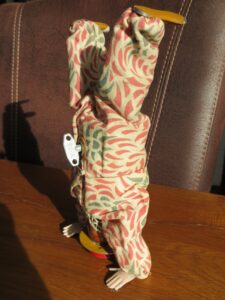
Victor Bonnet: Number 251 Le Ramier is found in three different versions, with a Bonnet type key, with a Georges Flersheim type key and with a separate key. Madelon Casseuse D’assiettes number 260 has a Bonnet type key, but there are also found exemples with a George Flersheim type key. Four models of the “Victor Bonnet Bonshommes” are found with a separate key: number 252 – l’homme toupie number 259 – L’entraineur skiff number 263 – la patinette number 265 – voiture nounou poupon
l’homme toupie with a Separate key
There will probably be other pieces with different keys. If you find a Martin with a different key, email me and preferably with a photo.
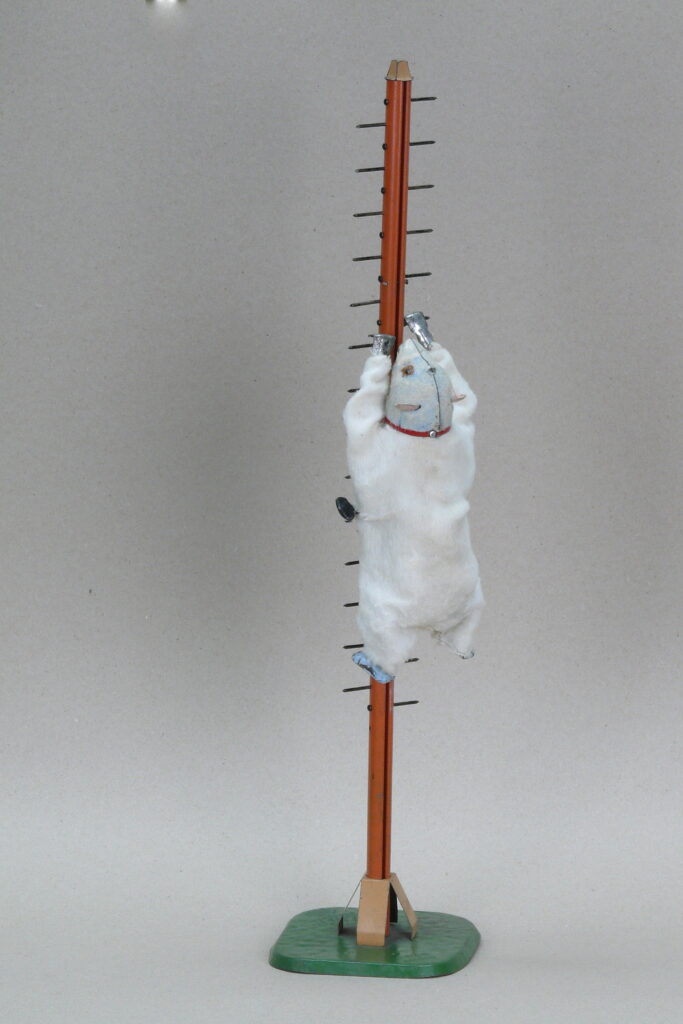
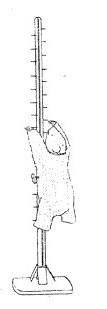
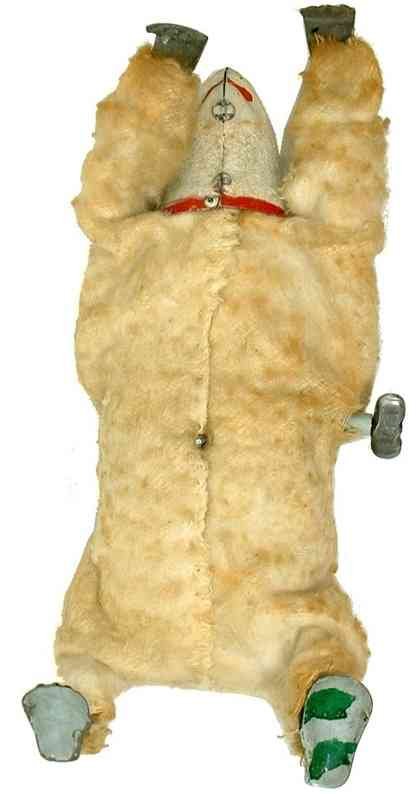
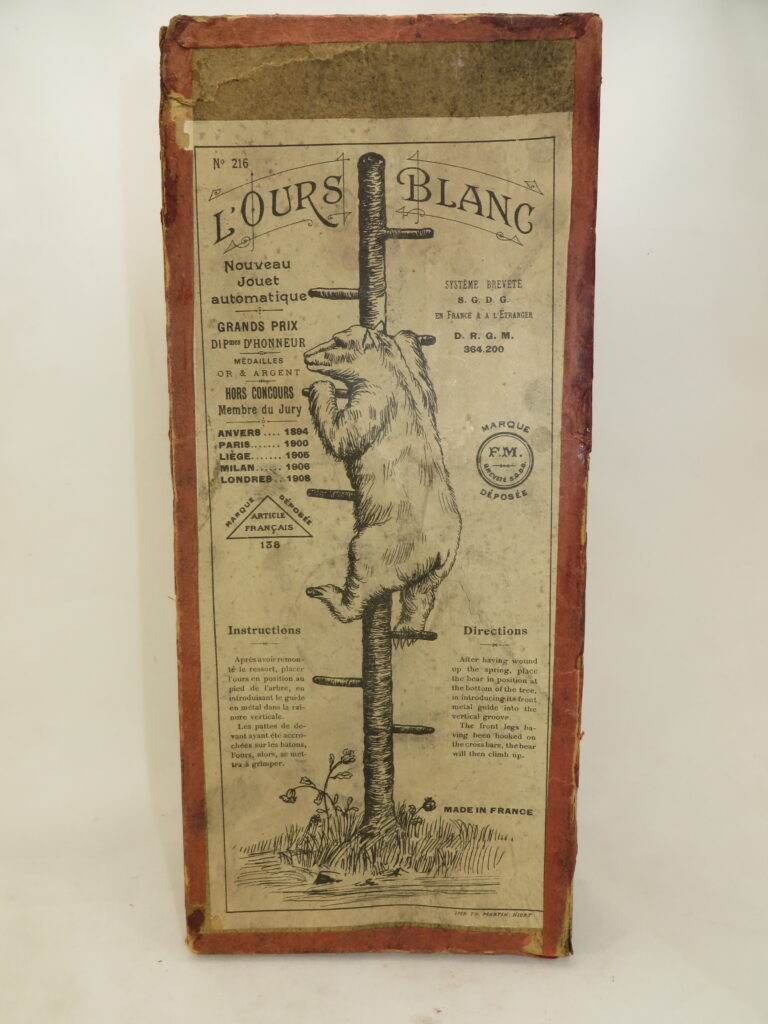
A special and quite rare Martin. Depicting a white bear climbing up a tree Martin number 216 from 1909 with the name L’ours blanc (the polar bear)
The bear is about 18 cm (7 inch) long The “tree” consists of two parts that must be pushed into each other in the middle, the total height is about 50 cm (19,7 inch)
Picture from the magazine La Nature 1910 pag. 51, Source: (Cnum – Digital Conservatory of Arts and Crafts – http://cnum.cnam.fr)
The text by this drawing is: The polar bear that our figure represents owes, to the interior device which animates it, of a remarkable quality of climber, it hoists itself very elegantly at the top of the ladder which completes the toy.
In the instructions for use state: After having wound up the spring, place the bear in position at the bottom of the tree, in introducing its front metal guide into the vertical groove. The front legs having been hooked on the cross bars, the bear will then climb up. So the bear only moves its front legs, one by one, the back legs have no climbing function.
You can see the metal guide pin in the middle of the belly
This toy is very rare but the original box is much rarer, this is the first one I saw.
The history of Fernand Martin toy manufacturer in Paris. Part three: The third Period – Georges Flersheim.
In the most relevant books about Martin are the toys that are made by Martin and his successors divided into four periods.
According to the latest state of insight, these periods might be classified as follows
Period 1 from 1878 – 1894 Period 2 from 1895 – 1912 Period 3 from 1912 – 1919 Period 4 from 1919 – 1933
The 4e period ended in 1933, Victor BONNET & Cie has been adminsitratively dissolved in 1933some of Victor BONNET & Cie’s assets were transfered to Victor BONNET’s privately held company that had been installed 8, rue des Tourelles in 1923.
The third period from 1912 – 1919:
Georges Flersheim was born on May 24, 1884 and purchased the Fernand Martin factory in 1912. He was an inventor and held a degree of “Engineer of the Arts and Manufactures“ from the famous school: Ecole Centrale des Arts et Manufactures de Paris
Before he took over the Martin factory, he already had a lot of technical patents to his name. Between 1909 and 1913 a minimum off 16 patent applications are known or which 4 toy patents. The first toy patent applications date from April 04, 1912, so shortly after the takeover of the Martin factory. These toys came from the old Martin portfolios, Martin had bought the design of a few of them at the Concours Lepine and Flersheim patented them under his name. Flersheim acquired with the company all Martin’s patents.
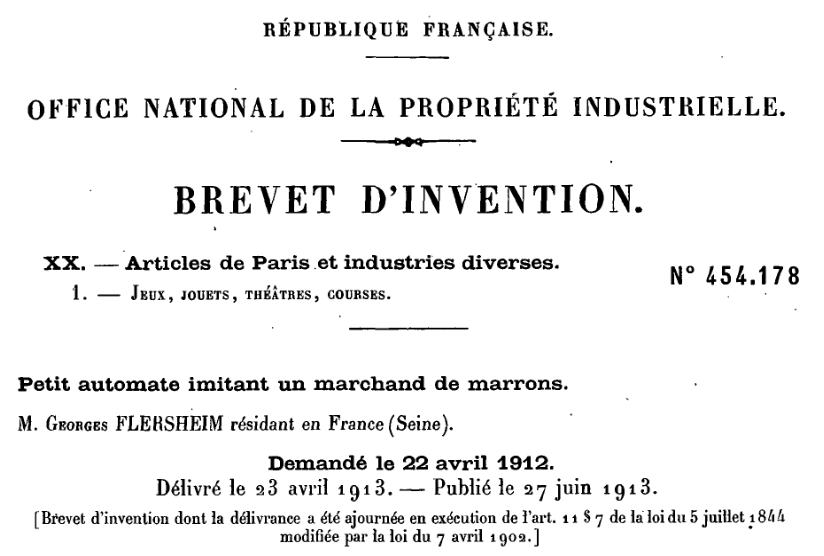
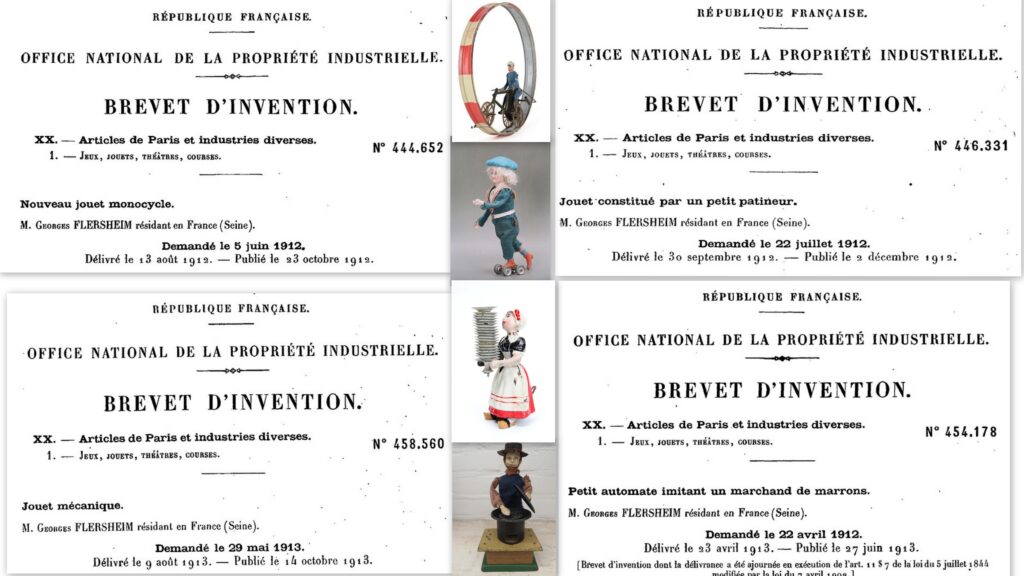
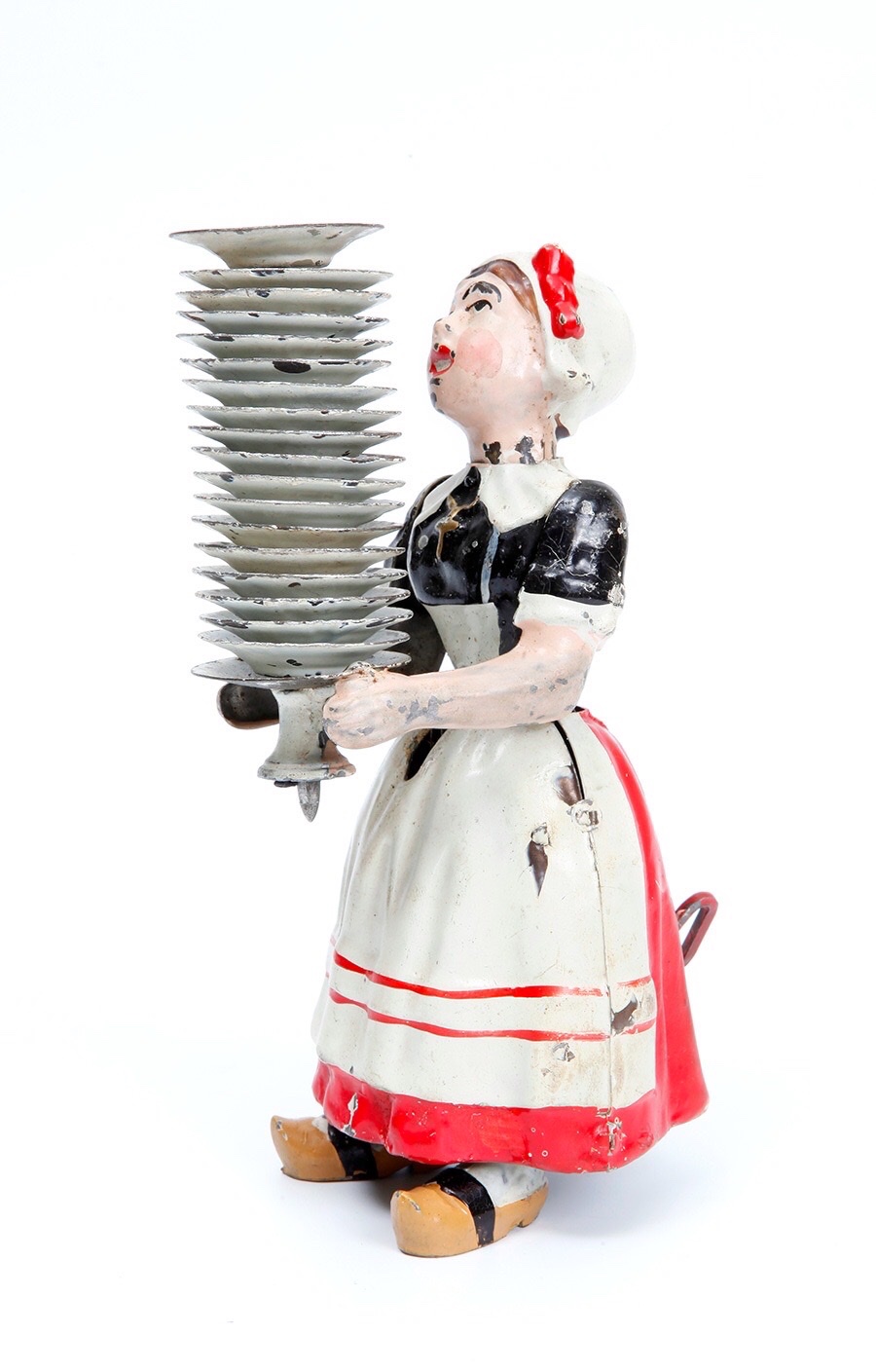
These 4 Flersheim toy patents are : 458560 La casseuse D’assiette number 233 454178 Chauds les marrons number 227 446331 Le Petit Patineur number 229 444652 Le Motocycliste enragé number 228
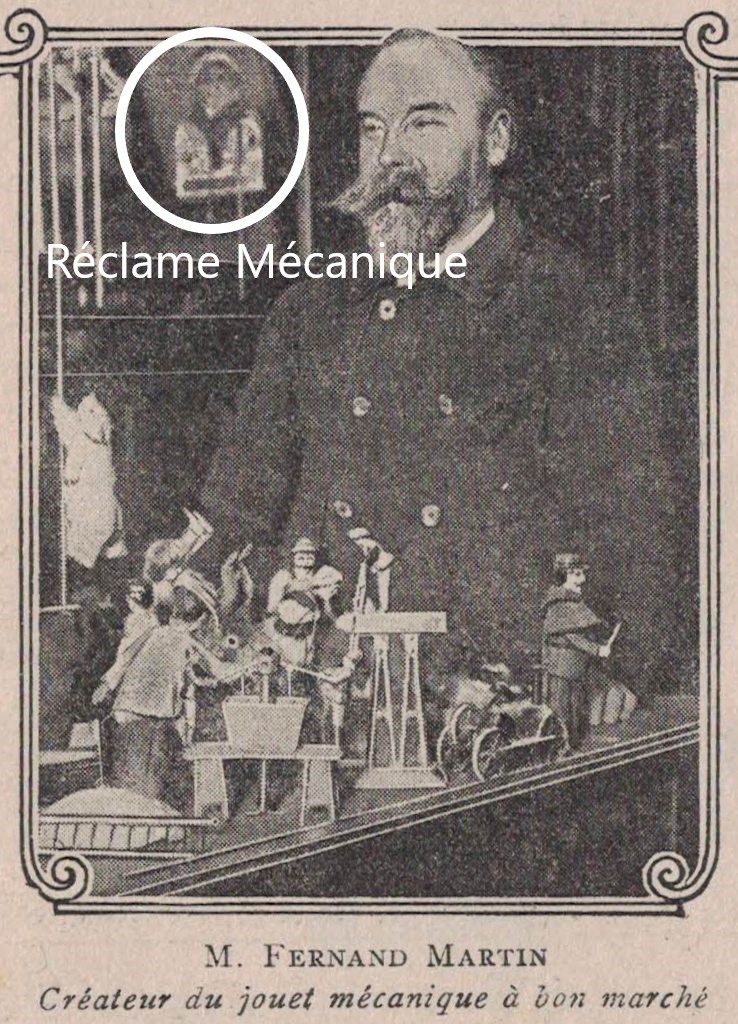
Since its creation, the Martin factory has also made and customized products that were not part of our well-known toys. (that we can see an inscriptions on the back cover of the 1898 and the 1908 Fernand Martin catalog which states that the Martin company “executions, based on orders, all articles in stamped or cut tinplate ”)
One of these products is an advertising board “Réclame Mécanique” as you can see in the book Fernand Martin Toymaker in Paris 1878-1912 on page 103.
Picture from the : Almanach Pratique Illustré de Petit Parisien 1913 page 71 (this book is from my own collection) On page 49 in the book of Frédéric Marchand: The History of Martin Mechanical Toys there you can see a better picture, top picture on the right side. .
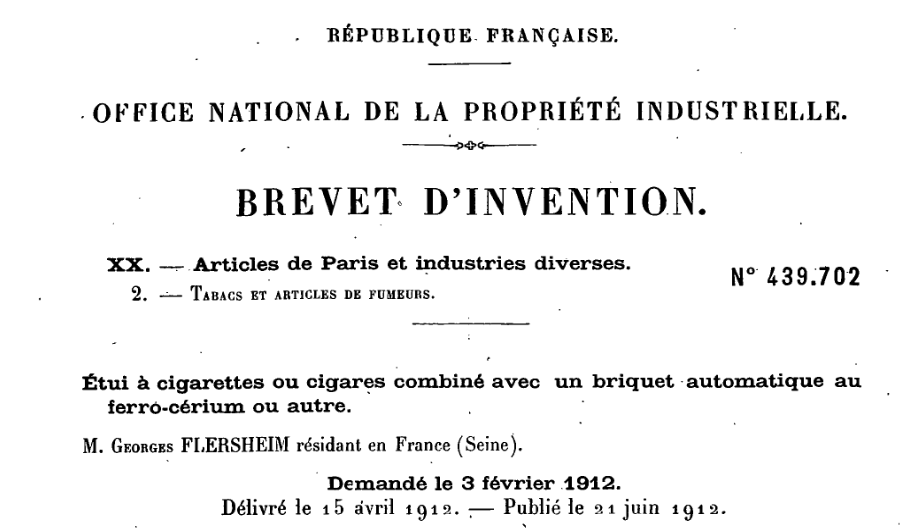
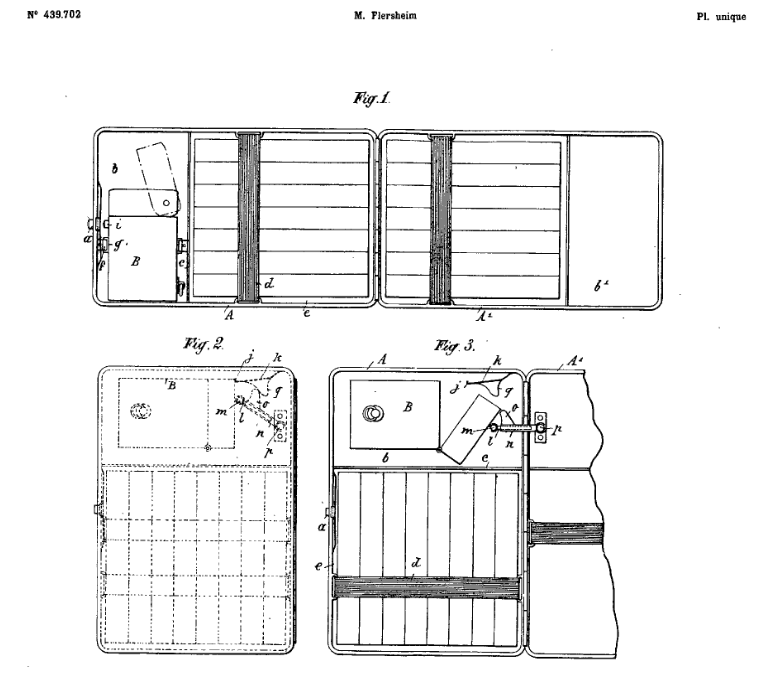
Georges Flersheim made other products to, he has a patent for a cigarette or cigar case combined with a build-in automatic lighter, this cigarette case has Patent number FR439702, but whether it was ever produced is currently unknown.
Part of Patent number FR439702 Patent from the site Espacenet
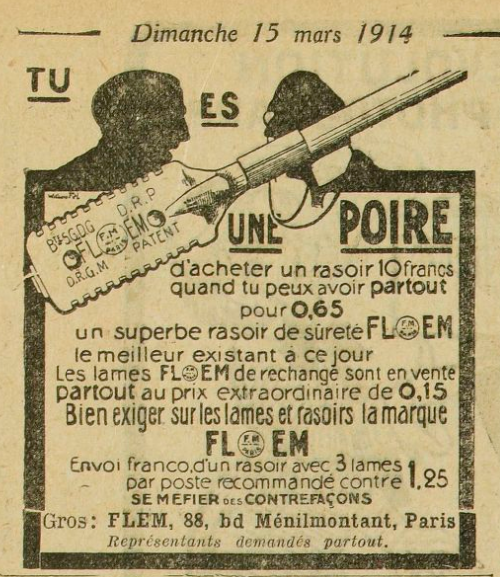
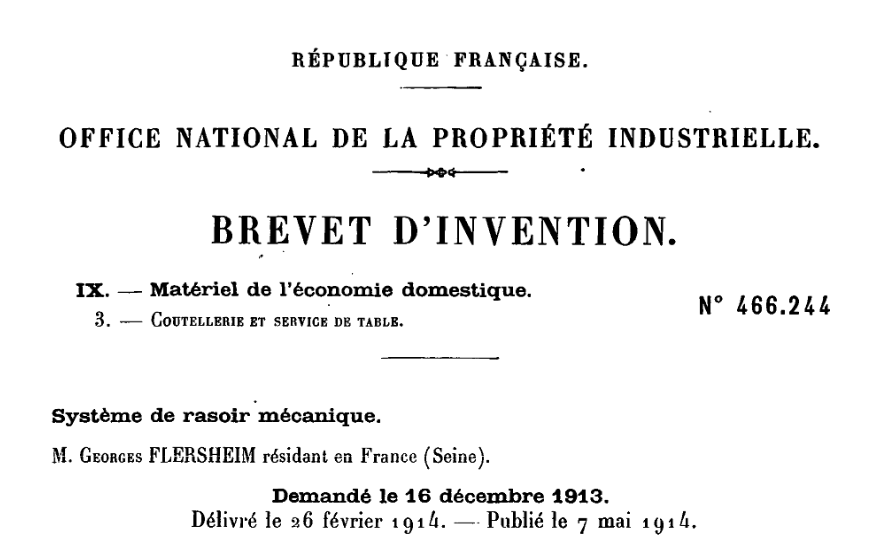
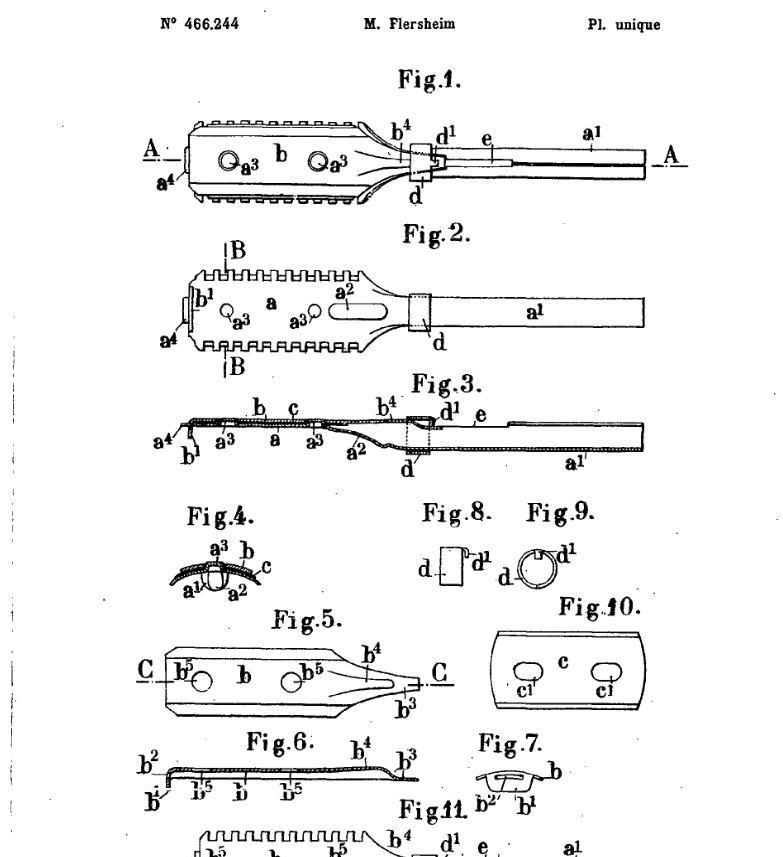
And as shown on an advertisement from March 15, 1914 he made razors too, with patent number FR466244. Pay attention to the FM logo on this ad. He used the letters FL and EM and between these letters the old “Fm Paris” logo in a circle. On the ad from the magazin: Excelsior Journal Illustré, you see the old Martin adres but he used the letters FLEM as a brand name.
Source gallica.bnf.fr / Bibliothèque nationale de France
Part of patent number FR466244 Patent from the site Espacenet
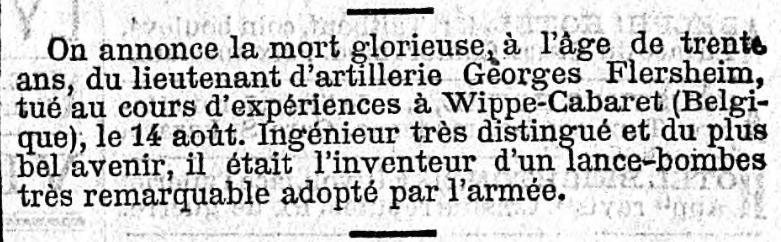
In addition to being owner of his company, Georges Flersheim was also a reserve Lieutenant of the artillery. During a demonstration of a shell-launcher, it went wrong. Georges Flersheim “dead for France” on August 14, 1915, in Woesten, ( a small village in the Belgian province of West Flanders and a part of Vleteren ) following war wounds.
In the French newspaper “Le Temps” from 17 september 1915 number 19795 is this announcement:
Source gallica.bnf.fr / Bibliothèque nationale de France
Translation: “At the age of thirty, we announce the glorious death of the artillery lieutenant Georges Flersheim, killed during experiments at Wippe-Cabaret (Belgium) on August 14. Very distinguished engineer and the most beautiful future, he was the inventor of a very remarkable bomb-thrower adopted by the army ” NOTE: Wippe is a neighborhood of Woesten Belgium
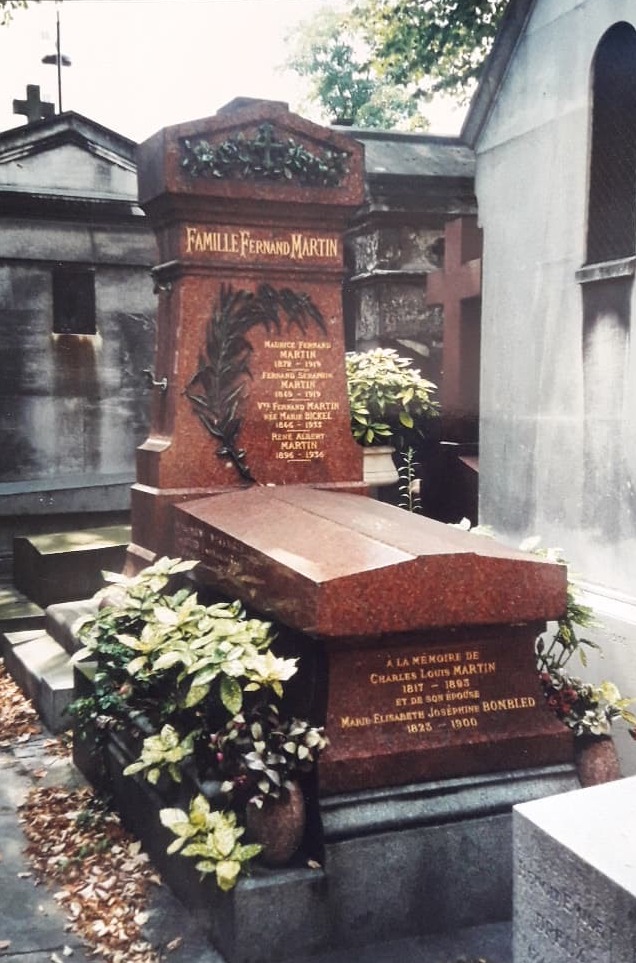
He is buried in a family grave at the famous Paris cemetery, “Cimetière du Père-Lachaise”. Many celebrities are buried at this cemetery. Fernand Martin is also buried in a family grave at this cemetery.
Since Flersheim’s death came so suddenly, what did they produce after his death?
did they continue to produce with the existing models?
supplemented with possibly new models designed by Flersheim?
were old models from the Fernand Martin period, produced again?
Since Georges Flersheim’s death, his mother was the administrator of the business.
But there was certainly some action from the Flersheim factory. In a publication of the monthly magazine “La France Universelle” in the section “Le Jouet” of April 1, 1917, it is stated that at the 2nd toy exhibition in Lyon, the company Fernand Martin (Georges Flersheim successor) is registered as an exhibitor.
And now two toys that are under discussion:
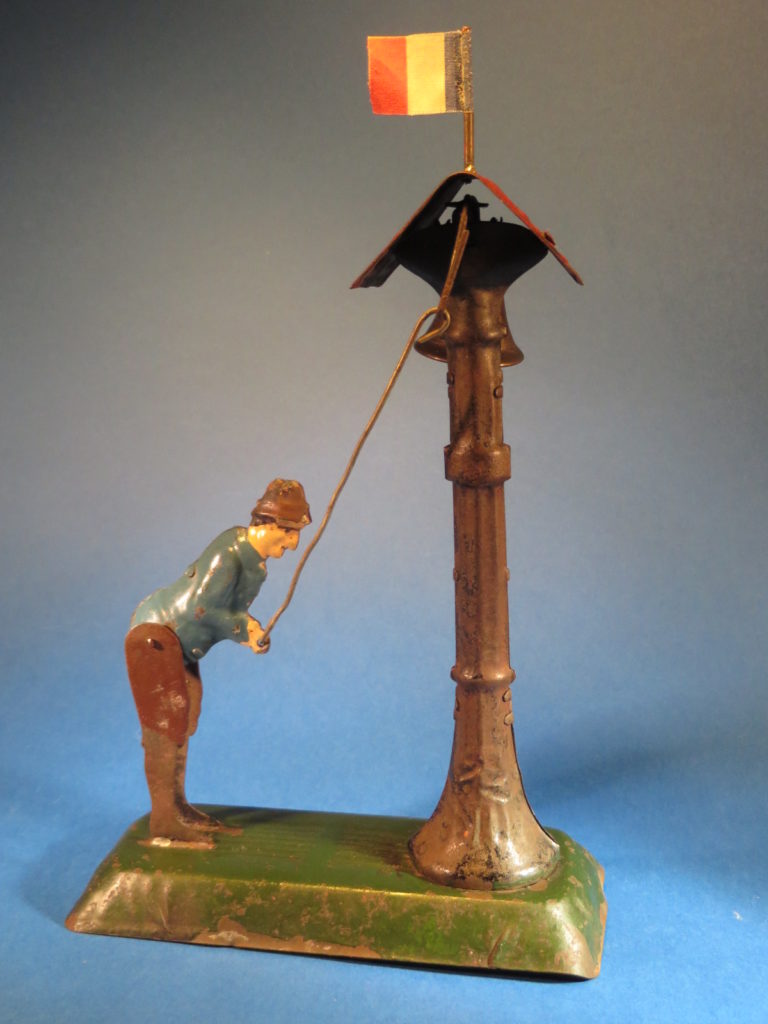
There is a toy the “Je sonne la paix” with number 246, this toy was an adapted reissue of the 1885 “Le sonneur endiable” by Fernand Martin, and must have been released at the end of the war in November 1918. On page 167 in the book of Frédéric Marchand: The History of Martin Mechanical Toys there is showing the label and in the book Fernand Martin Toymaker in Paris 1878-1912 there is a box on page 201 Till now, the only reference to this toy was found in the magazine “Le Petit Journal” dec. 17-1919.
The main difference are:
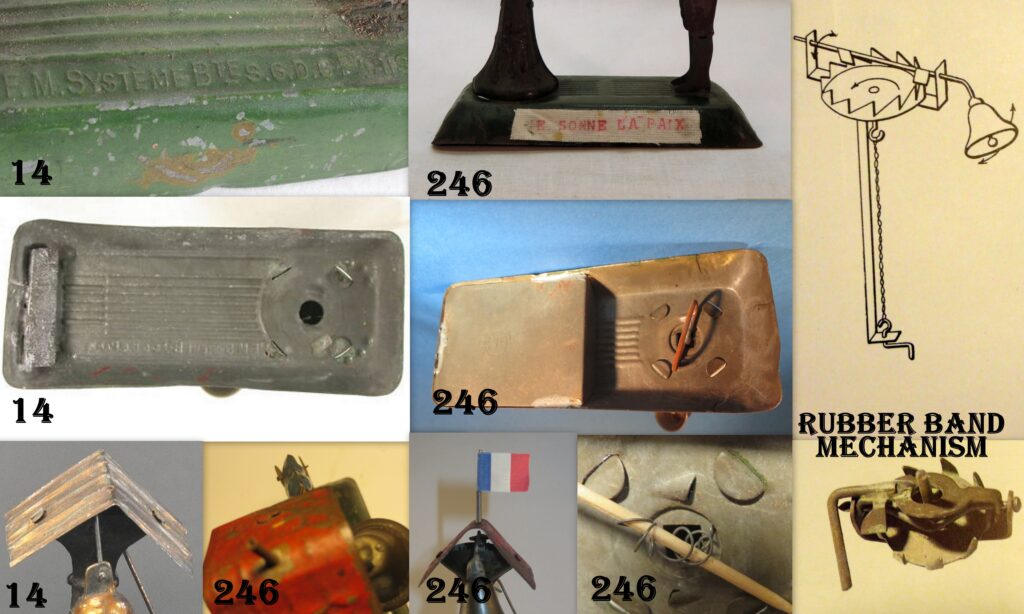
The Martin version (14) -“FM Systeme Bte S.G.D.G. Paris” is stamped on top/side of the base. -On the bottom, you see, under the male figure, an elongated piece of iron mounted as a weight -A rubber band drive. -The label in the original catalog marked with the FM logo and the triangle
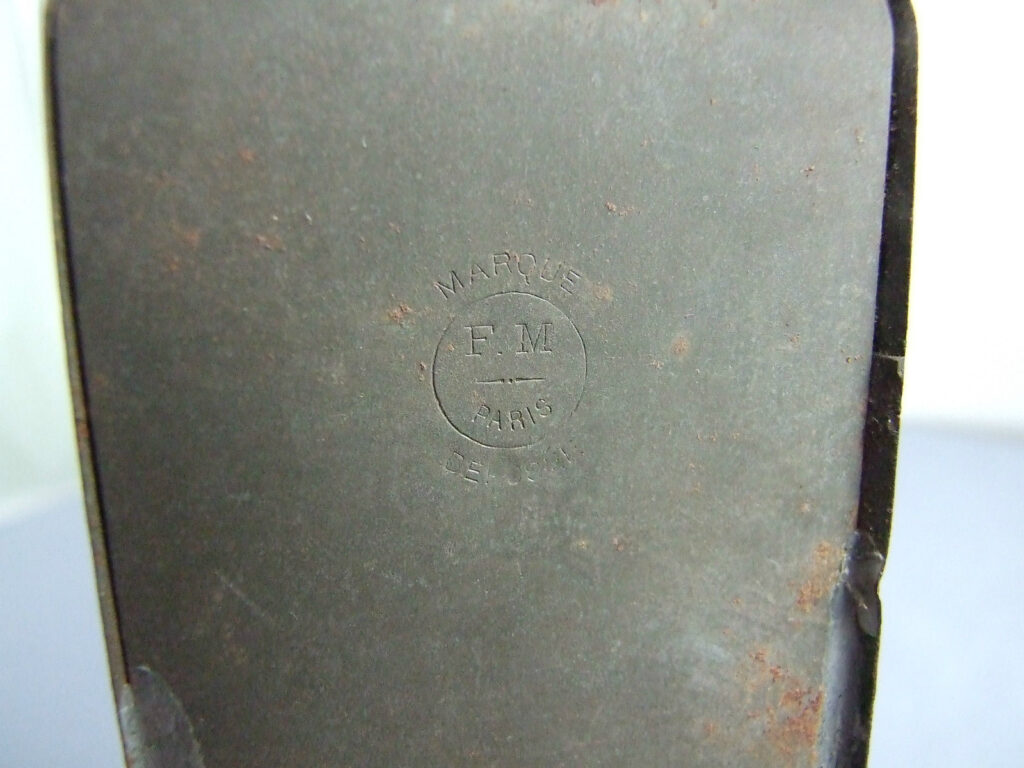
The Flersheim version (246) -The base plate has no name or logo, there is a piece of fabric on the side with the name “Je Sonne La Paix” printed on it. -On the bottom a solid plate is soldered and stamped with the round FM logo on it. -I have seen two different version, with a long spiral spring in the pole and there are versions with the rubber band drive. -At the top there is a French flag a hollow pipe has been placed in the roof for the iron flagpole with a fabric French flag. -The roof has been given a slightly different relief. -The bell has also been given a slightly slender shape.
Base plate with FM logo
During the war and afterwards, the toy manufacturers had hard times. Was the Georges Flersheim factory able to continue producing? Shortages of supplies and personnel in a shrinking toy market? The costs for the release of a “new or adapted” toy were also very high, molds had to be made or adapted, a new label must be designed and printed, boxes were made.
Discussion: Is this a officially produced / sold toy by the Flersheim factory? The pro arguments: -it looks that it is made with the old Martin molds. -it is marked with FM. Paris (another manufacturer would never use the FM brand!) -there is a label, marked with the FM logo and the triangle -there is a box, marked with the FM logo and the triangle -there is 1 reference to this toy as found in the magazine “Le Petit Journal” dec. 17-1919. The counter arguments are: -who made/designed it. (Georges Flersheim died three years earlier.) -why has the number 246 been used twice. (Victor Bonnet used it in 1919 for his first toy) -this toy is not shown anywhere in an original catalog, advertising or the like.
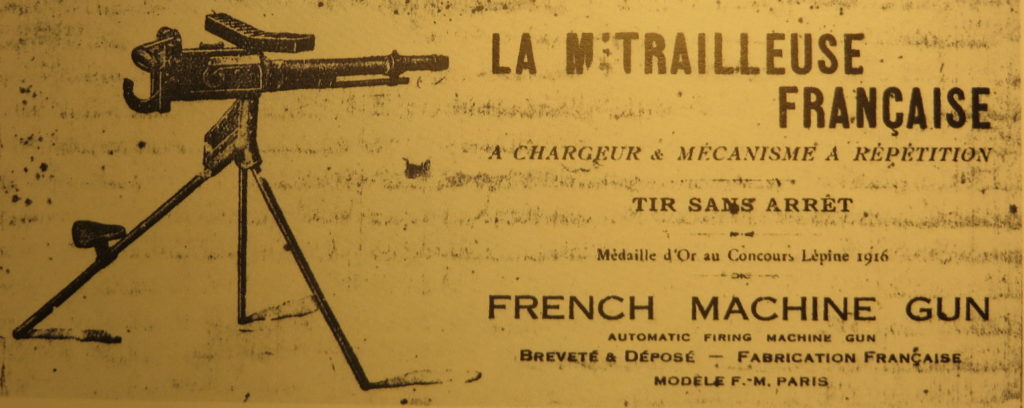
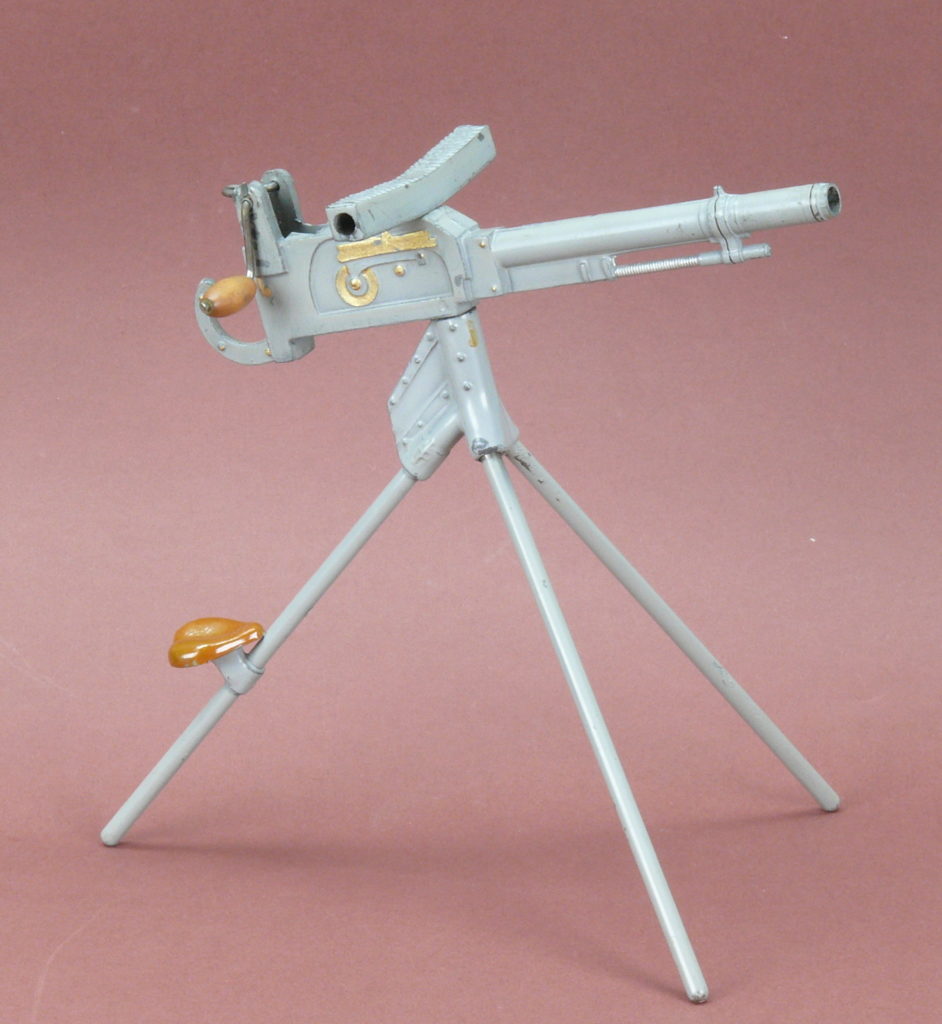
And then there is another debatable toy with the name “French Machine Gun”.
Courtesy Toy Museum Soltau (“Spielmuseum Soltau”) in Germany,
Is it made by George Flersheim ?? many think so, but is that so ?? As can be read on the box, it was brought to the Lépine exhibition and competitions in 1916, so 1 year after the death of Georges Flersheim, where it won a gold medal. This toy is not modeled like a Flersheim or Martin toy. The last complete metal cast toys is the spinning top “Les Valseurs” (the dancing couple) made in 1885. On the box you see the text: Bréveté & Déposé meens that this product was Patented & Registerd, but till now I can’t find this patent. It is marked on the box with “Modele F. M. Paris” but this F.M. can also mean something else and like: Fusil Mitrailleur (another name for Mitrailleuse Francaise) and also on the toy or the box are no “Martin/Flersheim” features like the Martin logo that Flersheim still used: the circle with FM, or another logo: the triangle with number 138 in it, and at last the box it is unnumbered and differs a lot from the designs used on the boxes at the time.
I have found no hard evidence so far that this toy belongs to the production of the Flersheim factory.
Courtesy Toy Museum Soltau (“Spielmuseum Soltau”) in Germany,
The story about Flersheim is not over because many discussions and questions remain. As in the current numbering, there will definitely be changes in the future.
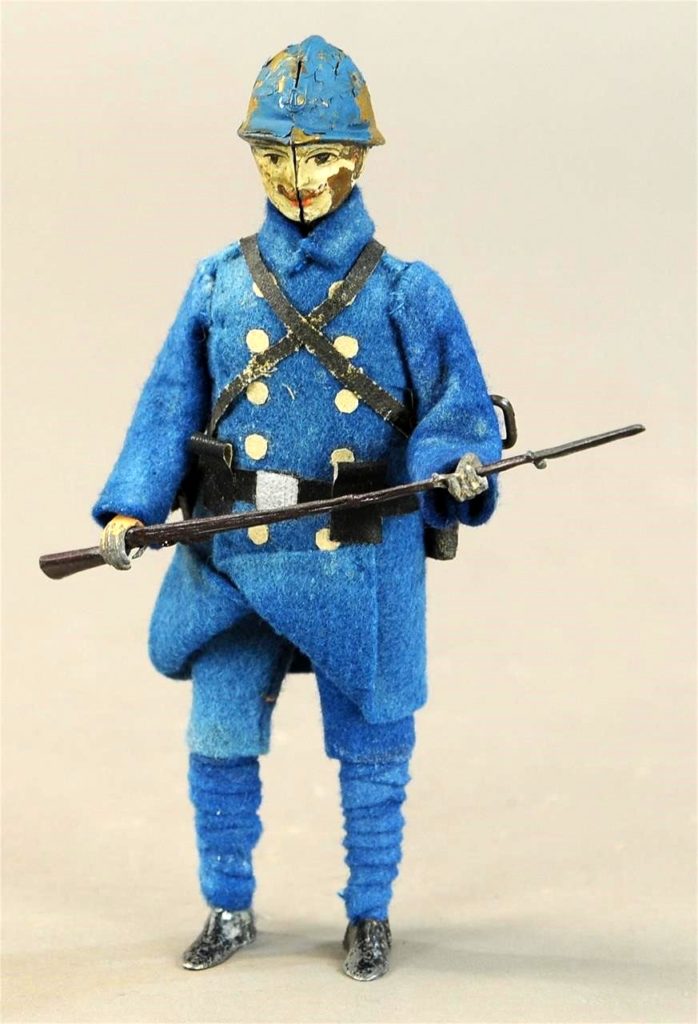
We need some help !
Picture from the site www.rubylane.com
During our search for soldiers who are made by Flersheim or Martin, we found this soldier on the site of www.Rubylane.com it was probably sold in January 2015, (the picture is meanwhile removed from the site) QUESTION: Who sold it or who bought it? We would like additional information about this toy. If you can help, Please contact us via the email address below. Or do you have unknown “Martin, Flersheim or Victor Bonnet” toys, let us hear from you, maybe these are the puzzle pieces we are looking for.
Many thanks with the help and texts I received from Francois Mesqui.
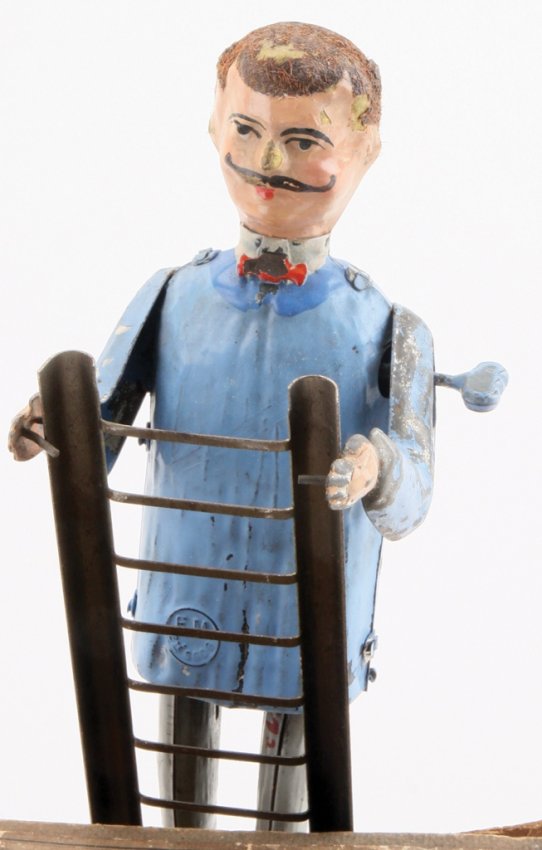
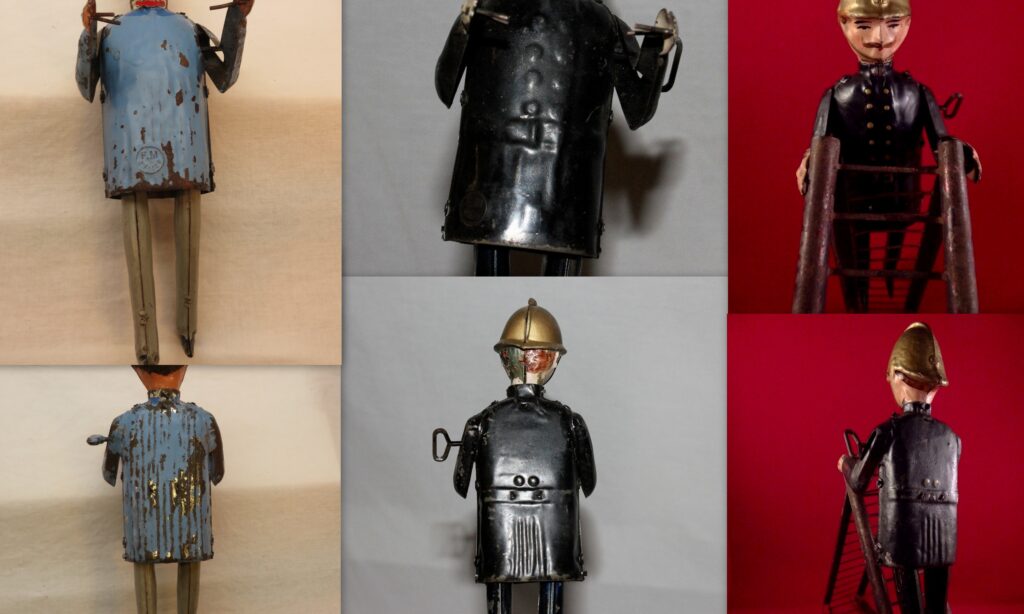
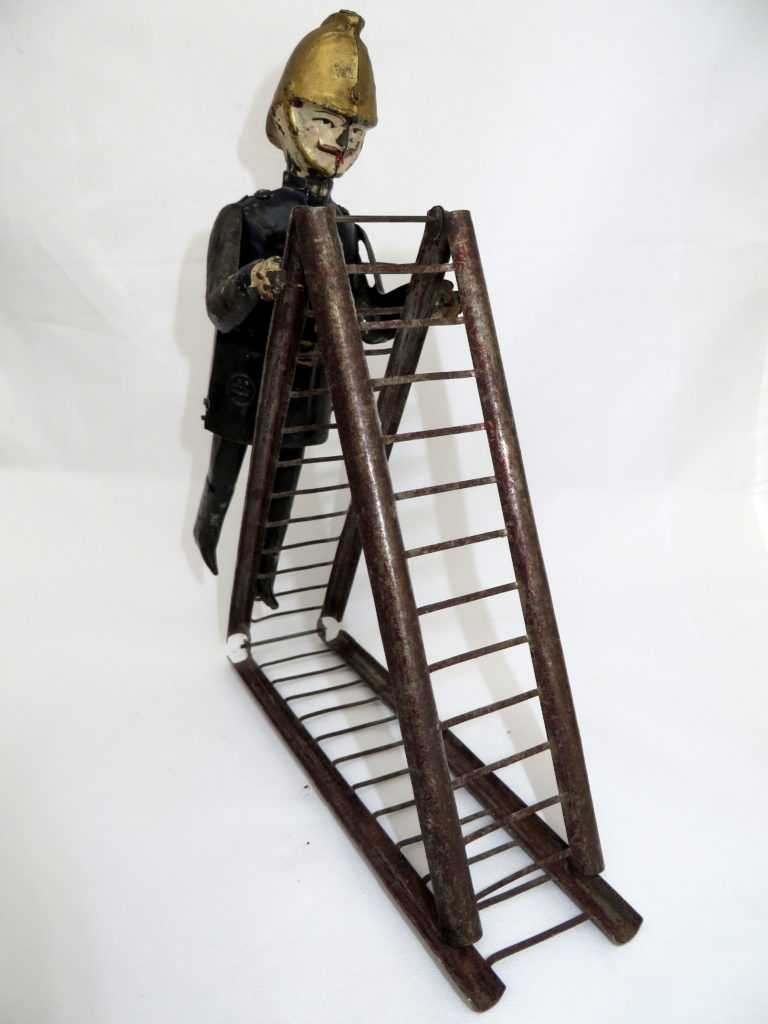
One of the rarer Martin toys and made from 1904. The height of the male is about 20 cm (7.9 inch) It got Martin number 197 A patent of this toy was issued on September 01- 1903 in France with number 334981. This patent is also been used for the firefighters with the same number 197
Courtesy Pook & Pook Auctions
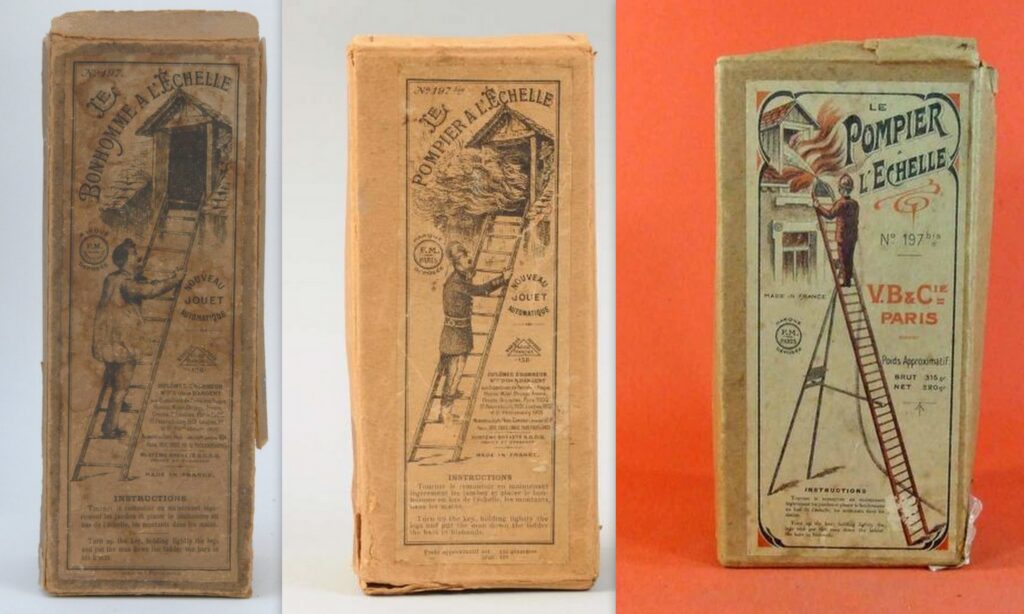
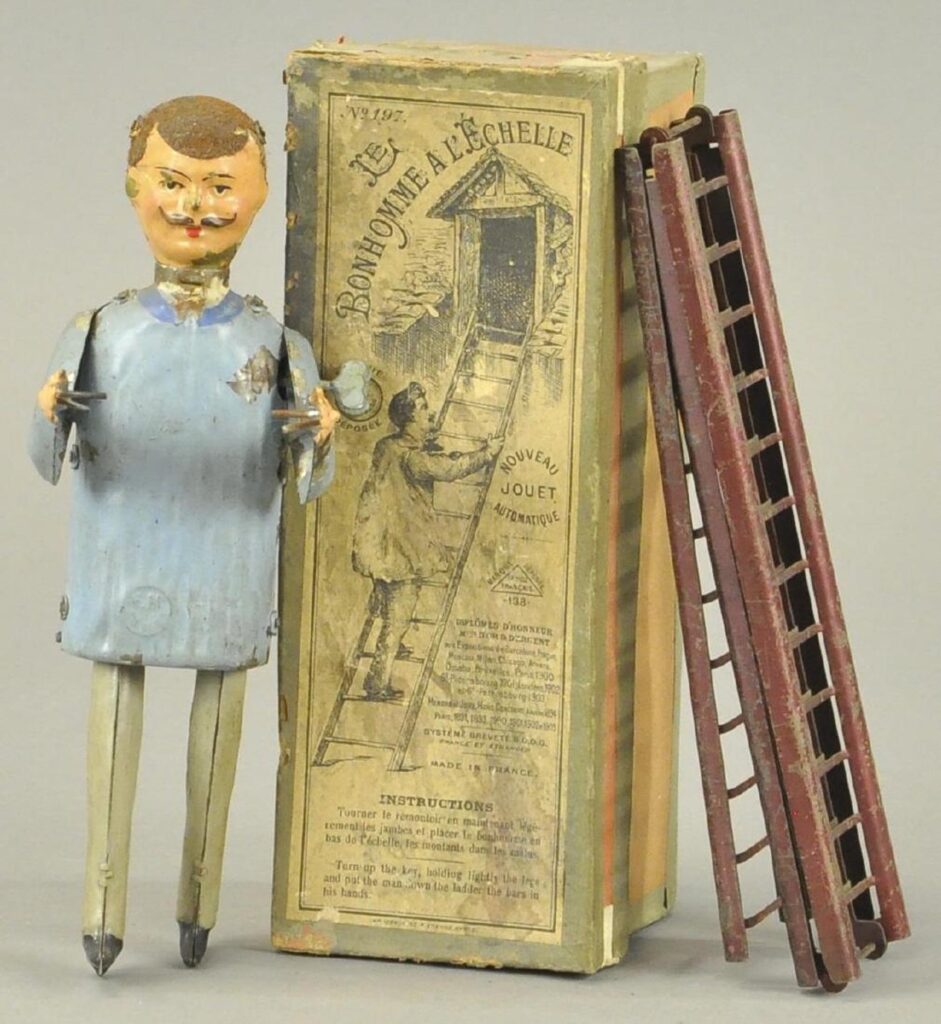
It is strange that number 197 contains three different figures. Even the text and pictures of the figures and house pictured the box are different. The first box is the light blue civilian figure on a ladder named: Le Bonhomme a L’Echelle from Martin. The second box is the Fireman on the ladder from Martin and Flersheim named Le Pompier a L’Echelle. The third box is from Victor Bonnet named Le Pompier a L’Echelle. All boxes have the same number 197 and all toys have the same climbing movement.
The difference between the heads and the color is very clear but the difference in the bodies is a little less clear, therefore these images, you can clearly see that the civilian has very different body characteristics.
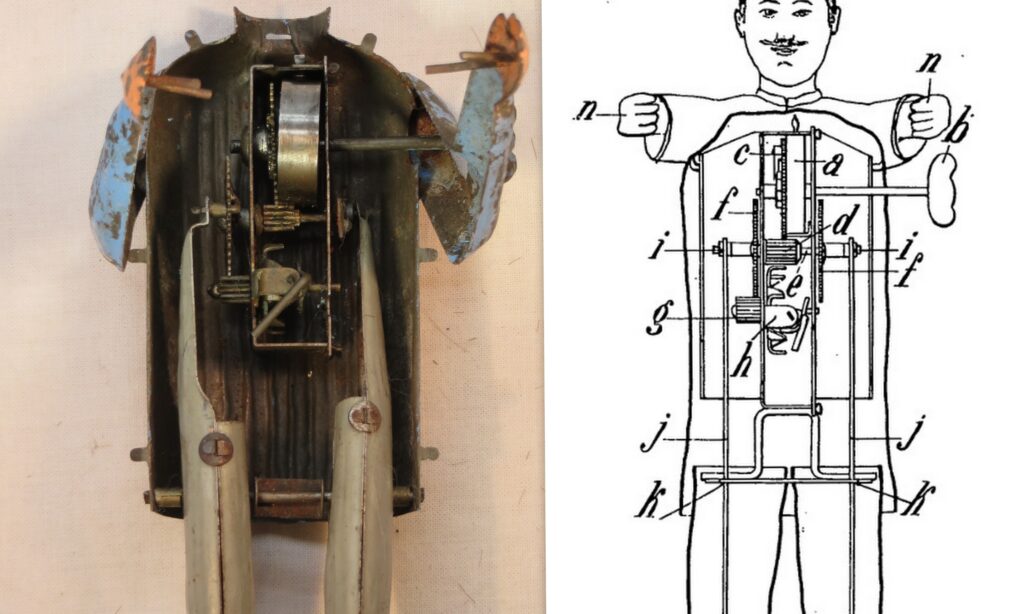
Courtesy Bertoia AuctionLeft: Martin civilian figure—Middle: Flersheim model and released by Victor Bonnet from about 1919 —Right: the early Martin 1904 model and released from about 1912 by Flersheim.The inside with the movement
In this pictures you see in the middle a dubbel “Z” form axel ( code i) so when the left foot goes down the right foot goes up and when the left foot goes up the right foot goes down and so on.
The operation is as follows: First wind up and hold, in his handpalm are “U” shaped bracket, you place the figure with these “U” brackets over both outsides of the ladder and slide it all the way down with 1 foot on the lowest tree, let go and he slowly move his legs up alternately to suggest realistic stair climbing.
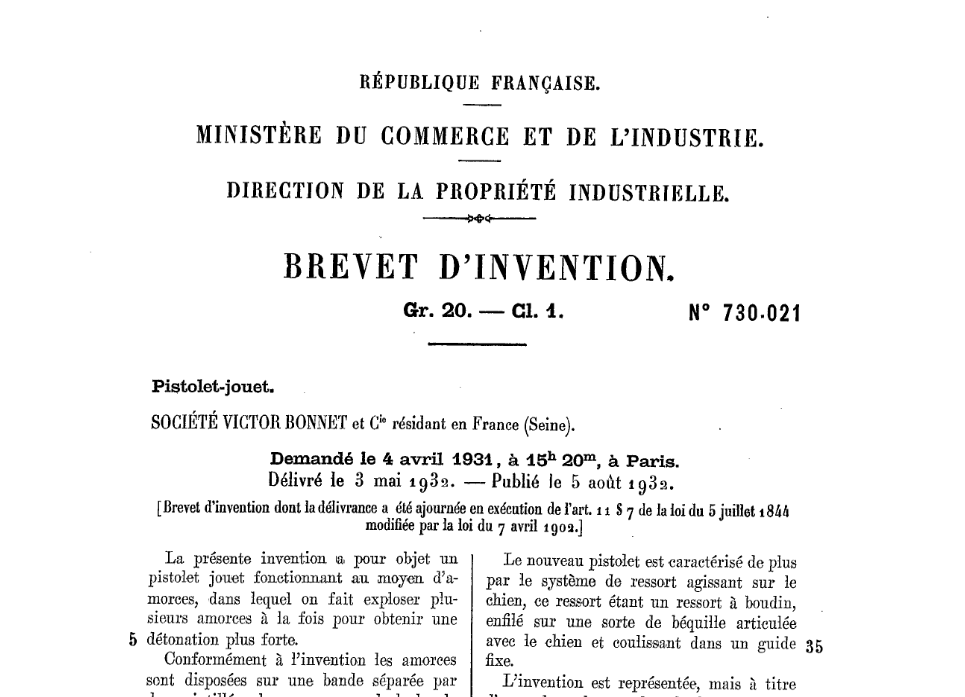
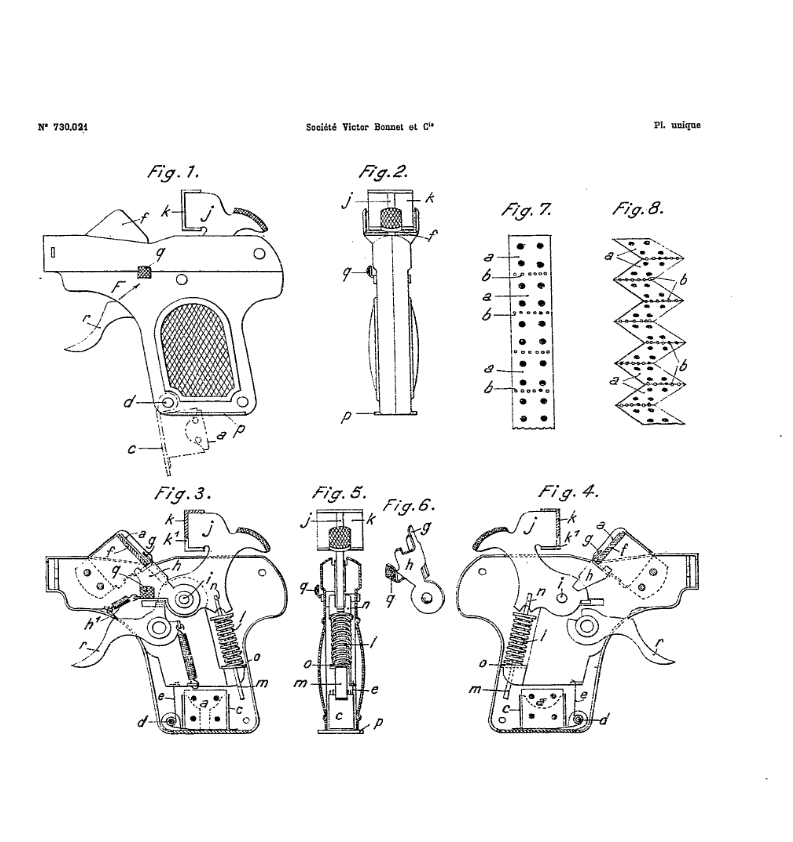
During his period as the owner of the former Fernand Martin factory, Victor Bonnet brought many beautiful new toys to the market. The pistols/guns are very noticeable here because they don’t really look like the other toys. But it was then and is still a hugely popular toy with mainly boys. Till today, 7 different pistols/guns are known. To my surprise, I found an second original bill from Victor Bonnet from 1933 with the order of various pistols and other toys on it.
This bill is dated March 31. 1933 The address of Victor Bonnet & Cie factory is still the old address where once Fernand Martin produced his great successes at 88 Boulevard de Menilmontant Paris.
At the back of this bill the 6 well-known pistols are also shown. This order included two well-known pistols, one pistol we discover earlier this year and two names that we didn’t know yet. Of course we recognize the well known PanPan and the Bombarde on this bill. The most toy collectors had never heard of these two names on this bill, the Auto-Fusée and the Corsaire. In the previous discovered bill, see: https://www.fernandmartintoys.nl/discovered-an-original-bill-from-1933-by-victor-bonnet/ we already found two new names of which we could attribute one to the pistol with number 266 de Le Costaud, and another one is the L’Epervier from which we now know what it is but I can’t yet give a number.
So we have till now 3 piece that are for the most collectors new, ( Auto-Fusée, Le Corsaire, L’Epervier) What represented they ??? They are : Le L’Epervier (Flying disc launcher) Le Corsaire (a pistol) so now we have 8 different pistols Auto-fusée (a race car) I don’t know for sure if there are more new names but I am continue to search.
Probably is that the Victor BONNET & Cie-in-liquidation, sold the patents and trademarks of guns/pistols to JEP, as they were show in a JEP’s product portfolio from 1934.
And do you know off there other missing pieces ? send me a message and make me happy.
The history of Fernand Martin toy manufacturer in Paris. Part two: The second Period.
In the most relevant books about Martin are the toys that are made by Martin and his successors divided into four periods.
According to the latest state of insight, these periods might be classified as follows Period 1 from 1878 – 1894 Period 2 from 1895 – 1912 Period 3 from 1912 – 1919 Period 4 from 1919 – 1933
The second period from 1895 – 1912:
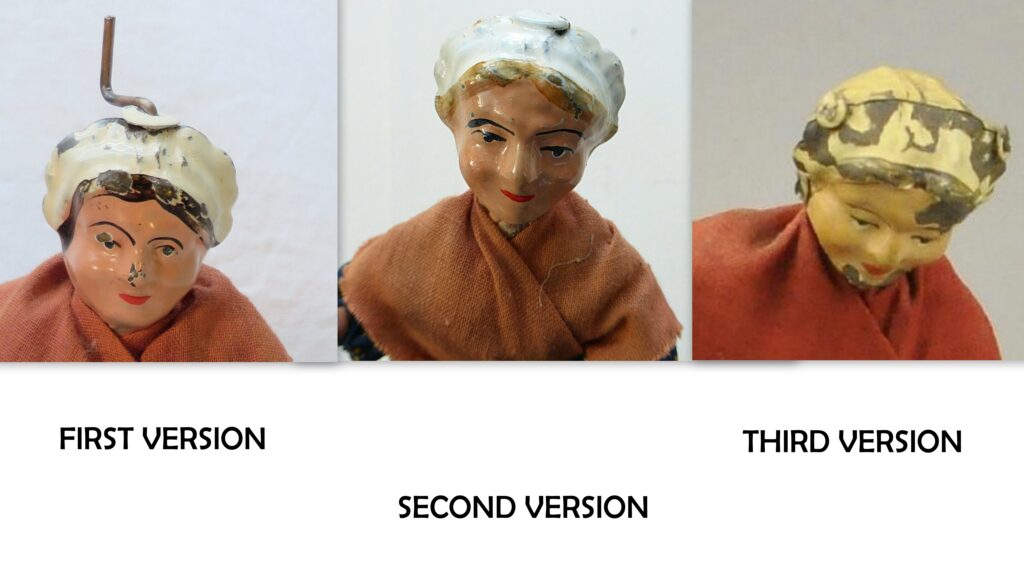
Fernand Martin started the second period in 1895 with his: Ma Portiére, Martin number 147. This toy was executed with his old invention the “Rubber band” drive. It turned out that the “rubber band” system for this larger toy didn’t work, it was too weak. Therefore he also performed this Ma Portiére with a clockwork drive, the difference is clearly visible, the first version has a little handle on top of the head, in the second version it has disappeared.
This new toys are mostly figures with a height of about 18 to 20 cm (7 – 8 inch). Most are made of a wire frame with lead feet, a head of copper foil, fitted out with a clockwork mechanism and dressed in clothes made of fabric.
In 1901 Martin came to the first exhibition: Concours de Lépine, ( The Lépine competition) of his very good friend Mister Louis Lépine, with 17 new figures, he called them the “Bonshommes de Paris”. This competition was held for the small inventors to present and promote their inventions and creations. On that event they get in touch with possible manufactures. Mister Louis Lépine was Préfet (head) of the Paris police. Later on Martin participated several times as a member of the jury of the toy section of this event.
Fernand Martin and his son Maurice created most of their production themselves, but occasionally they also bought up inventions / patents. Most of these patents were bought from the inventors at the aforementioned Lépine Competition. A few examples are the “La Boule Mysterieuse”, the “L’autopatte”, the “Le Marchand de Marrons”, (produced by George Flersheim) Some unknown names are the “L’homme aux echasses”, (man on stilts) and the “L’attraper de Mouches” (fly catcher), so far we know are these toys never went into production, perhaps produced in small numbers ??
Fernand Martin was very often on “business trips” around the world. He visited many exhibitions with his toys, but was also often a guest as a member of the jury. The toy boxes from that time include the following cities: London, Anvers, Paris, Moscow, Barcelona, Brussels, Prague, Chicago, Antwerp, Omaha, St Louis, Liège, Milan and St Petersburg. Was Martin at every exhibition in person? I don’t know but we know for sure is that he had his own stand in the French pavilion at the world fair of St Louis USA in 1904 and he was a member of the jury by at least 6 exhibitions.
Fernand Martin toys on the St. Louis World Trade Fair 1904 Picture from the Magazine Playthings page 178 June 1909 and with permission of The Strong Archive USA
But Fernand Martin also suffered setbacks. Just as at the end of May 1904, a major fire broke out and many workers were temporarily unemployed. A proposal has been submitted to the city council to compensate these employees with compensation. A proposal from Mr. Landrin, member of the Bureau of the City Council: Allocation of assistance to workers who have fallen victim to the factory incident on 88 Boulevard de Ménilmontant. As a result of a fire at the end of May 1904, 70 or 72 workers in the toy factory boulevard de Ménilmontant 88 were reduced to unemployment. At my request, the Office of the City Council voted in favor of provisional aid of 1000 francs. This amount is absolutely inadequate and I recommend the advice to kindly bring it to 3000 francs. Therefore, I submit the following proposal, for which I request the benefit of the emergency: The Council: For the time being, an amount of 3,000 francs is being made available to the mayor of the 20th district to help the workers. Victims of incidental unemployment due to the factory fire bd. 88, Ménilmontant. The amount of 1,000 francs already voted as a provision by the Office is deducted from this amount. Signed: M. Landrin. The emergency has been declared. Proposal put to the vote.
The Bonhommes were expanded very quickly with several figures. The most famous and sold figures are the Le Gay Violoniste and the Le Pochard. Almost every new collector starts with one of these two figures.
As already mentioned, this second period started with number 147 and ended with number 226 the “Les Cochins de Père François”. There are 82 numbers between the first and last toy of this period, but that does not mean that 82 toys have also been produced, no there are definitely more.
In 1907 his son Maurice became seriously ill probably struck by tuberculosis. In 1908 Martin bought a villa in the hills of southern France in a small village Villefranche-sur-Mer nearby Nice on the Mediterranean. The villa had the name “Villa Margot”. Later the village named a street after their famous fellow citizen Fernand Martin, this street is named: “Avenue Fernand Martin”.
In 1911 Fernand Martin decided to retire and sell to Georges Flersheim the 22-year-old son of a large banker family. The sale was concluded on January 1, 1912 and here ended this second period of the Martin toys
Maurice Martin died of his illness on August 15, 1919 and Fernand Martin died almost 3 weeks later on September 4, 1919, aged 70 years.
Both were buried in a family grave on the world-famous “Père-Lachaise” cemetery in Paris very close to their old factory.
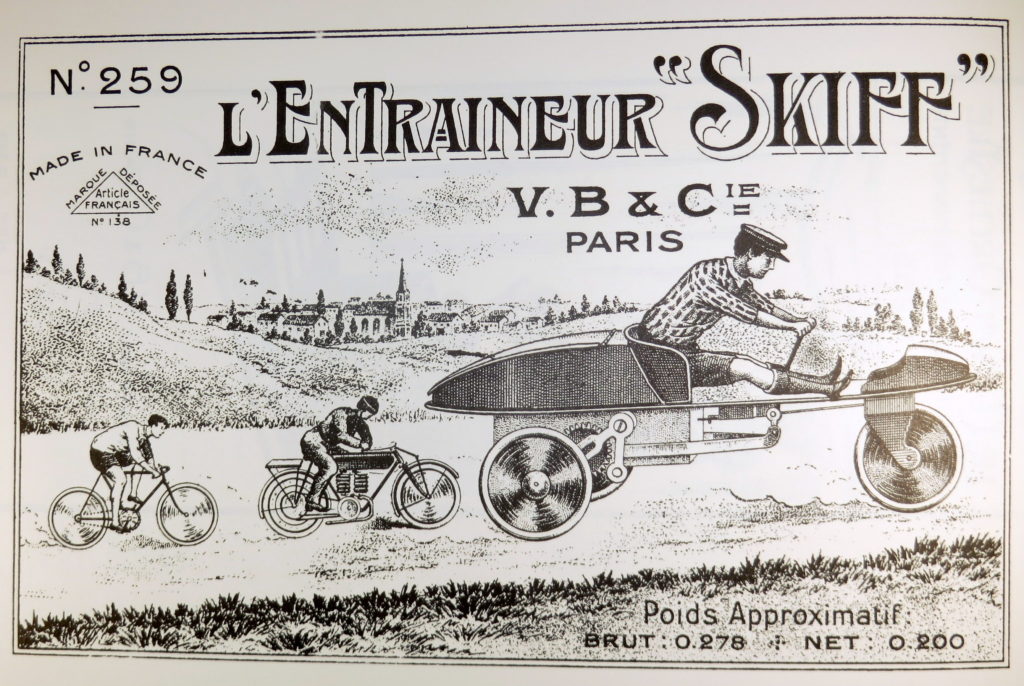
This very nice and almost lifelike toy is made in the fourth “Martin” period by Victor Bonnet & Cie It has been given the “Martin” number 259 This toy was produced from around 1928.
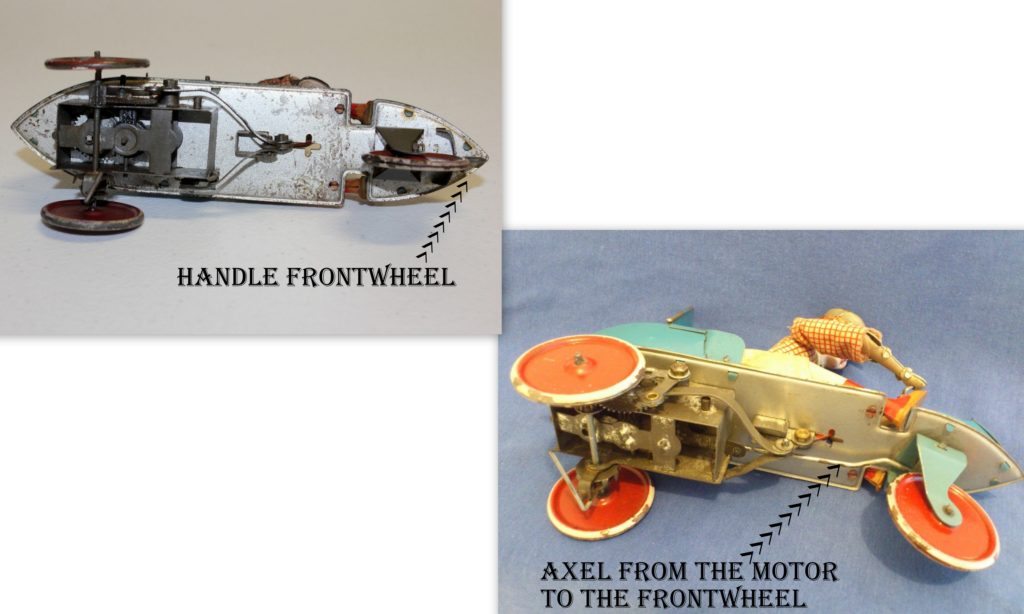
From my own collection: Model with the handle on the frontwheel
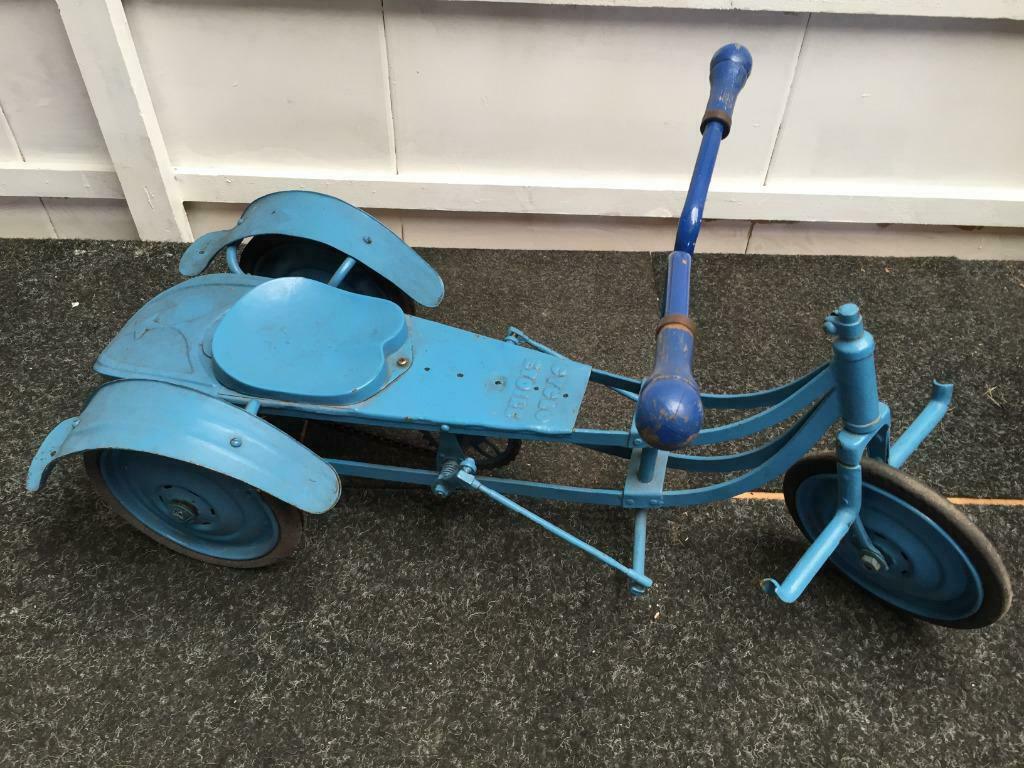
This toy was made after an example of a kind of children’s tricycle that was moved by means of arm strength and changed direction by steering the front wheel with your feet. There were models with one or two front wheels.
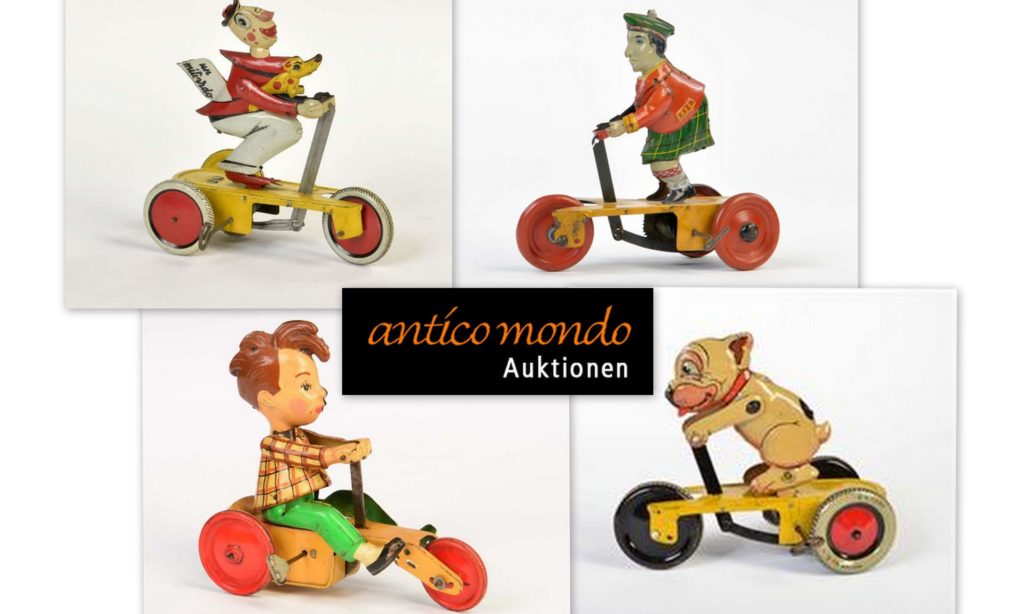
Various other manufacturers also made lithographed toy models of these arm-powered tricycles in the 1950s and 1960s.
Courtesy Anticomondo Auktionen Bornheim Germany
There are two different Victor Bonnet models on the market. At first glance you hardly see the difference, they are both blue and have the same boy figure. The difference is, however, at the bottom in the steering of the front wheel. The front wheel serves as a control for this tricycle.
Left model with the handle on the frontwheel – Right model with control from the mechanism
In one model, the front wheel is controlled by the drive clockwork mechanism itself. With the other model you have to do this yourself by means of a little handle which is directly on the front / nose, by adjusting the little handle the “skiff” goes straight or makes a turn to the right or left. So if you look at the bottom you can clearly see the difference.
picture from the catalog
I suspect that the model with the adjustment of the front wheel by the mechanism is the first version. My suspicion is that, on the original image on the box and in the catalog you can clearly see the adjustment rod (axel), just below his feet, from the engine to the front wheel.
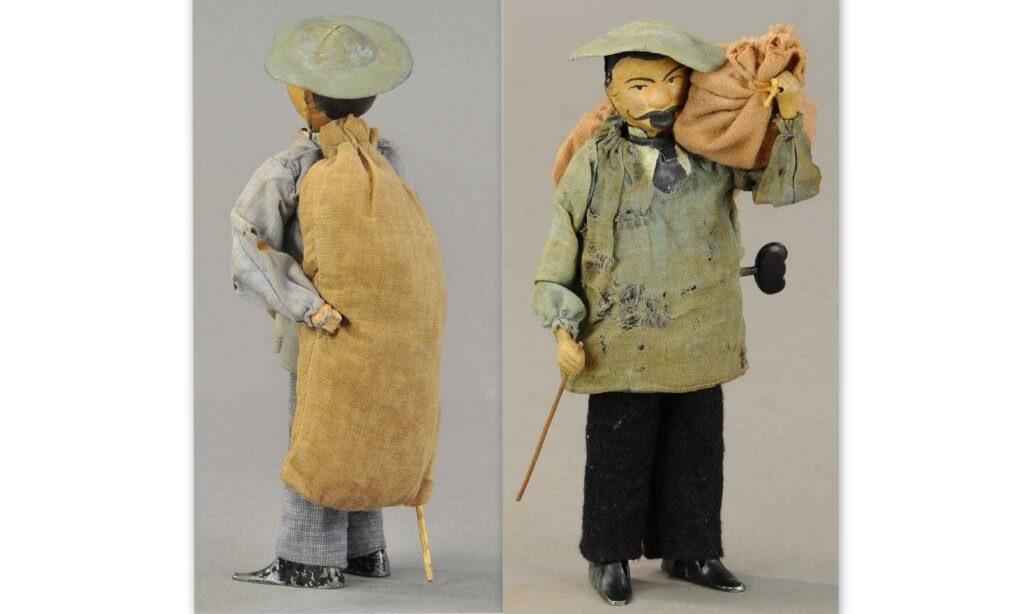
In the book: “Fernand Martin Toymaker in Paris 1878-1912” this figure is depicted on page 127 with number 188 in two versions called: “Le Charbonnier” and “Le Fort De La Halle” In the book “The History of Martin Mechanical Toys” from Frédéric Marchande on page 109 he writes that there must also be two versions.
photo courtesy of Michael Bertoia Auctions
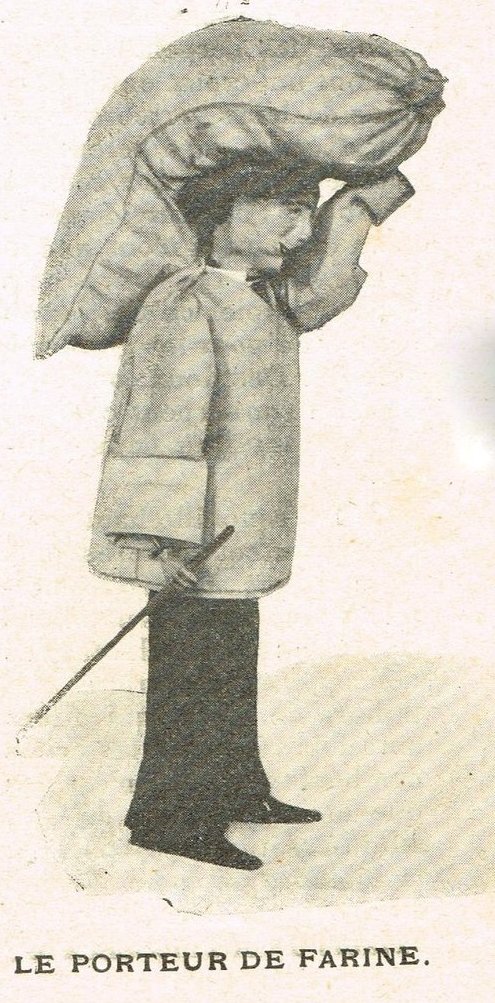
And here is example of another name that is depicted in the magazine Soleil Du Dimanche 03-12-1905. This time, in a article written by Léo Claretie (a good friend of Fernand Martin ) and now he is named: Le porteur de farine. So we have now three different names.
From the magazine: Soleil Du Dimanche December 03-1905
I personally think that there is originally only 1 version because: -The figures In the book: “Fernand Martin Toymaker in Paris 1878-1912” they are exactly the same figures. -In the book “The History of Martin Mechanical Toys” they are exactly the same to. -In both books are the same figures only they carries the bag in a different way, but that is possible by just bending the arm slightly. The bag is attached to the carrier by a string that runs through the hand. There is a hole straight through the hand. (See the left hands on both photos from the Bertoia auctions), there is also a hole in his right hand, but there is a cane in it.
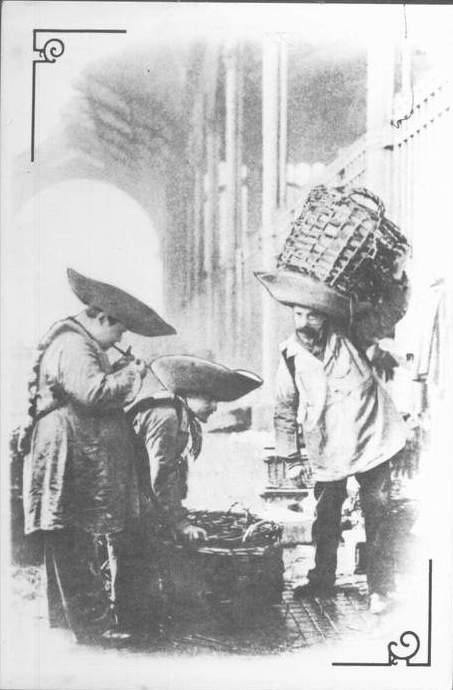
Postcard Le Fort de la Halle
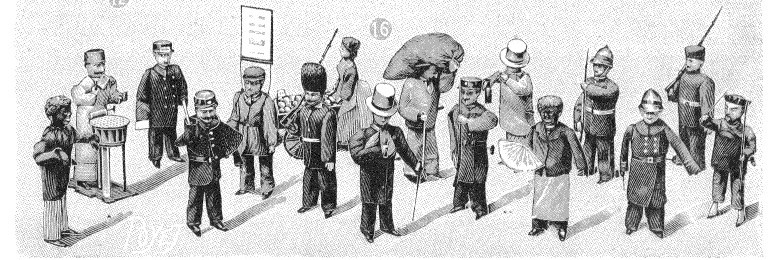
On the most pictures that I have seen, this toy carries the bag on his back for exemple: -You can see that on the toy what is in the collection of the French museum Musée des arts and Métiers – Le cnam, (this toy was in a gift from Fernand Martin to the museum). -A part of a picture from the magazine La Nature from 1902 pag. 13. (see picture below) -In the magazine: Soleil Du Dimanche December 03-1905 ( see picture above) -In the Englisch Illustrated Magazin number 34 Dec. 1905 (see picture below) -The poster from 1902 (see below)
La Nature from 1902 pag. 13. Source: (Cnum – Digital Conservatory of Arts and Crafts – http://cnum.cnam.fr)English Illustrated Magazin number 34 Dec. 1905
On an original box, the only I have seen at a toy market, the name was “Le Fort De La Halle”. Until now I have never seen a “Le Charbonnier” or a coalman, it should be exactly the same as the “Le Fort De La Halle” but covered with black coal dust. Presumably all the other names then “Le Fort De La Halle” were given in magazines, publications etc. by the writers themselves.
There may be a “but” and that is if Martin maybe made a one-off or a very little series of a black model especially for an exhibition, perhaps to see if the public reacts positively to it.
POSTER FROM 1902
Another proof that the name: “Le Fort De La Halle” the original name is, you can see it on an original Fernand Martin advertising poster from 1902 (on this poster you can see him standing at the bottom right, left of the pianist) showing with the bag on his back, and no “Le Charbonnier” is pictured on this, in 1902, hot poster.
If someone has a picture/photo or box label with a another name than the “Le Fort De La Halle”, and or of the black model, please send me an email with, if possible, a photo.
In the most relevant books about Fernand Martin are the toys that are made by Martin and his successors divided into four periods.
According to the latest state of insight, these periods might be classified as follows Period 1 from 1878 – 1894 Period 2 from 1895 – 1912 Period 3 from 1912 – 1919 Period 4 from 1919 – 1933
The first period from 1878 – 1894 :
His full name was Séraphin Fernand Martin and born in the French village Amiens. Fernand Martin lived from 1849 to 1919. Martin was an inventor, mechanical engineer and manufacturer of mechanical toys in Paris. He started as a small manufacturer and street vendor of artificial flowers, he made and sold these cloth flowers for many years but he certainly did not earn a good income with it. He married with Marie Bickel and in 1872 they have a son Maurice. But the brains of Fernand Martin were working hard and in 1878 he created his first toy, “Poisson Nageur” the swimming fish with a, for that time, very cheap and ingenious drive consisting of a “rubber band” mechanism.
demo model of the “rubber band” mechansime with the swimming fish
As clever as he was, he patented this invention and quickly sold this patent to Cremer toys 210 Regent Street London England.
With the proceeds he was able to start up his first factory in 1880 and from that moment on he could start producing more and in larger numbers.
He started in 1880 with 12 employees and in 1888 there were about 300 employees. Martin spent his life with his thoughts on toys, when he saw a special scene ore person along the way, he started to think whether it could be converted into a piece of children’s toys. You can clearly see that in all his work, they reflected the daily life and in particular scenes of children and working people in mainly France and in particular Paris.
If you now look in history books at pictures from that period, you will also see in many objects the unity with his toys from that period. During this first period Martin made at least about 47 (presumably many more) different toys, the exact number is still not known exactly because not every toy is numbered yet and he also often made toys on behalf of customer request, so toys that are not in his regular production was produced. Here we are still looking for more clarity, fortunately after deep research new facts regularly pop up. His earlier mentioned invention of the “rubber band” mechanism was used in most of his toys from this first period, he also used the “flywheel” mechanism and at the end of this first period, the “clockwork” mechanism . After 1897 he no longer used the “rubber band” mechanism.
He started in 1880 his first factory at 90 Boulevard de Menilmontant Paris in the 20th arrondissement, nearby the world’s most famous cemetery “Père-Lachaise”. Due the commercial succes of the “Petit Garçon Livreur” (the delivery boy) in 1888, Martin has now the money to buy a new building to expand his factory. We know this toy as the “Le Livreur” In 1892 he bought the adjacent building number 88 and after a complete renovation / rebuilding, the factory was expanded considerably as a result, and was, for that time, a revolutionary conception. This location is where the first period started and in 1934 the last period of its history ended here with the relocation of the Victor Bonnet production facility.
Martin became a respected citizen and has done a lot for the toy industry. He joined the “Chambre Syndicale des Fabricants de Jouets & Jeux” in Paris in 1886. In 1892-1893 he became Vice President and in 1893-1894 he was President.
Martin places his logo on most of his toys, first a circle with the letters FM and later with the addition the text Brevete S.G.D.G. (Sans guarantee du gouvernement). Around the circle was usually but not always the text Marque Deposee.
From 1897 he also placed the famous triangle with the text “Article Francais” and around it the text “Marque Deposee” and under the triangle a number, this triangle sign was granted from the “Chambre Syndicale des Fabricants de Jouets & jeux” to French toymakers. This number was different per manufacturer. Martin was given the number 138, so if you see the triangle with a different number underneath, then it is also a different manufacturer and for 100% no Martin.
In 1895 he started making toys in a larger size, this was the beginning of his second period with his “Bonshommes de Paris”.
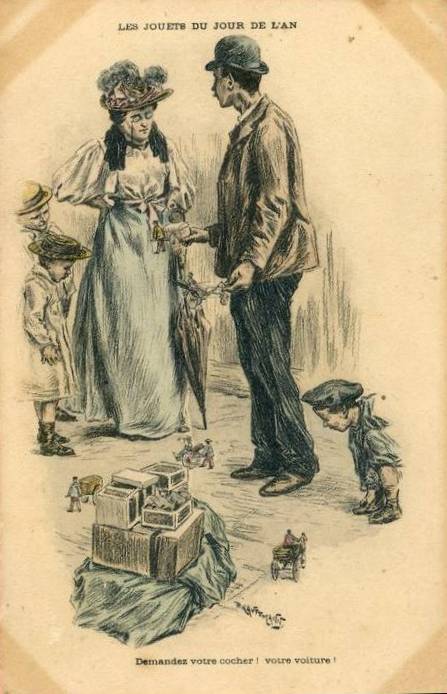
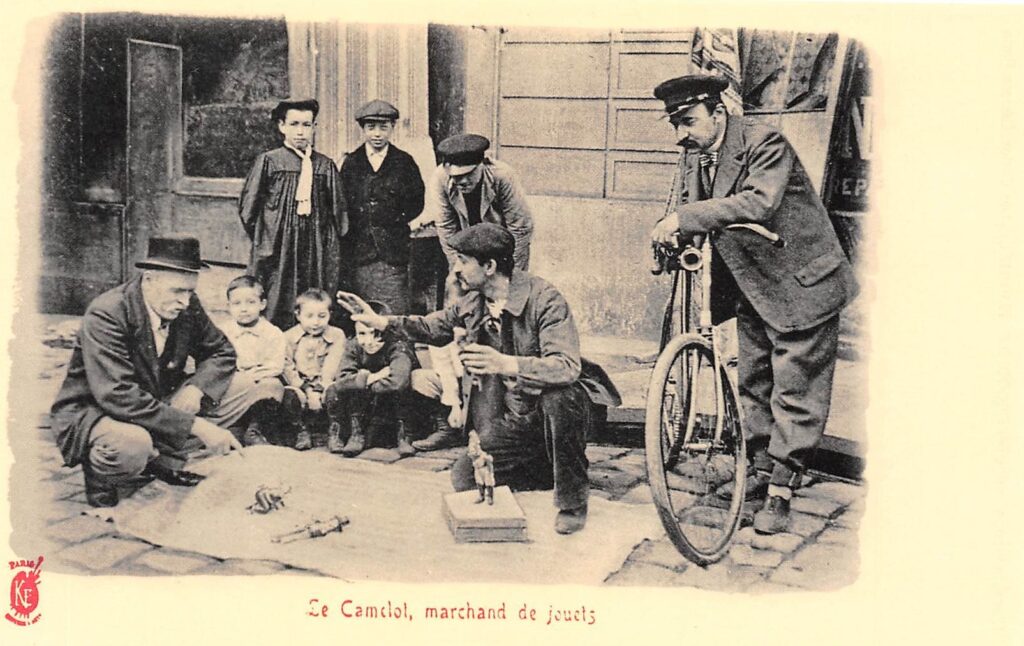
In a previous blog: https://www.fernandmartintoys.nl/fernand-martin-and-postcards/ I showed postcards depicting Martin toys. I have now been able to add a new postcard to my collection depicting three Martins, -the Le Fauteuil Roulant from 1889 (next to his right foot) -the Pousse pousse from 1889 (in his left hand) -the Le Livreur from 1888 (in his right hand and on the ground) This postcard is from France from the late 1800’s It shows a typical street vendor trying to promote his toys.
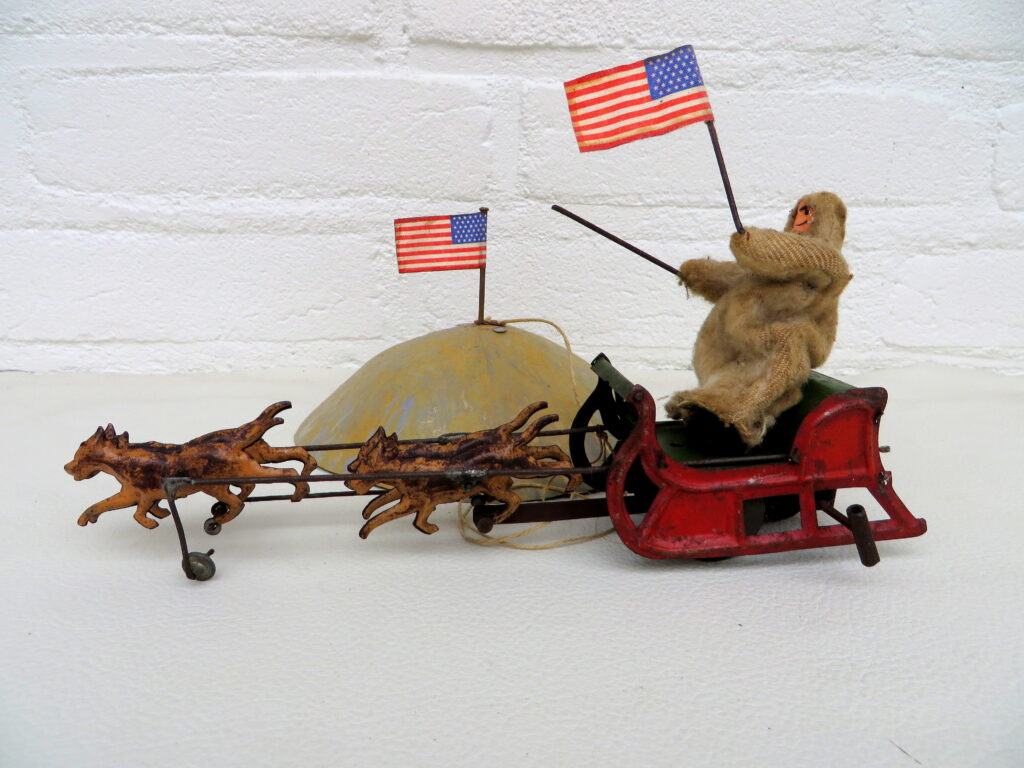
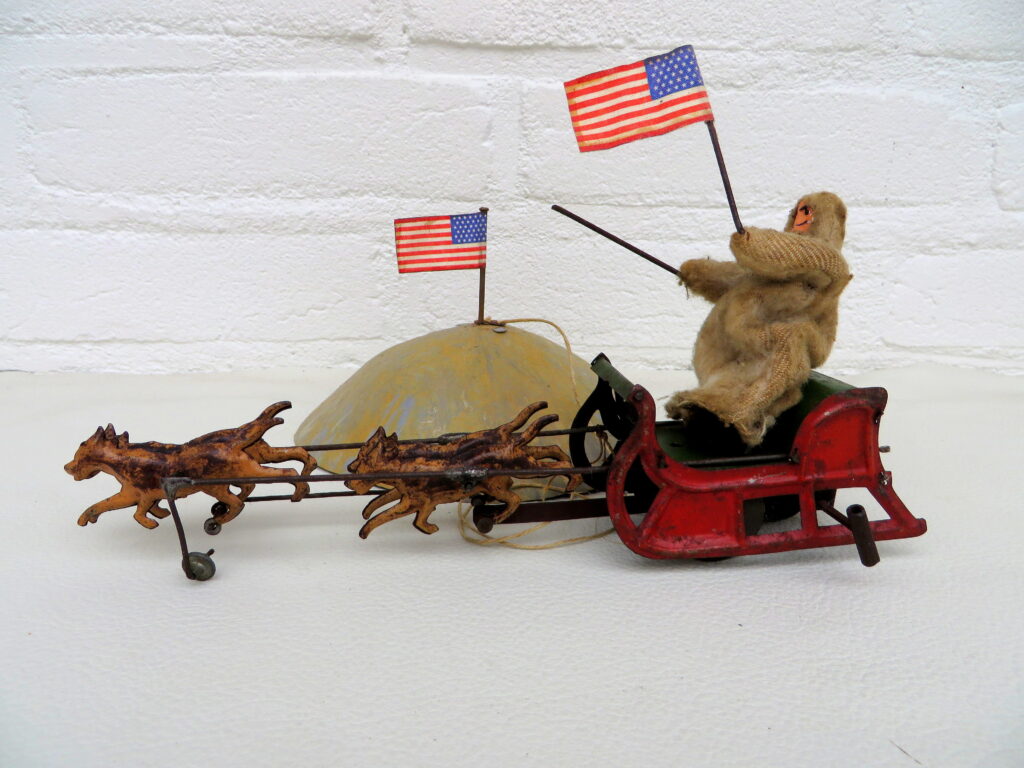
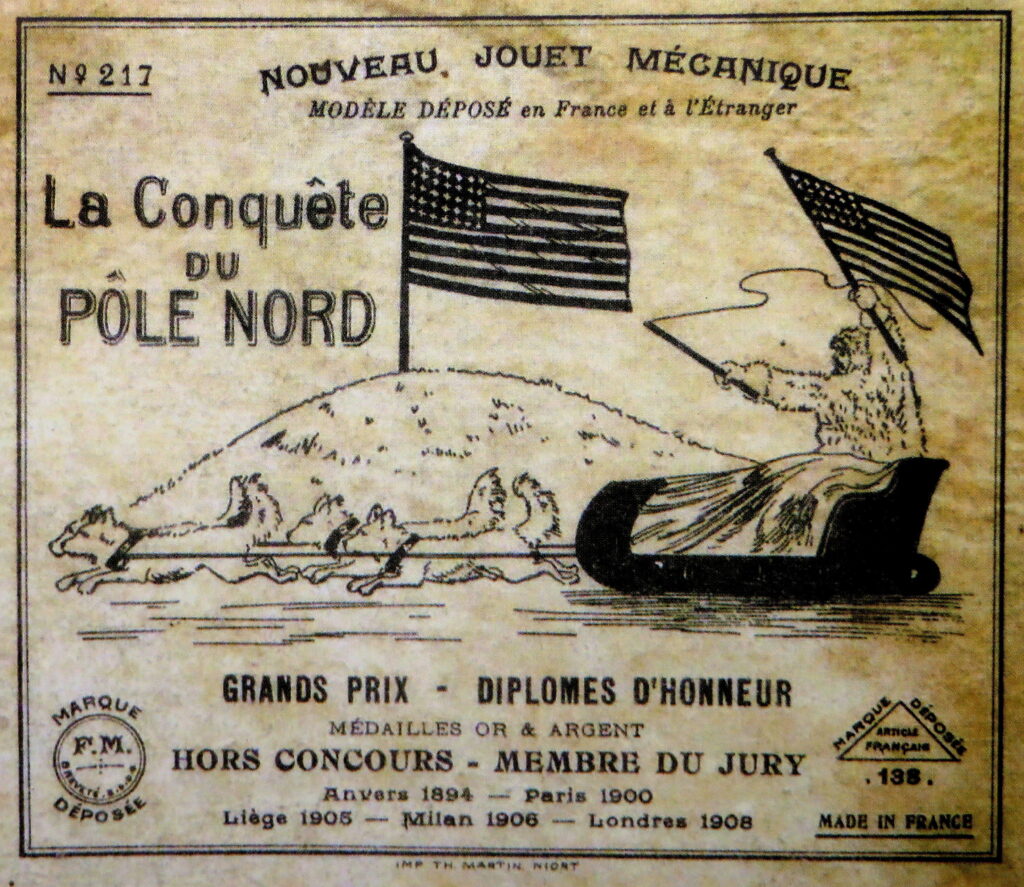
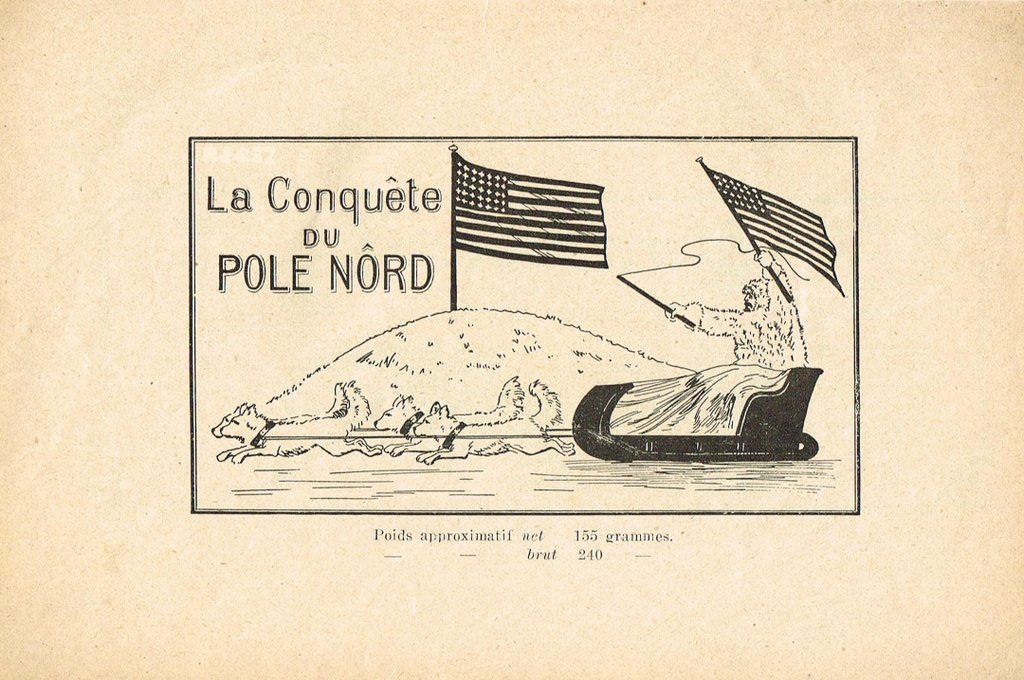
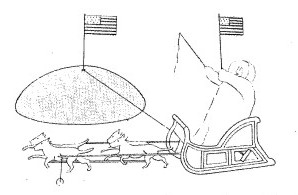
This sled was made in 1909 by Fernand Martin and get the name “Conquete du pole Nord” (Discovery of the North Pole). Martin number 217
box label
This toy was made by Martin in honor of the conquest of the North Pole by US Navy engineer Robert Peary. The sled is connected to the pole by means of a string, after winding the toy, the sled with the dogs rides around the Norh Pole.
At the end of the 19th century, the North Pole was seen as the last undiscovered place in the Northern Hemisphere, so many sought out adventure, often heading to the North Pole without proper preparation. The tours were extremely arduous and often underestimated, it is estimated that about 760 people died on these tours. The search for the pool became an international competition for the honor of being the first with teams from the United States, the United Kingdom and Norway. Robert Peary claimed to have reached the Pole on April 6, 1909, which today is seen by many as unlikely.
picture from the original catalog
The sled with the dogs is about 21 cm ( 8,30 inch) long, the pole has a diameter of about 14 cm ( 5,50 inch)
Drawing from the magazine “La Nature 1910” Source: (Cnum – Digital Conservatory of Arts and Crafts – http://cnum.cnam.fr)
I found this French book from 1922 with a very heavy title. “Manuel du Fabricant de Jouets” (“Manual of the Toy Manufacturer”) The description is very general and not deeply technical. If you read it, you will have a very quick general idea of how toys are put together in parts. So it is a guideline to produce various kinds of toys. In particular I found the directions for making tinplate toys and special to make a “Le Petit Livreur”, whether it is de description for the model of Martin, Flersheim, Victor Bonnet or another manufacturer, I don’t know, but as the first lines already say it is a general description and therefore also for other tin toys.
Translation from the book: “Manuel du Fabricant de Jouets” the writer is A. Broquelet in 1922
The little delivery boy.
As for any of the other articles, it is first necessary to establish a general drawing of the object and then an analytical drawing of each of the individual parts that make up it, paying attention to the location of the tabs and indicate holes needed to connect all the parts, this drawing is essential to identify the templates that will be used to make the dies for cutting.
This cutting is done by means of balancing presses; it is enough to put on the matrix, which is placed under the handle, a strip of tinplate suitable for the size of the model, then with the right hand with the crank move it forward to obtain the desired part .
This first operation produces flat parts, to give them the desired relief, proceed to their stamping which is carried out, as we have already indicated using a mold either in cast iron or in steel, and a counterpart.
That happens with all the parts that will constitute the automaton.
The worker assembles them and then takes them to a machine that compresses them and, as the case may be, using a small pair of pliers to flatten the wire, folds or bends the tabs so that they cannot be detached from the holes on which it is locked.
The various movements of the automaton are then obtained by means of cams, connecting rods and eccentrics; this is how the leg is controlled by connecting rods and eccentrics mounted on the wheels, which in turn are controlled by gears which constitute real clockwork movements, while a connecting rod controls a leg, a another connecting rod makes the knee joint maneuver, and the front wheel gives direction.
The cutting of the gears which enter the mechanism is done in the same way as that of the other parts.
When the toy is assembled, it only remains to paint it and to adjust it to ensure its proper functioning.
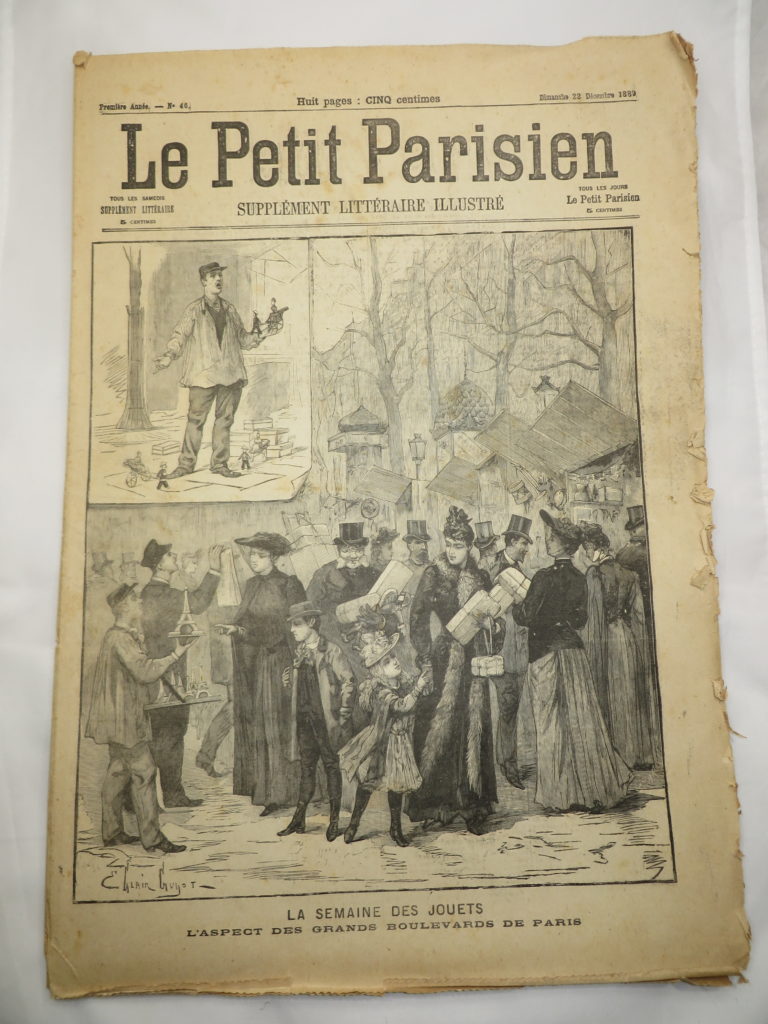
Toy week, The aspect of grand boulevards of Paris ( Newspaper from my own collection )
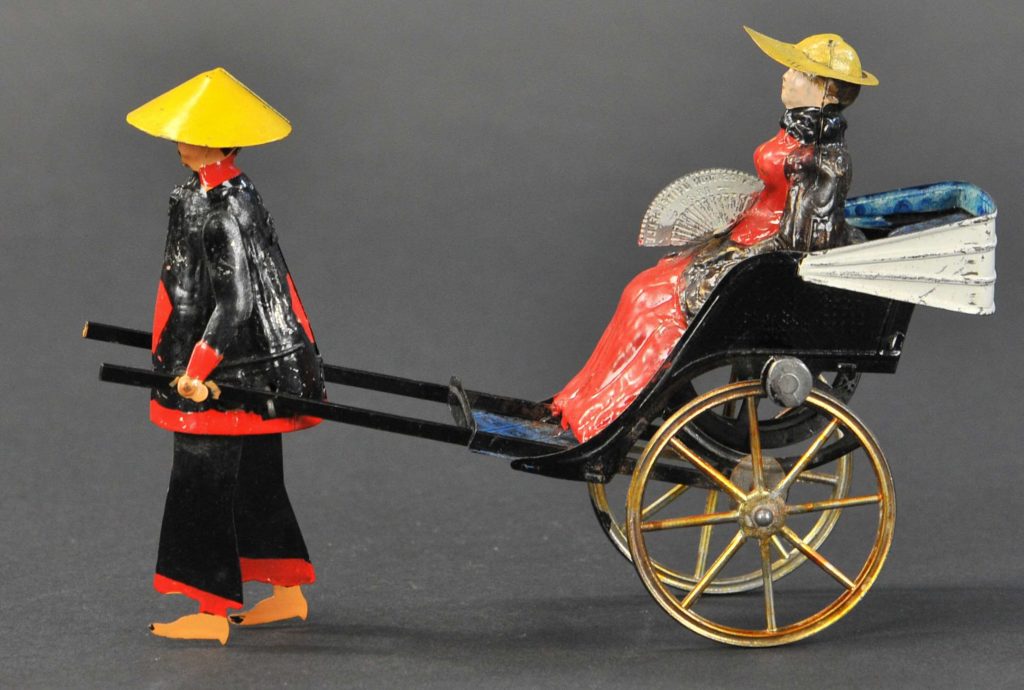
On the front of a very old French newspaper I found an image of a street vendor, selling the Pousse Pousse Annamite by Fernand Martin.
This original old newspaper is dated from December 22, 1889 The World Exhibition of 1889 took place in Paris from May 6 to October 31, 1889.
Courtesy Bertoia Auctions
Fernand Martin released this Pousse Pousse Annamite during the world exhibition and this toy was sold by street vendors on the corner of the streets or in one of the many sales stalls on the grand boulevards of Paris. On the front page of this newspaper you can see the typical busy Parisian street life where various street vendors and also sales stalls try to sell their wares/toys to tourists and parents just before Christmas.
Georges Flersheim purchased the Fernand Martin factory in 1912 and he acquired with the company all Martin’s patents. George Flersheim patented this toy in 1912.
photo with permission from Galerie De Chartres
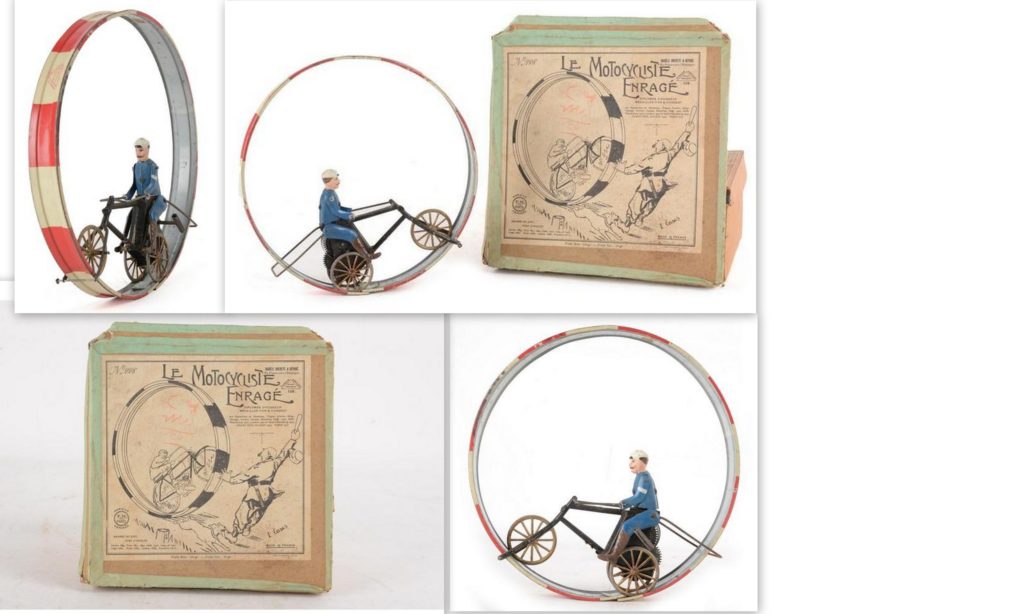
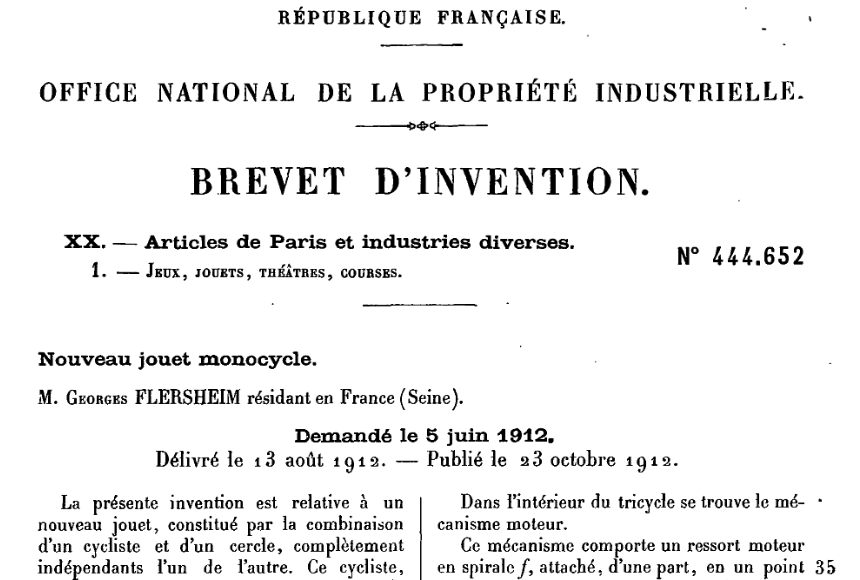
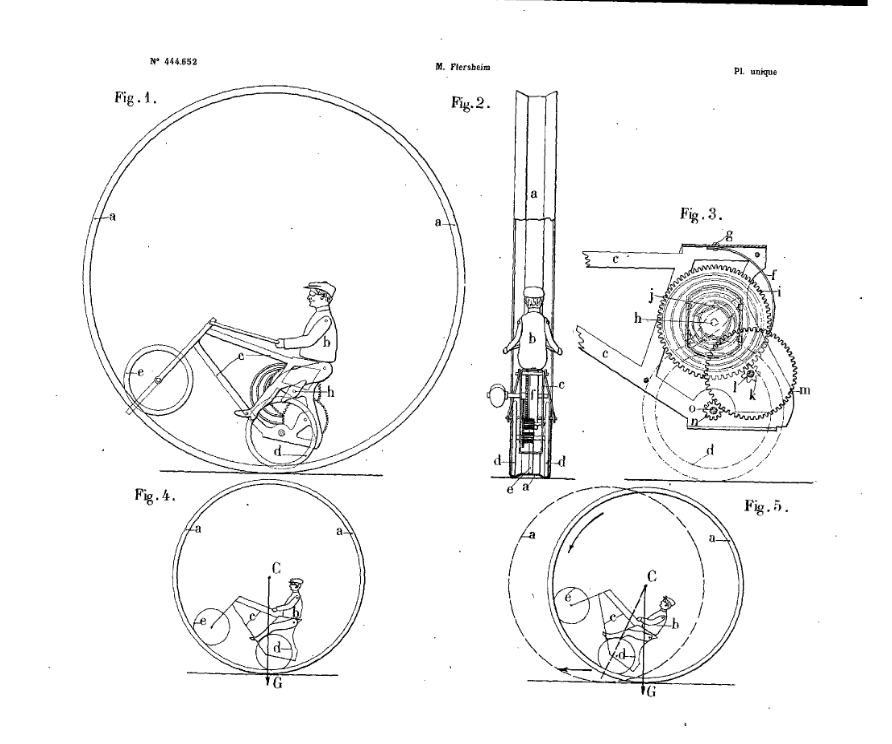
This performance of a circus act was produced in 1912 and it get the product number 228. The original patent with number 444652 was applied on 05 June 1912, granted on 13 August 1912 and published on 23 October 1912 under the name “Nouveau jouet monocycle” , it became the trade name: Le Motocycliste Enragé
photos with permission from Galerie De Chartres
This very rare toy auctioned on November 12, 2016 at the French auction house Galerie De Chartres together with the super rare box.
Part of the original patent
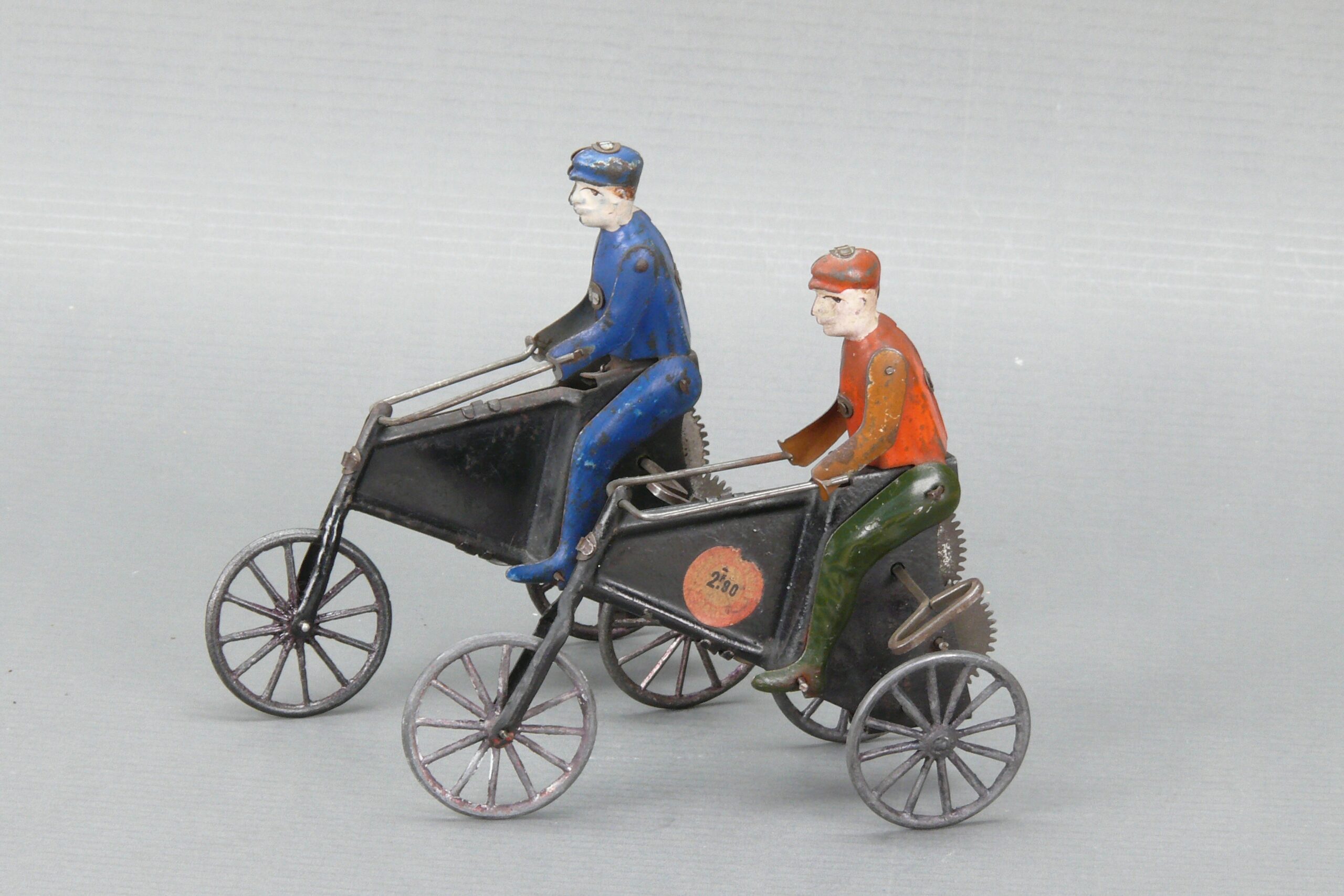
The motorcycle starts to move after winding and therefore he wants to drive up in the ring but due to the weight of the motor the ring moves forward. The movement is clearly visible on the patent drawing number: Fig.5. The motorcycle itself was also used by George Flersheim not much later in 1912 with the name “Le Motocycliste” and thisone gets the number 231. Victor Bonnet produced the same “Le Motocycliste” from 1919 with the same number 231. The Victor Bonnet version has a few differences; closed wheels, a closed back and a mechanism with the well-known Victor Bonnet key.
Model: George Flersheim Courtesy Toy Museum Soltau (“Spielmuseum Soltau”) in Germany,Model: Victor Bonnet Courtesy Bertoia Auctions
For the collectors who own the book “Fernand Martin toymaker in Paris 1878-1912” I have a number of additions here. These are the photos that were not known at the time of writing the book.
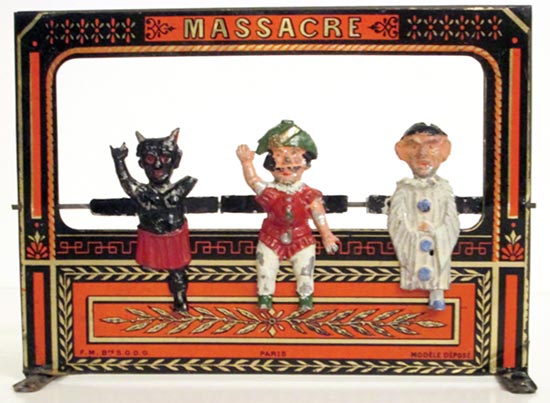
Page 45: Martin number 16 Le Jeu de Massacre from 1885
Cortesy Renaud Fournier
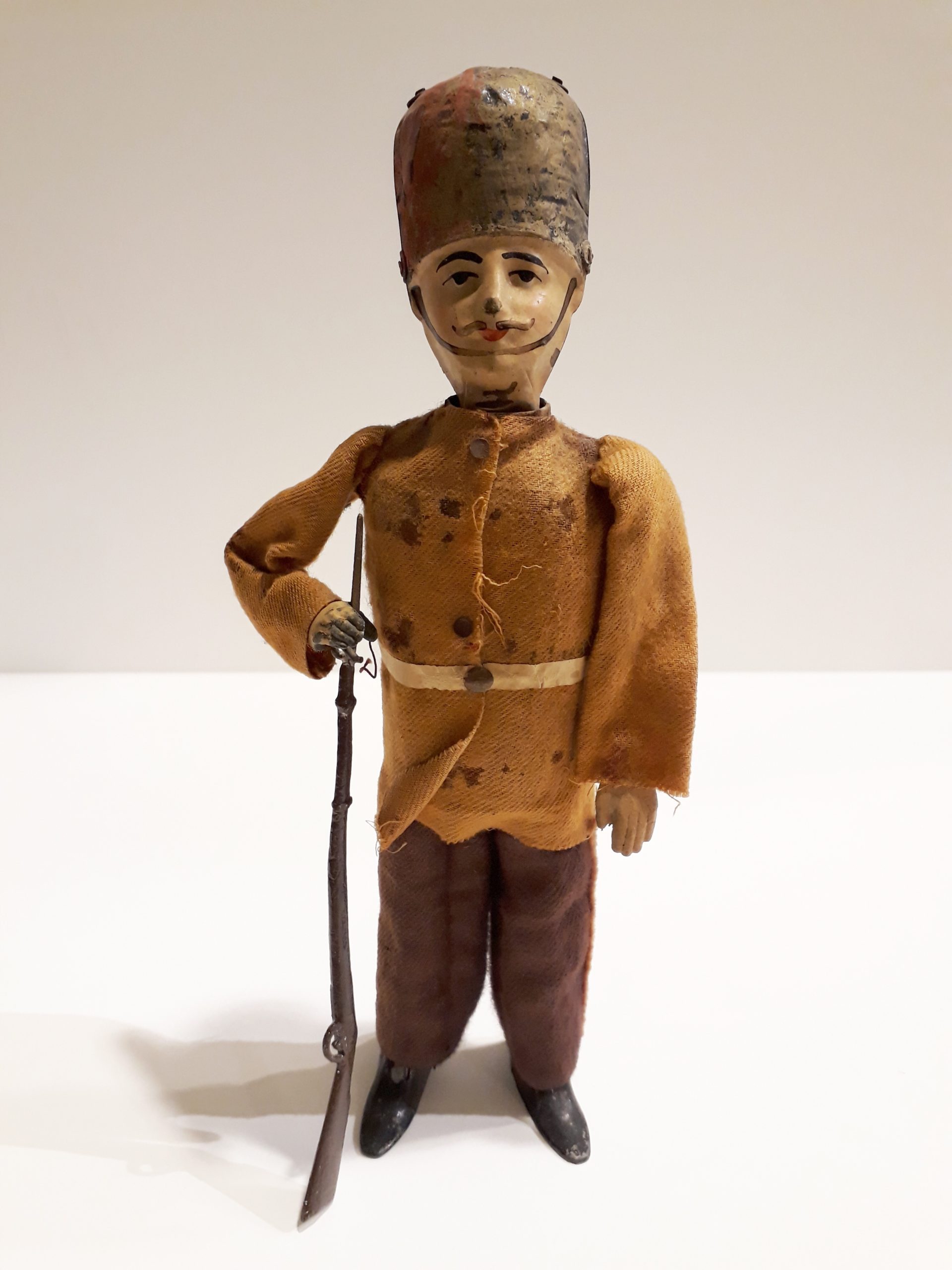
Page 121: Martin number 183 La Sentinelle Royal Guard from 1901
Photo with thanks to the Toy Museum Soltau (“Spielmuseum Soltau”) in Germany
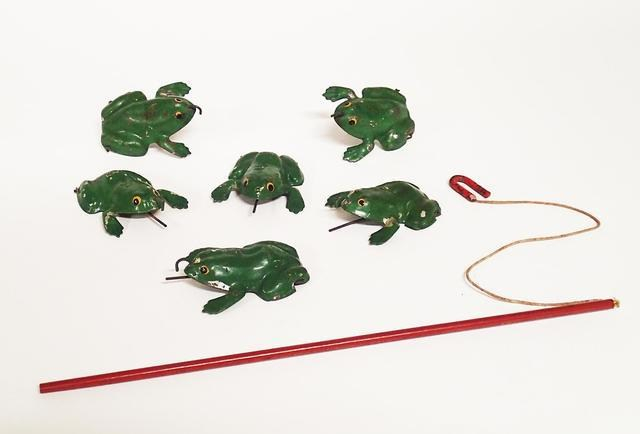
On page 151: Martin number 206 Jeu de Pêche a la Grenouille Sauteuse from 1906
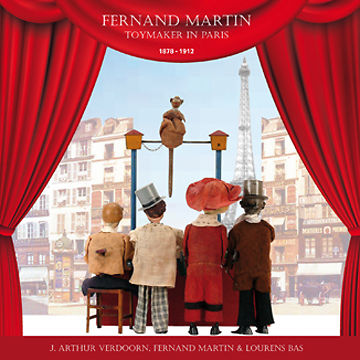
We know from the famous Fernand Martin book by Lourens Bas and Arthur Verdoorn: Fernand Martin Toymaker in Paris 1878-1912. that two rare original catalogs are known.
Released in 2014
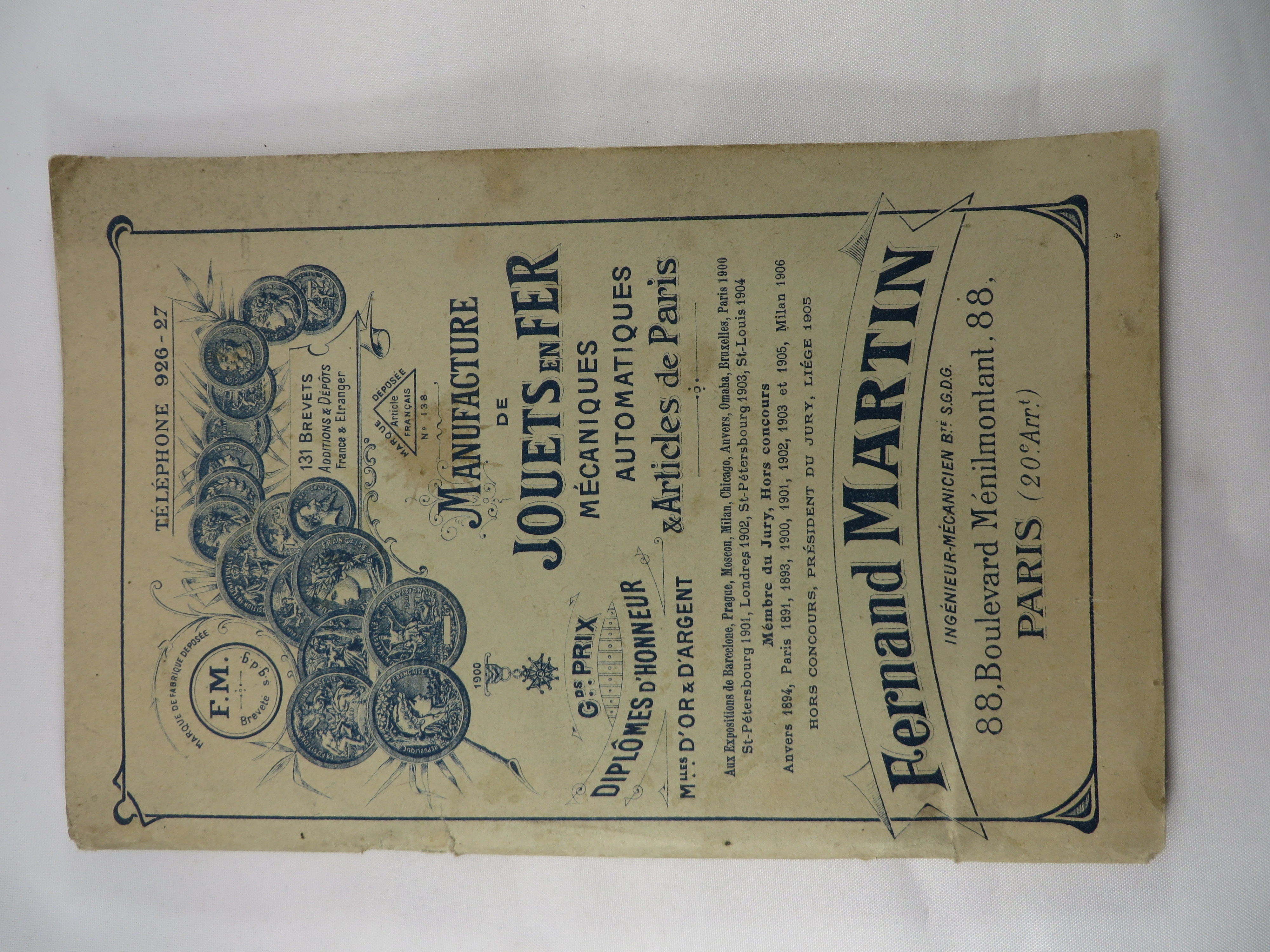
Many images of these two catalogs have been incorporated into this book. These two catalogs were discovered in 2012 and date from 1898. and 1911.
Left the 1898 catalog and on the Right the 1911 catalog
Furthermore, an old poster from 1902 ( I suspect that this poster is from 1902 because the last picture on this poster is the Pianist and he was produced from 1902) also surfaced a few years ago. See the blog of Lourens Bas: https://lourensbas.wordpress.com/2018/03/04/an-unknown-folder-of-fernand-martin-from-1905/ As far as I know this poster is currently in a collection in France.
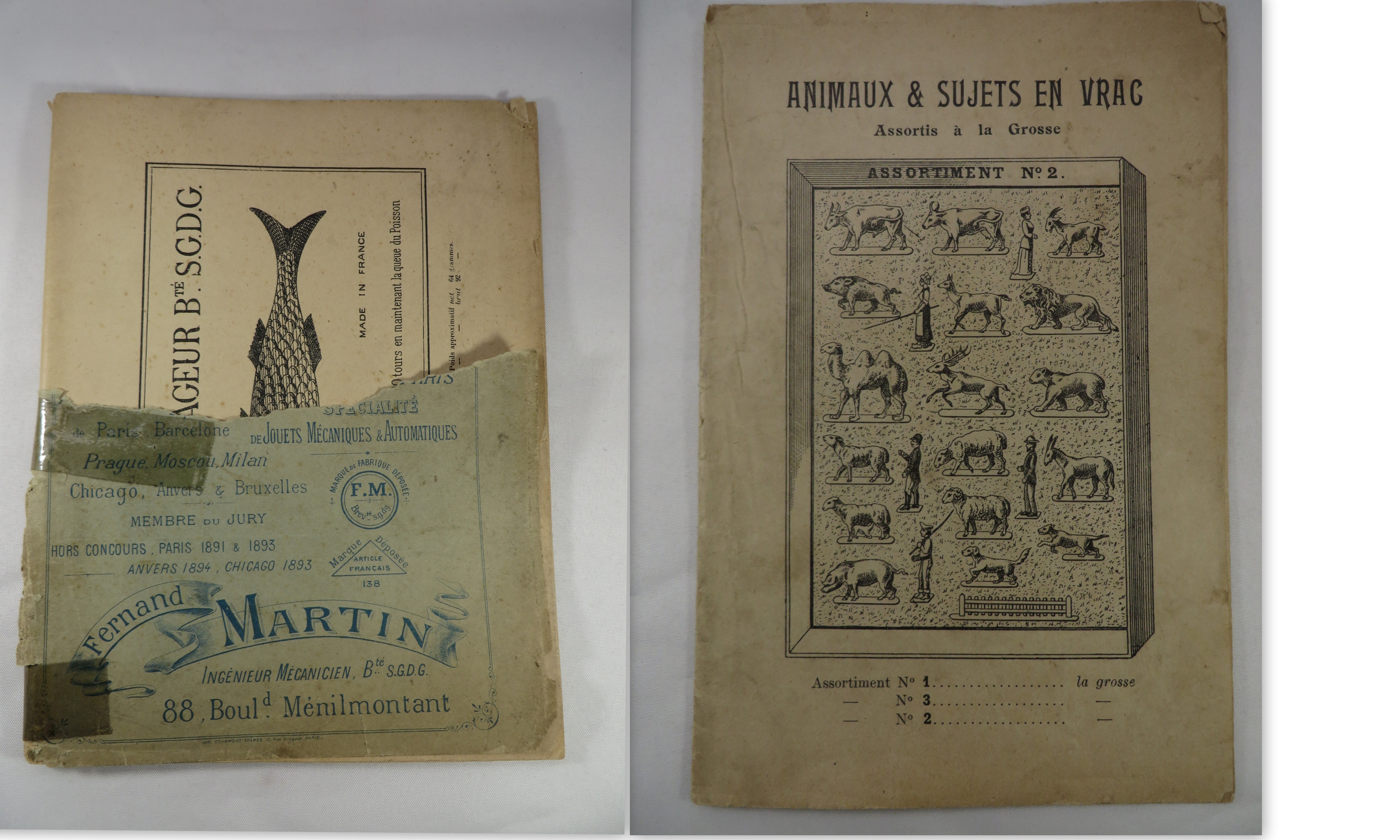
Now a third newly discovered catalog is added.
Front
Back
This rare new catalog is from 1908. It consists of 82 pages with 42 images of the pictures of Fernand Martin toys from to 1895 with de Ma Portiere number 147 till 1908 with the Petit Colbuteur number 213 . All images used are very similar to the labels used at the time, but often differ slightly in details. On the last 4 “empty” pages, 3 extra full size original labels have been pasted manually, on a sheet, the label of the Le Boucher number 210 has disappeared.
The last page from the 1908 catalog with two extra original labels
I think these “empty” pages were added during printing so that the new Martins toys that were designed and released during printing could be added manually so that the catalog was a good “Up To Date” for a long time. The format is almost the same as the two well-known catalogs. The dimensions are approximate 18 x 12,5 cm ( 7,5″x 5″) . These catalogs are all natural in black and white. This catalog is, for his age, in exceptionally good condition.
Maybe there are more catalogs among collectors, but I only know these three and the poster so far.
Another catalog is also known from the Victor Bonnet period. A reprint of this catalog was made in 1973 for the spring meeting of the : Antique Toy Collecters of America. I think the original catalog dates from the late 20s.
Folders, poster, publications, advertisements, labels and catalogs are very important to properly identify the toy and also to complete the large Fernand Martin “puzzle”. Do you have something? Please share it with me and fellow collectors.
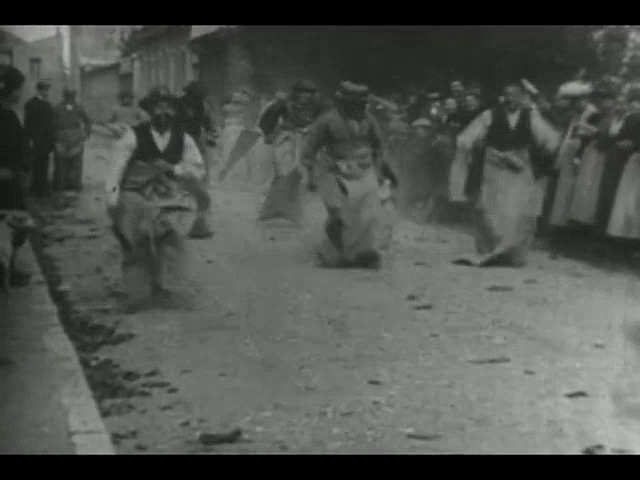
A child’s play from years past with a lot of fun. A competition to reach the finish line, while jumping in a potato bag as quickly as possible.
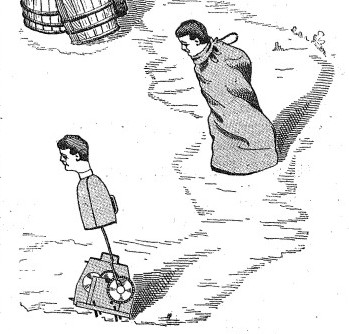
This toy was made in 1906 by Fernand Martin and currently very rare and therefore a very popular piece. A toy from the second “Martin” period and it was given the Martin number 205. At the top the potato bag is kept closed by a red thread Height 19 cm ( 7,5 inch)
The Martin logos are depicted on both sides of the bag.
At the bottom there are two slots, after turning up two bars per slot come forward to simulate the jump, it makes a very nice almost natural movement.
Picture from the original 1908 catalog
The drawing below shows the inside. This drawing is from the old French magazine La Nature from 1908
Source: (Cnum – Digital Conservatory of Arts and Crafts – http://cnum.cnam.fr)
Snapshot from 1896
THE TOY AND THE CATALOG ARE FROM MY OWN COLLECTION.
After 15 years, in 1933, the lease of the factory at the location 88 boulevard Ménilmontant expired and Bonnet moved the production to another Bonnet factory in the Rue des Tourelles Paris 20 number 8. (This Victor BONNET’s privately held company was, producing household items from the early 1920’s.) Until the end of the production at the location 88 boulevard Ménilmontant, Victor Bonnet still used the old Fernand Martin logo and on one of his Account overview / Payment reminder’s shows that he also advertised that he had over 200 Patents, additions and deposits in France and abroad, but that includes the patents from Fernand Martin and George Flersheim
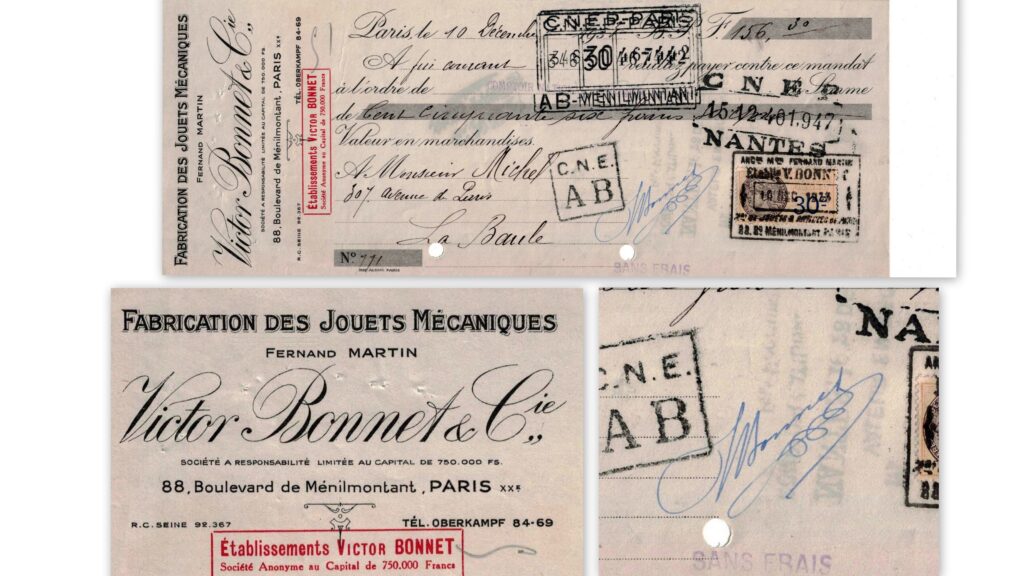
This payment reminder is dated December 1, 1933
Payment reminderDetail of this account overview
This check is dated December 10, 1933, belonging to the above account overview, see the detail on the right with the original signature of Victor Bonnet in blue.
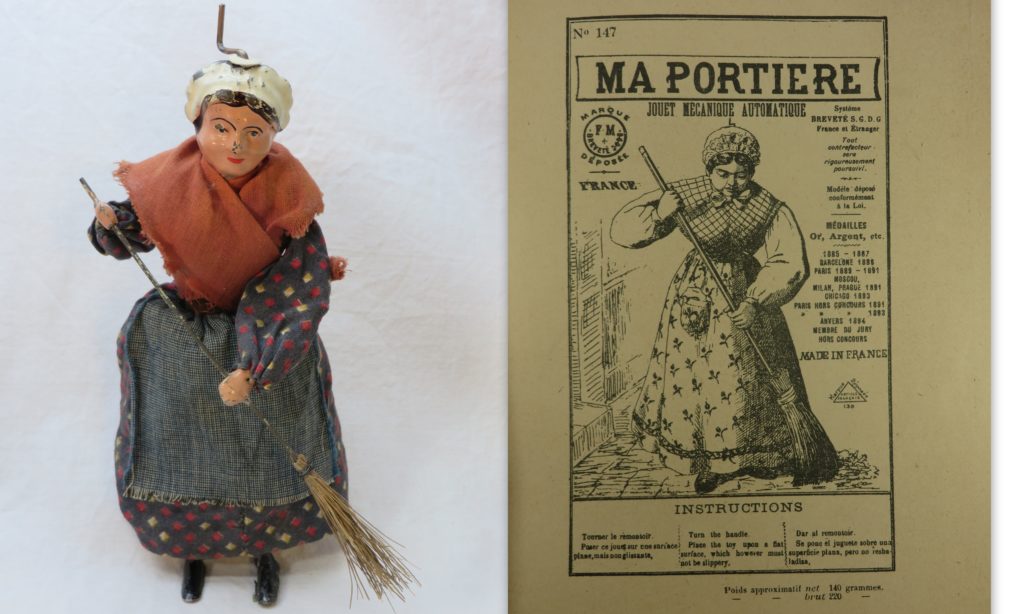
The first Martin of the “bonhommes” series from the second Fernand Martin period (1895 -1912) with number 147 and produced from 1895
From my own collection
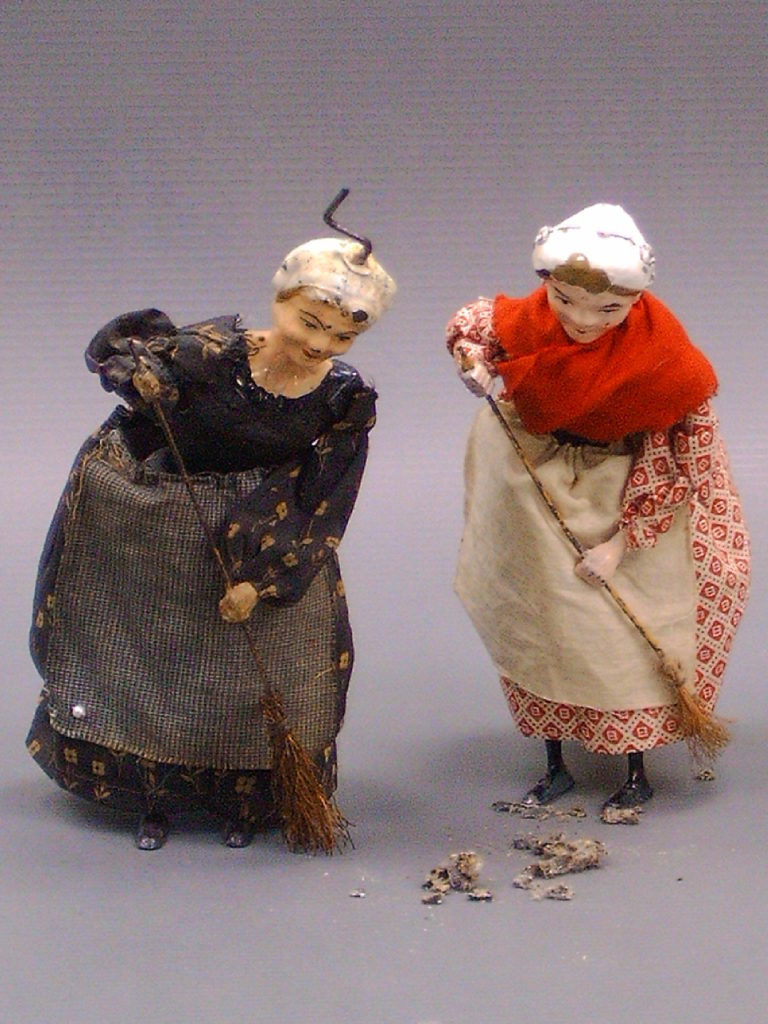
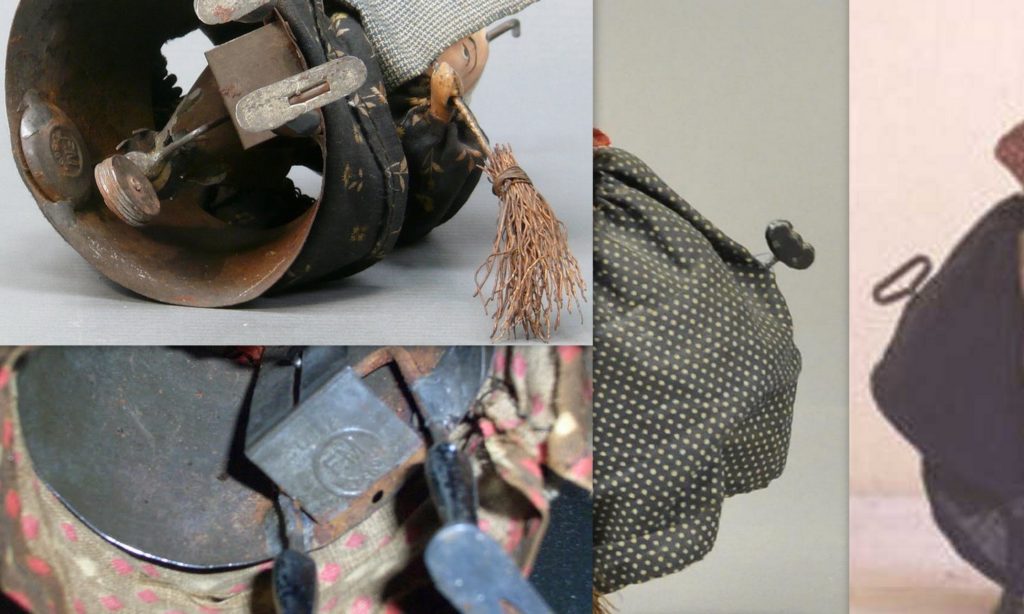
The very first examples were produced with the famous “rubber band” mechanism. Later they were executed with a “clockwork mechanism” they are easy to keep apart. The model with the rubber band has the handle on top of the head to turn on, the model with the clockwork mechanism has the well-known Martin key on the back. The difference can of course also be seen at the bottom when you look for the kind of mechanism.
Toys from the collection of the Toy Museum Soltau (“Spielmuseum Soltau”) in Germany
The rubber band model has two different places where it can be marked, one is a tin / lead seal against the metal skirt with the FM symbol on it. The other is marked with an embossed FM logo against a bracket underneath the skirt. The clockwork mechanism model is not marked she only has a Fernand Martin key.
Top left with lead seal–below left embrossed–right two differend Martin keys
The rubber band mechanism basically consists of three separate parts, the handle, the elastic and the movement part. If the rubber band breaks, the mechanism will fall out at the bottom and the wind-up liver at the top so they may have been lost over the years.
Model with the rubber band mechanism Source: La Nature (Cnum – Digital Conservatory of Arts and Crafts – http://cnum.cnam.fr)
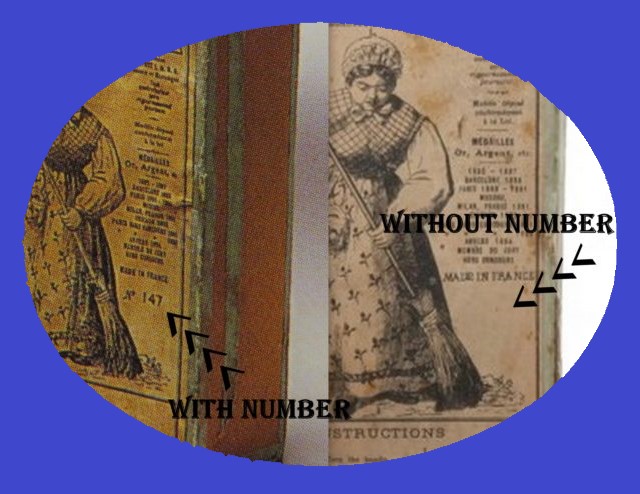
Two different boxes are known, with and without numbering, but on both boxes the “Ma Portiere” is equipped with a winding handle visible on the head, so the “first” version. It is therefore not entirely clear when the boxes with or without a number were issued exactly. Also striking is that in the catalog from 1898 the drawing was numberd left above. (see the first image at the top of this blog)
The first version is therefore with a “rubber band” drive, with this version you can clearly see the winding handle on top of the head. The versions thereafter received the winding mechanism, but in the first copies the hole on the top of the head was sealed with a round plate. Later versions have been given a head without a hole or plate.
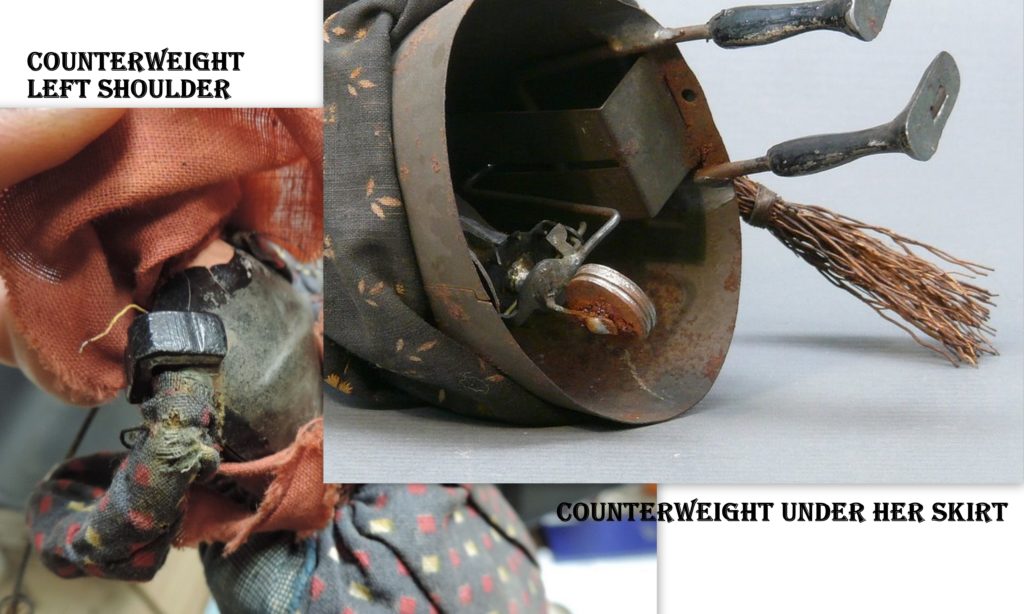
Another separate component is the weight mounted on the left shoulder, meant as a counterweight for the movement of the mechanism. The other counterweight is under the skirt at the end of the mechanism.
The mechanism moves her upper body from right to left. If the movement to the right or left is at its end, the mechanism will be forced again by the two counterweights to move to the other side, so it looks like she is sweeping the floor.
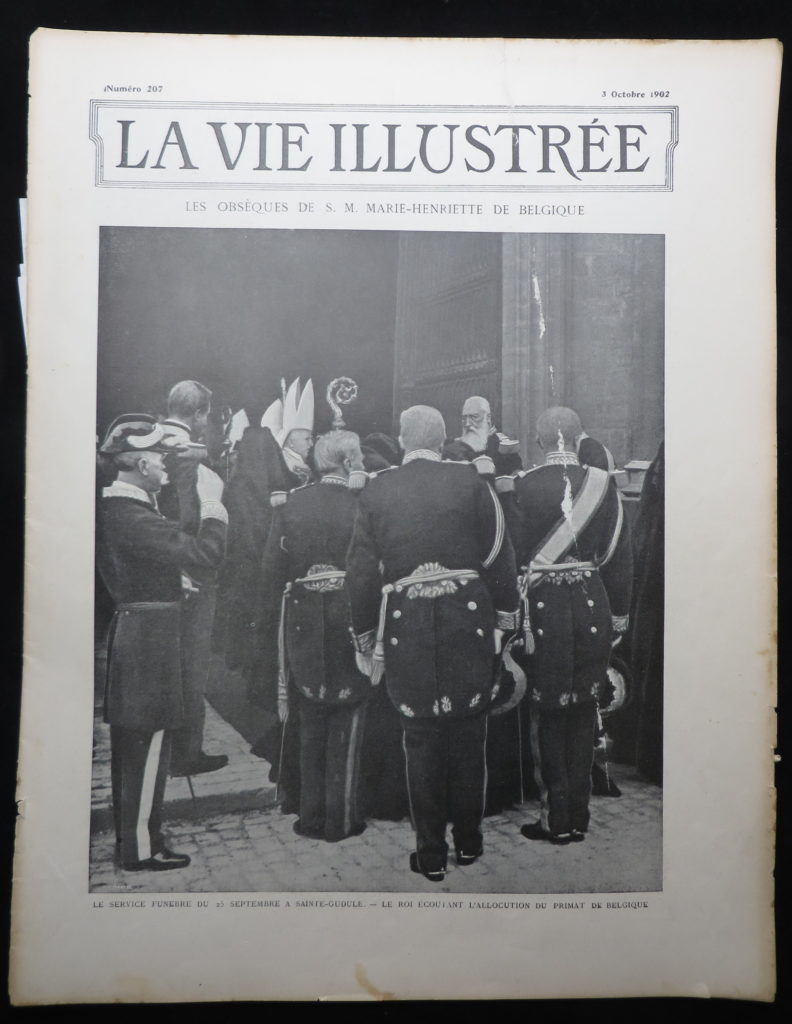
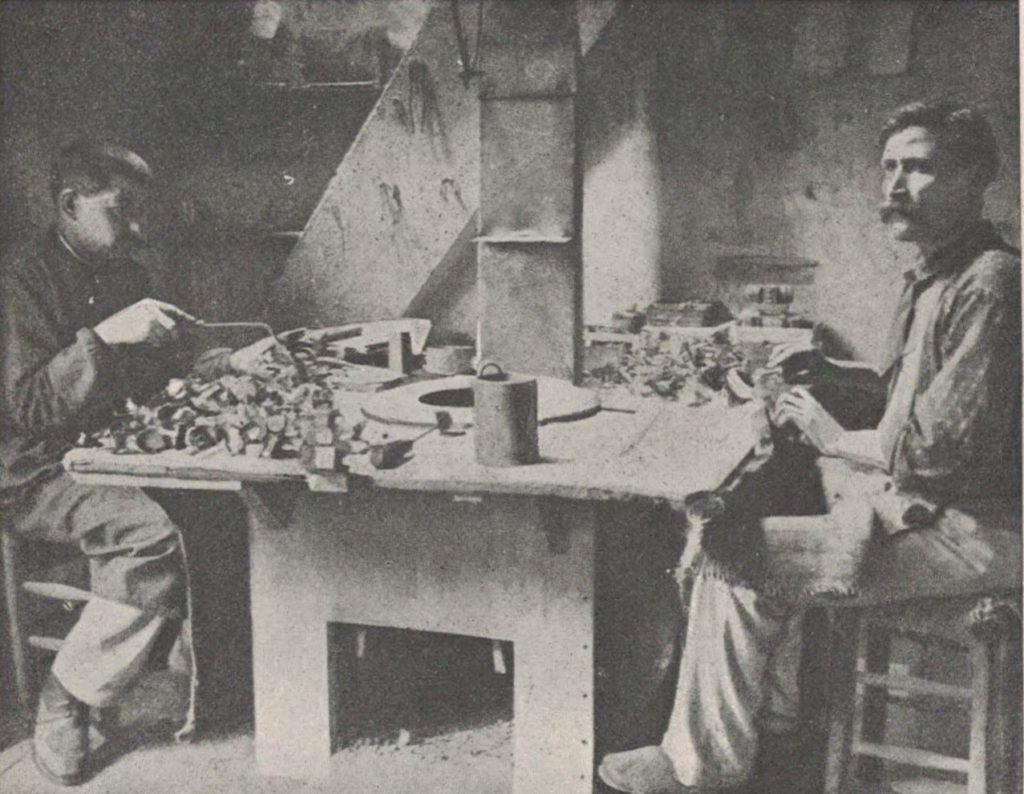
The translation of a French article about the manufacture of mechanical tin toys from Fernand Martin in the late 1800s and early 1900s, written by Paul Peltier and published in 1902 in the magazine “La Vie Illustree”
Magazin from my own collection
ABOUT THE 1902 TOY COMPETITION OF M LÉPINE
There are many toys about the upcoming October 10th (1902) Exhibition, organized by the small manufacturers of these tiny and delicious things, whose appearance on the family table will provoke the joyful laugh of enthusiastic toddlers. This exhibition, moreover, is the reedition or, if we wind, the extension of the competition organized by M. Lepine, prefect of police, last year. The moment, therefore, seems to have come to introduce our readers to the mysteries of the manufacture of the mechanical toy, and to reveal to them the secrets of those curious arcana from which articulate blacksmiths and little merchants pushing their cars on the sidewalks conscientiously. The mechanical toy, as a very popular toy, very wide spread, very loved, is a very modern invention. The difficulty & indeed, It’s much less a matter of moving a character than of being able to make this articulate and animated personage very cheaply.
It is certain that, in a pinch, the automaton of Vaucanson can be considered like a toy, but certainly the hawkers of the time could not have sold it for some grounds at the time of the New Year’s Day. Thanks to the kindness of Mr. Fernand Martin, who has attached his name to the cheap mechanical toy industry in France. We will introduce the reader in this world of the toddlers where articulated “Eves” and automatic “Adams” wait for the moment to leave their paradise quickly. Like medicine and literature, the toy industry has its specialists.
The main specialties are:
1 Mechanical toys, in a general way.
2 The dolls, these cute little creatures with eternally pink cheeks, eternally constant heart, which not only delight the girls, but still know how to inspire, if need be, the novelists- Cosette’s dolls: Miserables, doll dresses from Dickens- like the musicians – the Nuremberg Doll, • the Infant’s Dolls, and, a few years ago, the Doll.
3 The lead soldiers; here we fall in the operetta, with the lead soldier of Mire Nitouche
4 Railways, racing games, etc., etc.
But it is the mechanical toys that are most interesting. The first toys of this kind were created around 1879. Their little “soul”, which no Paul Bourget will ever try to analyze, was essentially composed of an inert motor pelit composed of twisted rubber wire with escape wheel. One of the worst “hurts”, none of which will ever be analyzed, was essentially a small engine, composed of a twisted rubber wire with an escape wheel. It was obviously not very complicated, but as for the egg of Christopher Columbus, it was all about thinking about it !! It was first the le Poisson Nageur, then the Les Forgerins Infatigables, Les Scieurs, Le Suiveur Endiablé, who delighted the Boulevards. Another invention, very curious and amusing, made its appearance around 1883. It was – said without wanting to do the least course of mechanics! – a steering wheel whose shaft operated on two wheels. This engine, very simple as we see, was first applied to the loco-motive road that – I call the fathers! – made a sensation. There was much talk about it at the Tuileries ( formal gardens next to the Louvre in Paris, the gardens are all that remain of the Tuileries Palace, a royal residence begun in 1564 and burned down in 1871 during the Commune of Paris.) the old five-year-olds discussed it with interest in Luxembourg, and the little world of Parc Monceau was very satisfied.
Then came the Les Valseurs, Les Pompiers, Les Duellistes. In 1888, the Deliveryman and the Pousse-Pousse had a big success, which reached its peak during the Exhibition of 1889. Then we see the L’Autruche, Le Cab, Le Perroquet, Le Pêcheur á la Linge, etc., etc. Around 1894, a new series of little automatons appeared: “Ma Portière”, Le Petit Décrotteur, the Violoniste, La Blanchisseuse.
Finally, in 1900, we have the Le Pochard and the Le Bamboula. The mechanical toy industry is also inspired by the news, as an in-depth review of the end of the year, so that among the recent creations we have seen: the L’Agent with the white baton, the Le Vieux Marcheur, a delicate allusiun to the success of the Varieties, Le Chinois, finally the Le Boer and the L’Anglais.
We will consider, in the photographs attached, (photo above) a bloody meeting between the L’Anglais and the Le Boer, and (photo below) a suggestive group of agents, policemen and gendarmes: a true International Police Congress!
Finally, as the latest creations, the Le Clown Marchant, walking on the hands, and the Le Petit Pianiste whose fingers agile and tiny. He performs fantastic scales on a diminutive piano, and one can judge the marvels of skill and ingenuity which must be displayed in order to obtain a similar toy for a few pence, all the more so, oh joy! really what’s going to be saying Reyer? … Needless to say, the division of work reigns supreme in mechanical toy factories. First of all, it is the forge, where workers do all that one could call the “big work”, because everything is relative.
Then comes the welding, where the little automaton will begin to feel the clever stroking of feminine fingers. From there, we move to the manufacture of “skeletons”. This macabre expression refers to the assembly of all the parts of wire and metal that make up the body of the character. Then it’s dressing up, and really this part of Mr. Martin’s factory is quite reminiscent of the workshop of a great couturier, whatever Doucet for dolls! consists, for the fingers, always feminins, to illuminate quickly and well the hands of the Le Bamboula or the trowel of the Vieux Marcheur. Finally, the filling: this is where we put the last hand to the little toy, where, for example, we stick the piece of music in front of the eyes and the pianist is incredibly enthusiastic.
And when our babies, already ferocious, tear the tunic or the bodice to see “what’s inside”, they will certainly suspect the amount of work and pain that will have cost their toy a few French cents ! In fact, it is thought that to make toys like the ones we are talking about and sell them cheaply, we need personnel and tools of extraordinary complexity, and our readers have realized this. The equipment is so multiple, and the meeting of raw materials relatively so long, that the French manufacturer has time to cast a good part of his invention, before the German manufacturer finds the opportunity to counterfeit and sell himself. It is, indeed, in Germany, the classic country of the Nuremberg doll, that the French mechanical toy is pillaged with the greatest cynicism. There are, it seems, in Germany only two manufacturers of mechanical toys who do not copy our objects ! …
We were talking about the tools and personnel of a big toy factory mechanical. Some typical details will serve to fix the ideas. Do we know how much the house we have visited employs dressers, who, as their name implies, are exclusively employed in re-covering the skeletons of iron wire, hidden in the small chest of tin plate? It are thirty dressers! These thirty dressers, some of whom work in the workshop, the others at home, can dress up to three thousand figs a day. In addition to the dressers, the toy houses still use machine-made stitches. To dress ten thousand little “ bonhommes”, it takes six hundred meters of a cloth having 80 cm wide.
Another detail borrowed, no longer from the mechanical toy industry, but from that of small rifles. The tiny arms, which sell for about fifteen cent, are provided with a shoulder strap, attached to a small staple nailed to the edge of the butt. To obtain these staples, we use a machine that can drill in a minute a zinc plate a meter long: well! the cuts, the small trimmings that fall by the thousands, are precisely the staples. This detail shows how frighteningly rapid it is to satisfy consumption.
In Paris there are in 1902, about 25,000 toy workers employed by 500 employers. Not included in this number, of course, watchmakers, molders, seamstresses, etc., who are used, but who are not dedicated to the toy. Men can earn 5 francs the piece, about 50 francs per day; women 3 francs. The work is done either by the pieces, or by the day. We see that the toy – at least the mechanical toy – is not what a vain people thinks. It’s not just “the joy of children and the tranquility of parents”. It is also one of the objects on which our national industry has made its mark, and from this point of view the public can not be too interested in it.
All workshop images are insights from the Fernand Martin factory in 1902
At the end of 1800 and early 1900, Fernand Martin was a highly regarded businessman in Paris. His toy factory flourished and his toys were hugely popular and well-known This of course also attracted people who wanted to get a piece of his popularity and now I mean it in the good sense of the word. One of those people was an artist who made bronze sculptures. At that time, bronze statues were enormously popular and in many living rooms these statues were to be admired. The name of this artist was Jose (Josep) Cardona Furro, he was born in Barcelona Spain and lived from 1878-1922. He left for Paris at a young age. Martin often made his toys about what he saw in daily street life and that was the same thing Jose Cardona did. His bronze statues were mostly statues of people and often of children he saw busy in the street.
One of his images is of a street vendor with clearly recognizable Fernand Martin’s the Ma Portiere. on his back a sack full of boxes of toys, in his hand he is busy turning up a Ma Portiere and there is also a clearly recognizable Ma Portiere at his feet. The Ma Portiere was made by Martin from 1895, so this image will also be designed and made by Jose Cardona in 1895 or a little later, so at the age of 17. The sculpture is very detailed and approximately 36 cm high and weighs more than 5 kg. ( 11 pound ) There are versions known with a marble base and versions without this base.
In one of the following blogs I will cover this “Ma Portiere” extensively,
Exactly 1 year ago I started this blog. In the course of this year I have written about 80 articles. The number of readers watched has also increased considerably, from about 30 a month to currently an average of over 120 a month. The number of hits on articles has also increased, there are days with only 3 hits but also days with more than 40 hits, the total number of hits is currently more than 2200 and that is an average of 29,5 hits per article. Also, from the number of positive responses, many readers are satisfied with this blog. So for me again the challenge to work hard on new articles.
I thank everyone for the good words and especially the auctioneers, traders, museums, private collectors, etc. who have given permission to use images in this blog.
And if you have any questions or material that I can process please send it to me and I will make sure that I find it right and if it is interesting for the readers, I will put it in a blog. Thanks again everyone.
(All photos in this article are of my dear and early deceased friend Arthur Verdoorn.)
In the year 1900 the 13th universal World Exhibition was in Paris. Fernand Martin participated in this exhibition and was also a jury member of the “Hors Concours Médaille D’or ” as can be read on the box and on the catalog picture of the Bamboula no 179.
This World exhibition lasted from April 15 to November 12, 1900.
During this exhibition many products were sold to the public by business exhibitors, but street vendors in the streets of Paris also sold more than normal during that period.
I have found three boxes of the Le Pochard number 172 produced from the year 1899 with a additional reference to this exhibition.
This “Le Pochard” is familiar to all Martin collectors and it has also been produced for a long time and is one of the most renowned Martin’s .
This additional reference is a loose sticker that is stuck on the boxes The sticker on the first box is difficult to read but the other two boxes are much clearer to read. The sticker on box three is not on the front but on the top of the box
Exposition Universelle 1900 F.M.
We can assume that these pieces were sold during this world exhibition in 1900, but it is also possible that the stickers were placed as advertisements well before the world exhibition to draw attention to this exhibition. These boxes with toys are therefore very easy to date. You also see that both drunks are dressed the same.
I do not know if boxes of other Martin toys were also provided with this sticker, but perhaps one of the readers of this blog has an answer, please let me know.
This rabbit is produced from 1890 and quite rare In the 2014 book: Fernand Martin Toymaker in Paris, the Le Lapin Vivant is listed on page 59 with the number 32 but the new number is 114 I know some color varieties such as white, light brown and dark brown.
It is a fairly small bunny with a height of 13 cm. After winding up, he moves forward and his ears and arms move. Immediately below the winding roll it is marked with the old known logo of Martin, the circle with the letters “F.M.” and “depose”
So far I have only seen versions with a flywheel drive. Recognizable on the side where the wheel is to wrap the rope.
With the rubber band version I have never seen myself I recently bought a series of 4 little etchings from 1892 with images of toys. On one of the etchings this Le Lapin Vivant with the version with a rubber belt drive is shown. The original etching is very small; approximately 8×10 cm In the French technical year magazine: La Nature from 1892 on page 45 this drawing / etching is depicted on which a beautifully open worked Le Pantin Vivant can be seen.
Source: (Cnum – Digital Conservatory of Arts and Crafts – http://cnum.cnam.fr)
This etching is made by mr. Louis Poyet Mr Poyet made many etchings of toys for the technical magazin “La Nature”, he therefore regularly visited toy factories, including of course the Fernand Martin factory to make a lot of etchings of the latest new toys.
A very special toy with an ingenious mechanism L’homme toupie made by Victor Bonnet from Paris, the last owner of the Fernand Martin toy factory in Paris. This clown has the product number 252 It has been produced from around 1921/1922 This toy can be winded by means of a separate key. The height is 19 cm = 7,5 inch.
two different color varieties
After winding, place him on top of his head / hat on a flat table and let go. (in his hat is a clearly visible screw on which the whole turns) He then starts to turn around his axis and at some point his hands slowly move towards the table, then stops turning and then pushes his head / hat away from the table. His legs then separate and back together. Then his head / hat returns to the table and everything starts all over again. The manufacturer calls it a spinning top but therefore a very special ingenious spinning top. He is now collected by collectors of tin toys and then mainly collectors of Fernand Martin toys. He is therefore also collected by spinning tops collectors and collectors of circus acts. It has a tin body, head, feet and hands. The arms and legs are made of metal wire. The feet, hands and the head with the hat are hand painted. Furthermore, the whole is provided with colorful fabric clothing.
The top of the hat with the brand name and the named screw –the hand-painted face– the keyhole on the back and an image from a catalog from the late 1920”s .
To wind it up, there is a keyhole on the back What is important at purchase this toy, look at this keyhole, there is normally a Brass ring with disc attached in the fabric clothing, the disc is clothed with fabric, but very often this ring with disc is torn out and disappeared due to frequent use. The clown is marked on top of the hat with the text: Article Francais V.B & Cie Paris.
This article is published in the ATW Antique Toy World magazine of March 2020-Volume 50- No3. Read that article here but now with a very recently found additional supplement. This additional supplement was unfortunately too late for publication in the ATW.
The Martin period is brought together from the beginning of the first Fernand Martin toy the POISSON NAGEUR in 1878 during the move of Victor Bonnet from the original old Fernand Martin factory on the 88 Boulevard de Menilmontant Paris to another location in 1934 The last toy we now, till now, was the VOITURE NOUNOU POUPON with number 265
Until now we thought that this VOITURE NOUNOU POUPON with number 265 was the very last “Martin” produced in the factory on the 88 Boulevard de Menilmontant Paris, but that is now changing. We can now add this extra number 266 to it. And maybe there are more extra numbers to discover.
I have now found a new piece with number 266 on the box. It is a pistol with the name LE COSTAUD And luckily with the original box in a fairly good condition so we now for sure that it has number 266.
Dimensions box approximately 2,5 x 10,5 x 16,5 cm (1 x 4,5 x 6,5 inch) Dimensions pistol approximately 11,5 x15 cm (4,5 x 6 inch) I can say that we have found another piece of the big “Martin” puzzle.
And I have an original bill from Victor Bonnet in my collection that includes this pistol. The bill dates from June 16, 1933 and this bill also shows the old trusted location of the original old Fernand Martin factory on 88 Boulevard de Menilmontant Paris.
On this bill there are three well-known Bonnet pistols: –the PAN PAN (number 247) –the TAPE FORT (number 262) –the FLAC (number 256) And now the unknown LE COSTAUD with number 266. But there is still another unknown part on this bill under the name: “EPERVIER” in English this means (Sperrow) Hawk. I think this is also a pistol, because I have often seen tin toy pistols with the name Hawk but till now not from Victor Bonnet but I am not sure yet.
And now the recently found addition:
I very recently found the French patent for this pistol LE COSTAUD with number 266 The patent number is FR 730.021 The following dates can be seen on this patent: -Announced on April 04-1931 -Submitted on May 03-1932 -Published on August 05-1932 Now we know for sure that this pistol has been produced since 1932.
A part of the first page The third page
The displayed bill and pistol are from my own collection
During his period as the owner of the old Fernand Martin factory, Victor Bonnet brought many beautiful new toys to the market. The pistols/guns are very noticeable here because they don’t really look like the other toys. But it was then and is still a hugely popular toy with mainly boys, who as a boy did not in the past, as a soldier, cowboy or police, walked around with toy guns and called “pang-pang” Till today, 6 different guns are known. To my surprise, I found an original bill from Victor Bonnet from 1933 with the order of various pistols on it.
Front
This bill is dated June 16, 1933 The address of Victor Bonnet & Cie factory is still the old address where once Fernand Martin produced his great successes at 88 Boulevard de Menilmontant Paris. The Martin period is closed on the date of the move from the Victor Bonnet factory to another building in 1934.
Back
At the back of this bill the 6 well-known pistols are also shown. The order included three well-known pistols and two names that we did not know yet. Of course we recognize the PanPan, the Tape Fort and the Flac on this bill For me there are two unknown names on this bill, the Costaud and the Epervier. From one of these unknown pieces I have discovered what it is, this will be discussed extensively in one of my next blogs in the next month. So we still miss 1 piece, what is it ??? I don’t know yet, but we continue to search.
And do you know what the missing piece is, send me a message and make me happy.
Many of us still know the time when there was no internet with e-mail and the telephone was still very rare, the postcard was then still a popular and cheap means of transferring short messages, congratulations or greetings. Nowadays, postcards are almost no longer used due to the availability of faster, cheap media. The postcard was introduced in the second half of the 19th century. On a postcard there was room for writing a message and usually there was an image on the other side. Fernand Martin’s toy has also been used a number of times as an image on a postcard. I have examples from France, Germany but also one from the U.S.A. The most of the postcards shown here are from my own collection.
detail with the Martin toys
A street vendor from Paris with a stamp from 1905
French postcard with images of Martins, date unknown
Another French street vendor from the late 1800s, with the Violinist, this image was also used on a chromo collector plate. This card can be found in the hand-colored version or in black and white
A French postcard with the “Le Charcutier” date unknown
A German postcard of the circus Barnum & Bailey who toured in Europe around 1900. The “La Boule Mystérieuse” is shown on this postcard
Another postcard now of the circus Strassburger from around 1914 The “La Boule Mystérieuse” is shown on this postcard
A street vendor from New York with a stamp from 1906
A postcard from 1994 with the Number 233 La casseuse d’assiettes from 1912
It is nice to collect this postcards next to the Martin toys.
Besides the violinist and the drunkard, the le Petit Livreur is one of the most produced and well-known Martin toy. Of all the different “models” mentioned here, there are many different color versions.
Model 1: Fernand Martin made the first model with the spoke wheels and a head with “look a like” real hair in 1911
Model 2: The second known model is from George Flersheim and features the Flersheim key, another label, painted hair and the closed wheels. This model was made from 1912
Model 3: The third model was made by Victor Bonnet, this model was similar to the Flersheim model but has a different “Bonnet” key. What was also changed was the operation of the small “steering wheel” under the cart. With the Martin and the Flersheim the handle is on the left or right side and with the Bonnet usually on the front but there are still some Le Petit Livreurs with a Bonnet key and the handle also on the side. The Bonnet version also has a brass nameplate on the cart This model was produced by Bonnet from 1919 After the relocation of the factory in 1933, the brass nameplate and the paper on the case disappeared, replacing it with the new VEBE logo on the case
MODEL FROM 1919 TILL 1933
Model 4: The fourth and rarest model. In 1911/12 a separate “MARTIN” model appeared on the market, this model had a higher suitcase/trunk with advertising on it instead of the low suitcase. This case was also lithographed and could be opened Whether the labels on the suitcase can be recognized as the round logo of the “Grand Hotel” in Paris. The boy of this Petit Livreur also got a bunch of hair and a flat cap. It was suspected that this Petit Livreur was made on special order for the Gand Hotel and was sold as a tourist item to guests / visitors to the hotel. There would have been sweets in the suitcase, so it was a kind of candy container. There is still another Martin toy with such a trunk, it is the L’autopatte from 1910. These two toys are also depicted in the book: Fernand Martin Toymaker in Paris 1878-1912 from Arthur Verdoorn and Lourens Bas. on p. 223.
A collector of hotel logo’s from Portugal, told me that this “Grand Hotel Paris” logo was used at that time in 2 versions, a round and a right-angled one, by the Grand Hotel. It was used as a seal on letters and was also stuck on tourist gift items in the “Grand Hotel” gift shop. These logos waren used from the end of 1800 to the beginning of the 1st World War (WW1) in 1914. With its 700+ rooms, the hotel was the largest in Paris and was used as a military hospital in the 1st World War This hotel still exists today.
It is not exactly clear whether Fernand Martin or George Flersheim put it on the market, but I suspect Martin because it still has a typical “Martin” key, but that actually means little because Flersheim has also released toys with a Martin key, presumably using up old supplies. All in all an exceptional piece and very sought after because it is not sold in large numbers.
There is a known photo of the stall with the “normal” and the “special” Le Petit Livreur, this photo was once sold on Ebay. A question for those who have this photo: send me an image then I can add it to this article.
A very early toy that Martin made were two firefighters with a fire sprayer, which reflects the state of the art of firefighting at the time.
courtesy Michael Bartoia auctions
History: A fire sprayer had already been granted a patent in 1614, but the first well-functioning model comes from the Dutchman Jan van der Heiden in 1672 with a hose fire sprayer. This type of fire sprayers was sometimes used until the Second World War (WWII) Large heavy pumps used to be pulled by horses and the smaller models were pulled by firefighters themselves.
Foto with permission of BHIC ( Brabants Historisch Informatie Centrum ) s’Hertogenbosch the Netherlands, fotonumber BCV2538
The fire sprayer can be compared to a wooden, red-copper or metal tub / container in which a hand pump with a nozzle is attached. Although this type of fire sprayer delivered a constant flow of water, it had the disadvantage that it had to be filled with buckets. There is also a type that could itself suck water from a canal or ditch. Because the hose could not be too long, it had to be placed close to the fire, which of course was dangerous for firefighters and equipment.
Foto with permission of Vincent Martin www.112heemstede.nl
Now about the toy model. Dimensions: Height 16 cm (6-1/4 inch) Length 14 cm (5-1/2 inch). At the bottom of the storage tank, you can connect a hose. If you look at the drawing you will see an “A” at the bottom, that’s the wind-up key. After being wind up, you place this toy on the table. I don’t know if you have to fill it with water or put it in a little tub with water. Filling seems unlikely to me because the container due to the mounting tabs it would leak everywhere. Sucking up seems more likely to me, the water can then be sucked up through the pipe at the bottom.
With permission of GAGoes, municipal archive Wolphaartsdijk.
On the drawings in the catalog and the drawing on the box you see an extra pipe drawn, the water could be sucked through this pipe, on the actual toy you can no longer see this pipe but it can be integrated into the thick pipe where the wind-up mechanism is located. Both figures then move up and down and thus pump the water away through the hose.
In this small old drawing it seems that the toy is probably partially in the water up to about the plateau on which the two firefighters stand.
Here above an image from the original Fernand Martin catalog 1898 Compare this image with the image on the lid of the original box and you will see some differences.
If you look very closely you will see the next differences: 1- The two corners of the catalog image are not richly decorated. 2- On the box label there is no “triangle with number 138” 3- On the box label there are no dates of various gold medals that Martin has won 4- On the catalog image the net and gross weights are stated below the image. 5- On the left of the catalog image is the text “Made In France”. 6- The catalog image is numberd with number 105, (but more about this number in one of the following blogs).
A very rare and hard-to-find toy, the box is even rarer to find. The piece with the box on the first photo was sold at the Bertoia auction on May 9, 2019 for $ 8000 without the auction surcharge.
Fernand Martin has made two versions of these Harlequin figures These figures were very popular with the children at the end of the 1800s You could buy these figures from department stores, smaller toy stores, market halls and from street vendors.
picture of a collector plate
These Harlekijn dolls were for sale in various materials such as fabrics, wood and by Martin in the tin plate version
The first one he made was quite early in his career. In 1882 he made an approximately 22.5 cm (8 ¾ ”) figure, and is called “Le Pantin Mecanique” The product number is unknown (In the books known to us, this toy has the Martin product number 06, but that must is incorrecte) It is found in two color varieties in blue and in red The special thing about this figure is that it has two faces, one at the front and one at the back The mechanic was by a rubber band drive In the museum in Paris Musée des arts and Métiers – Le cnam, the red one can be found, it was in the gift from Fernand Martin to the Museum As the photos of the museum contain a copyright, I cannot show it here, but a digital visit to the site is worth looking at, see this link: https://phototheque.arts-et-metiers.net/?idPageWeb=95 enter the keyword “Fernand Martin” at “rechercher”. The photo you can find at number 0001664-143
Here the blue one, the photos are from the : front – side – back You can see that the front and back are both with a face Photos with thanks to the Toy Museum Soltau (“Spielmuseum Soltau”) in Germany
The second version was made from 1896, so in the second period of Fernand Martin. The product number is 152 and the name is “L’assiette Au Beurre Et Le Pantin” This is also known so far in two color varieties in Blue / red and in Red / blue It is quite small and only around 10 cm (4”) in size, the drive is here through a pull rope If you pull this, the arms and legs start to move, Lehmann also had a similar effect with his well-known Climbing monkey. This figure does have a clear front and back
Left the Le Pantin with box from the Toy Museum Soltau (“Spielmuseum Soltau”) in Germany collection, the other two photos courtesy of Michael Bertoia Auctions
Soltau, a small town located in the north of Germany, just an hour’s drive from Hamburg. In the center of Soltau, spread out across two buildings (Poststrasse 7 and 15), is one of the most exiting toy museums I know.
Welcome to the Toy Museum Soltau (“Spielmuseum Soltau”), a house full of treasures, dreams and ideas! The museum houses one of the best and most varied toy collections in the world: from a huge all-original Victorian dolls house with fifteen fully furnished rooms to a great Humpty-Dumpty circus set, from William & Mary wooden dolls to mechanical tin toys and from Erzgebirge scenes to paper toys.
The hairdresser is already talking a lot about this great museum.
And it will get even better: at the end of March 2020 a special department dedicated to a large collection of Fernand Martin toys will open at the Poststrasse 15 branch of the museum. This department will be named “Klein-Paris!” (Little Paris!): a new exhibition unit with fantastic French toys from the turn of the (1900) century is currently under construction. The focus is on mechanical sheet metal figures by the famous Paris toy maker Fernand Martin.
Even on the street this is the talk of the day.
All objects come from the great collection of Arthur Verdoorn and were donated to the “Stiftung Spiel” (Foundation for Play) that runs the museum. Arthur Verdoorn was a Dutch collector and a personal friend of mine, he was one of the two authors of the fantastic book: “Fernand Martin Toy Maker In Paris 1878-1912”.
I know his collection very well and I often played together with him, in his own home museum, with these toys.
Arthur Verdoorn with his beloved toys
A very large collection that fortunately can be admired by everyone soon.
The Spielmuseum Soltau is not just a museum to look at: visitors of all generations are invited to explore, enjoy, try out, play and learn. So, step into history, reminisce and get inspired! The museum is open 365 days a year from 10 am to 6 pm and the exhibitions cover a total of 900 square meters.
Now we just have to wait for the train to Soltau
And have you decided to take a look and travel to Soltau? Then don’t miss the nearby felt museum “felto – Filzwelt Soltau” and be surprised there, too – for example by more than 120 historic Steiff character dolls all made of felt.
Vrolijk Kerstfeest en een Gelukkig Nieuwjaar Merry Christmas and a Happy New Year Fröhliche Weihnachten und ein glückliches Neues Jahr Joyeux Noël et Bonne Année Feliz Navidad y Próspero Año Nuevo Buon Natale e Felice Anno Nuovo Boas Festas e um feliz Ano Novo Kala Christougenna Ki’eftihismenos O Kenourios Chronos God Jul och Gott Nytt År Glædelig Jul og godt nytår Geseende Kerfees en ’n gelukkige nuwe jaar Hyvää joulua ja onnellista uutta vuotta
A piece of a French Christmas wish advertisement from a Paris toy department store in the early 1900s
This very ingenious toy is a reproduction of reality, it was a circus act from the late 1800s and early 1900s
A piece of history :
This act was performed by an Austrian artist Leon Rauche with his artist name La Roche or LaRoche LaRoche started at Barnum & Bailey in 1895 The world famous circus Barnum & Bailey had this act in its program from 1895 to 1903. In 1897, James A. Bailey, as Director of the Barnum and Bailey show, decided to organize a multi-year tour in Europe. In October of that year, he arrived in England with his complete circus company and began his performance at the Olympia Hall in London. He traveled throughout England to cross the mainland of Europe. After visit many cities in Central Europe, the circus returned to America in 1903.
Original circus poster “LaRoche and His Mysterious Ball” Picture with approval of: Poster Auctions International Inc. NYC
This poster is dated 1897 and that is because almost all images for this European tour were pre-produced in 1897 in America at: “THE STROBRIDGE LITHO CO. “In Cincinnati; Ohio. In countries where the circus stayed for a long time, the text was adapted to the national language. The amount of posters taken for this tour was more than 100,000 sheets. Should a certain stock run out, then according to the American design, sheets were printed in Europe. In exceptional cases, local designers and printers were sometimes called upon.
The show was in Paris in the period of November 1901 – March 1902 Housed in the Salle des Fêtes of the Galerie des Machines at the foot of the Eifel tower, a remnant of the 1900 exhibition in the Champ-de-Mars. Barnum & Bailey presented its show consisting of a large number of first-class attractions. The first show took place on November 30, 1901. Barnum & Bailey was sold out until March 23, 1902. The shows took place every day at 8:15 pm, with matinee at 2:00 pm, Sunday, Wednesday, Thursday and public holidays.
I think Fernand Martin also visited this show in Paris, but he didn’t come up with the La Boule Mystérieuse at that time, why?? read more…..
German postcard from the European tour 1897 – 1903
The invention of the act :
Leon Rauche (Laroche) has designed this act himself. Legend has it that circus contortionist Leon LeRoche got his inspiration for ‘La Boule Mysterieuse’ from a popular gambling game that took place outside the tent of a show in Romania. After bettors bet on one of multiple numbers, the showman rolled a ball from the top of a 1 foot high spiral, screaming as the ball rolled its way to the winning number. LaRoche’s had a 12-foot spiral built for his own act. While he was locked up in a metal ball of 2 ½ feet in diameter, he slowly and mysteriously rolled up and down on a spiral track without railing, and without the help anything visible or a motor. The mystery of its progress is supposed to be explained when the man comes out, but it is more mysterious than ever, for the man has to tie himself in a knot to get into the sphere and certainly does not appear to have room to budge an inch , and the reason why the ball goes up and down slowly is just as inexplicable as ever! “.
The trick was considered “an inscrutable mystery,” a sudden genius. Everywhere the show agents arranged performances of this wonderful man and his company. LaRoche doubled the height of the spiral to 24 feet and by the time he started touring with Barnum and Bailey in 1896, the course was already 30 feet high. After the circus went back to America in 1903, La Roche left Barnum & Bailey and presumably continued with his act to the “Strassburger” circus. This circus existed from 1892 to 1963
Postcard from 1914
The toy :
Fernand Martin came on the market in 1906 with his “La Boule Mystérieuse” and it was a great success.
But Fernand Martin was not the original designer/inventor of this toy. On 6 December 1905, a French inventor Mr M Celestin Gasselin applied for a patent under patent number 360440. It was granted on February 23, 1906, and on April 21, 1906, this patent was published.
This is a part of the original published patent
Fernand Martin purchased this patent directly from Mr. Gasselin and put it on the market in 1906. This toy was registered in Germany under a patent number D.R.G.M. 269277 The “Martin” number of this toy is 204
Sinds 25 mei 2018 is de Algemene verordening gegevensbescherming (AVG) van toepassing. Dat betekent dat in de hele Europese Unie (EU) dezelfde privacywetgeving geldt. De Wet bescherming persoonsgegevens (Wbp) geldt niet meer.
In het kader van deze Algemene verordening gegevensbescherming die per 25 mei 2018 in werking is getreden, informeren wij u hoe https://www.fernandmartintoys.nl. omgaat met uw persoonsgegevens.
Welke gegevens verwerkthttps://www.fernandmartintoys.nl. Uw persoonsgegevens worden verwerkt doordat u gebruik maakt van onze diensten en/of omdat u deze zelf aan ons verstrekt. Hieronder een overzicht van de persoonsgegevens die wij verwerken: • Voor- en achternaam. • Adresgegevens. • E-mailadres.
We kunnen niet controleren of een bezoeker die via de website is aangemeld 16 jaar of ouder is. Als u er van overtuigd bent dat wij zonder die toestemming persoonlijke gegevens hebben verzameld over een minderjarige, neem dan contact met ons op via cor@vanschaijk.com.nl dan zullen wij deze informatie verwijderen.
Waarom https://www.fernandmartintoys.nl. uw gegevens nodig heeft Wij verwerken uw persoonsgegevens voor onderstaande doelen: • het verstrekken van informatie. • het reageren op uw bericht.
Hoe lang bewaart https://www.fernandmartintoys.nl. uw gegevens? https://www.fernandmartintoys.nl. zal uw persoonsgegevens in ieder geval bewaren gedurende de bewaartermijnen van de Nederlandse wetgeving en zo veel langer als nodig is om goede service te kunnen leveren.
Met wie deelt https://www.fernandmartintoys.nl. uw gegevens? https://www.fernandmartintoys.nl. verstrekt in principe geen persoonsgegevens aan derden. Gegevens worden uitsluitend aan derden verstrekt als dit nodig is voor de uitvoering van onze overeenkomst met u of om te voldoen aan een wettelijke verplichting.
Websitebezoek | Cookies | https://www.fernandmartintoys.nl. gebruikt alleen technische en functionele cookies en analytische cookies die geen inbreuk maken op uw privacy. Een cookie is een klein tekstbestand dat bij het eerste bezoek aan deze website wordt opgeslagen op uw computer, tablet of smartphone. De cookies die wij gebruiken zijn noodzakelijk voor de technische werking van de website en uw gebruiksgemak. Ze zorgen ervoor dat de website naar behoren werkt en onthouden bijvoorbeeld uw voorkeursinstellingen. Ook kunnen wij hiermee onze website optimaliseren. U kunt zich afmelden voor cookies door uw internetbrowser zo in te stellen dat deze geen cookies meer opslaat. Daarnaast kunt u ook alle informatie die eerder is opgeslagen via de instellingen van uw browser verwijderen.
Uw gegevens inzien, aanpassen of verwijderen
Op schriftelijk verzoek is het mogelijk uw persoonsgegevens in te zien
en/of aan te passen. In bepaalde gevallen en indien daarvoor goede
redenen zijn, kunt u vragen om uw persoonsgegevens te wissen mits de wet
dit toelaat.
Beveiliging https://www.fernandmartintoys.nl. neemt de bescherming van uw gegevens serieus en neemt passende maatregelen om misbruik, verlies, onbevoegde toegang, ongewenste openbaarmaking en ongeoorloofde wijziging tegen te gaan. Als u de indruk heeft dat uw gegevens niet goed beveiligd zijn of er aanwijzingen zijn van misbruik, neem contact op via cor@vanschaijk.com